 by
Share On Social!
This content is from UT Health San Antonio’s book, “Advancing Cancer Research for Latinos and All Populations: 2026 Conference Proceedings,” which highlights results of the same-named conference in February 2026.
Genetic Variation and Population Differences in the Risk of Childhood Acute Lymphoblastic Leukemia (ALL)
Dr. Adam de Smith is a genetic epidemiologist and Associate Professor at City of Hope.
The epidemiology of ALL

Dr. de Smith began by discussing the epidemiology of ALL, which has an increased risk among individuals of Latino ethnicity. ALL is the most common cancer in children, comprising approximately 30% of childhood cancer with over 3000 new cases each year. ALL is a cancer of white blood cells, affecting B-cells in about 80% of cases and T-cells in about 20%. Although recent advances have led to cure rates of up to 90%, ALL remains a leading cause of childhood mortality. Survivors of childhood ALL face lifelong treatment-related morbidities and increased risk of mortality including from secondary cancers. Therefore, prevention remains an essential goal.
The first hit mutation for childhood ALL often occurs prenatally. However, not all individuals with these mutations develop ALL, indicating both a genetic and environmental component. A greater understanding of genetic and environmental modifiers is needed to develop prevention strategies for childhood leukemia.
ALL incidence is 1.4 times higher in Latino children than non-Hispanic White children, and 2 times higher in Latino adults. This incidence among Latino populations is primarily driven by an increase in B-cell ALL. Furthermore, incidence of ALL is rising among this population across all age groups. Latino and Black ALL patients also have inferior survival outcomes when compared with non-Hispanic White ALL patients. Latino patients with higher proportions of Indigenous American ancestry have even worse outcomes.
Genetic drivers of ALL
Dr. de Smith and colleagues have developed a polygenic risk score for ALL based on research that established the association of certain alleles with ALL risk. One novel variant in theIKZF1 gene has a risk allele frequency of about 20% in Latino populations, but less than 1% in non-Hispanic Whites. The precise impact of the IKZF1 risk allele on ALL risk has not yet been determined, but it is likely associated with stalled B-cell development.
In addition to their research on IKZF1, Dr. de Smith and colleagues tested the association between genetic ancestry and case-control status at known ALL risk loci. Results showed that not only is the IKZF1 risk allele highly correlated with global and local Indigenous American ancestry, but many other variants associated with ALL are as well, including GATA3, ARID5B, and others. In fact, Indigenous American ancestry was positively associated with ALL risk at 14 of 20 ALL risk loci. Admixture mapping,
which uses admixed populations to detect loci where ancestry proportions differ between cases and controls, was also used to identify 4 significant loci: 2 known loci (IKZF1, ARID5B) and 2 previously unknown loci (MGAT5, and RAB11A). These previously unknown loci warrant further investigation.
In order to advance beyond the genome-wide association studies performed in the United States, expansion studies have been initiated by Dr. de Smith and colleagues in populations in Mexico and Guatemala. This expansion is being done to investigate the impact of known ALL risk loci and the performance of the polygenic risk score in Latino populations outside of the US, potentially discovering novel genetic associations in these populations.
Dr. de Smith closed the presentation by outlining the goals of current ALL research. The hope is to incorporate genetic data to screen for ALL and other cancers at birth. However, more information is needed to understand both genetic risk and non-genetic environmental factors in order to attain precision prevention. Furthermore, genetic research and analysis must be expanded outside of the US in order to accomplish a more complete understanding of these factors.
Language and Outcomes in Pediatric Cancer Care
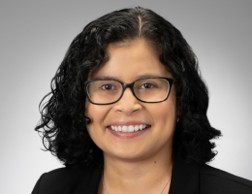
Jenny Ruiz, MD, MSCE, is Assistant Professor of Pediatrics at the University of Pittsburgh School of Medicine.
Language and leukemia
Dr. Ruiz began by stating that the incidence of acute lymphoblastic leukemia (ALL) is highest in Hispanic children, and emphasized the urgent need to investigate intersecting drivers of health such as language and English proficiency. Over 27 million individuals in the United States have limited English proficiency (LEP), defined as a self-rated ability to speak English less than “very well”. Furthermore, 63% of those with LEP speak Spanish. Finally, over 26% of children in the US are in immigrant households.
Certain laws and policies address language access. For example, the Civil Rights Act prohibits recipients of federal funding from discriminating against individuals because of race, color, or national origin. Section 1557 of the Affordable Care Act also reinforces language services as a fundamental right. Specifically, language services are required to be free of charge, accurate, timely, and to protect the privacy and the independent decision making of the individual with LEP. Importantly, these services cannot rely on staff other than qualified interpreters, and Section 1557 prohibits the use of minors or accompanying adults as interpreters or translators, except in emergencies.
However, research has found that oncologists provide leukemia treatment details to only 65% of parents who speak a language other than English, compared with 71% of English-speaking parents. Families of leukemia patients who speak a language other than English also ask 50% fewer questions to their healthcare providers than English-speaking families. [Simon 2003]
A review of pediatric phase I/II interventional cancer clinical trials with information on CT.gov from 2010 to 2023 revealed that 96% (418/438) of studies did not explicitly report language requirements. Furthermore, when the Children’s Oncology Group (COG) language working group surveyed clinicians and research coordinators at COG affiliated institutions, 47% of respondents reported that recruiting persons who speak languages other than English to clinical trials was somewhat or very difficult. [Beauchemin 2024]
Qualitative insights
In response to these difficulties, Dr. Ruiz and colleagues performed qualitative research to understand Spanish-speaking caregivers’ communication experiences with the medical team at the time of diagnosis and to identify strategies to improve communication. Interviews were conducted by a bilingual research team, and participants were Spanish-speaking caregivers of children with cancer diagnosed in the last 10 years. Themes that emerged throughout the interviews included variable access to an interpreter, the emotional response to diagnosis, divergent comfort levels with asking questions, and the therapeutic relationships. Caregiver recommendations for improving communication included bilingual clinicians, in-person interpreters, detailed explanations, and perspective taking.
Quantitative evidence
Dr. Ruiz and colleagues also undertook a quantitative research study with 2 goals: to examine the association between preferred language and high acuity (defined as ≥2 organ systems requiring ICU-level care during the first 72-hours of initial admission) in children with acute myeloid leukemia (AML) at presentation, and to examine the association between preferred language and intensive care unit (ICU)-level care during first cycle of therapy in children with AML.
Compared to non-Hispanic White English-speaking patients, Hispanic Spanish-speaking AML patients were both significantly more likely to have high acuity at presentation and higher ICU-level care needs. Hispanic English-speaking patients did not show this difference, supporting the hypothesis that speaking a language other than English is a risk factor for early morbidity. More research on interpreter use and family-centered communication for cancer patient families that speak a language other than English is needed.
These studies show that, although language access is mandated by law, varying outcomes based on language and other social drivers of health exist in pediatric oncology. Providers should strive to partner with medical interpreters for families who speak a language other than English at every clinical encounter along the cancer care journey.
References
Beauchemin MP, Ortega M, Santacroce SJ, et al. Clinical trial recruitment of people who speak languages other than English: a Children’s Oncology Group report. JNCI Cancer Spectr. 2024;8(4):pkae047.
Simon C, Zyzanski SJ, Eder M, Raiz P, Kodish ED, Siminoff LA. Groups potentially at risk for making poorly informed decisions about entry into clinical trials for childhood cancer. J Clin Oncol. 2003;21(11):2173-2178.
By The Numbers
142
Percent
Expected rise in Latino cancer cases in coming years