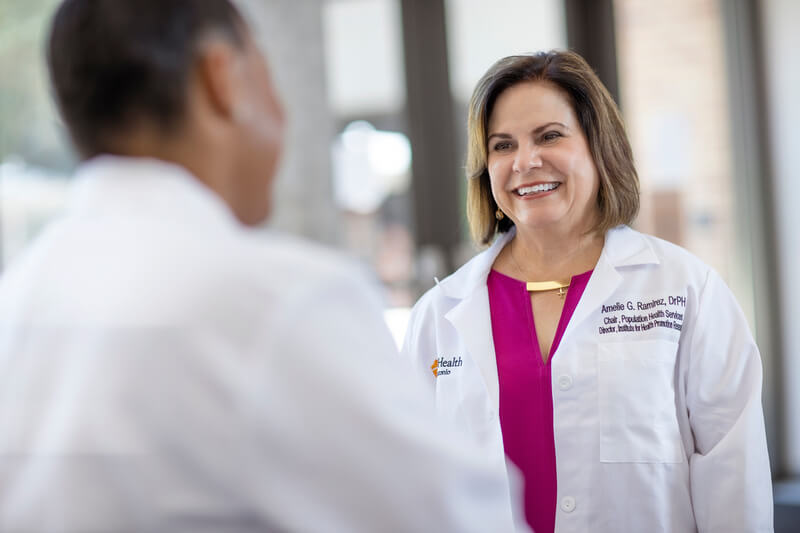
Dr. Amelie G. Ramirez, leader of Salud America! at UT Health San Antonio, recently shared the need to help Latino cancer survivors on "Science & Medicine," an audio collaboration of Texas Public Radio and UT Health San Antonio. Bonnie Petrie, TPR's bioscience and medicine reporter, hosted the segment. Ramirez spoke to Petrie about her project to improve care and life for Latino cancer, called “Avanzando Caminos (Leading Pathways): The Hispanic/Latino Cancer Survivorship Study.” "Our big goal is to really have more equitable care for everyone, not only in South Texas, but nationwide, and that their outcomes for survival are also improved,” Ramirez said during the segment. Listen to the full audio here.
About the Avanzando Caminos Research Project
Avanzando Caminos ...
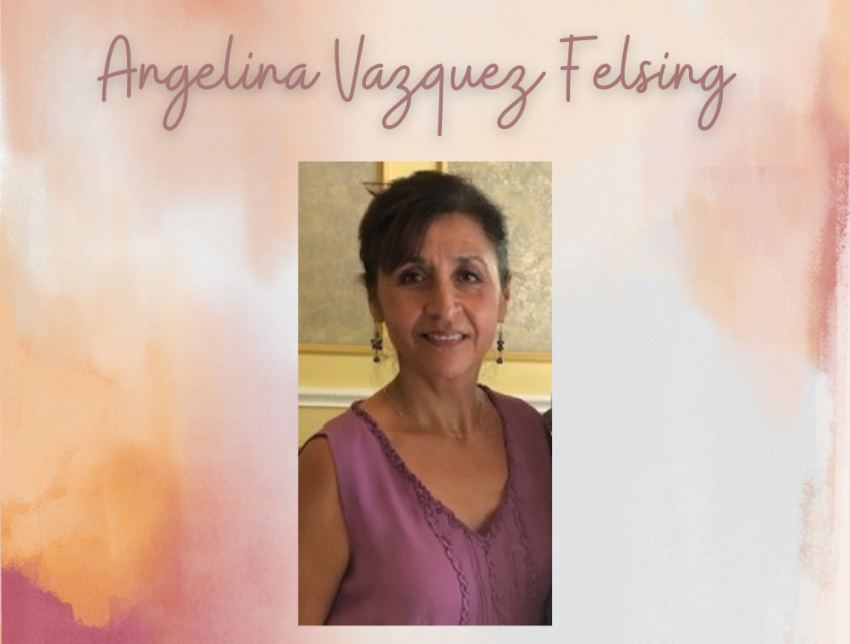
“It was kind of a fluke.” That’s how Angelina Vazquez Felsing describes the events that led to her diagnosis of lung cancer. Like many, Vazquez Felsing maintained a healthy lifestyle. She didn’t smoke. She ate healthy, ran regularly, and had no family history of cancer. Vazquez Felsing, who immigrated from Mazatlán, Mexico, in 1972, grew up in the Floresville area and has lived in San Antonio for many years. It all started when Vazquez Felsing went to her yearly checkup through the wellness program at her job, where she has worked as a systems analyst for 17 years. “They found something that was a little bit odd. They said, ‘Well come back in a year, and we'll do another CT scan,’” she said. “And when I went back, they found that whatever ...
Cancer patients with unmet needs for support – in areas from finances to emotions – are more likely to experience worse clinical outcomes, according to a new study led by Dr. Frank Penedo of the Sylvester Comprehensive Cancer Center at the University of Miami. Who are the cancer patients at highest risk for having unmet needs? Latinos, Blacks, and people who experience anxiety, depression, pain, poor physical function, and low health-related quality-of-life scores. "Our findings offer strong evidence that unmet supportive care needs are associated with unfavorable clinical outcomes, particularly higher risk for ED visits and hospitalizations," Dr. Penedo said, according to a news release. Let’s dive into unmet needs and what they mean for Latino cancer ...
Dr. Amelie G. Ramirez of UT Health San Antonio is launching the new "Avanzando Equidad de Salud: Latino Cancer Health Equity Research Center" thanks to a 4-year, $4.08-million grant from the American Cancer Society. The Avanzando Equidad de Salud Center, which will begin in February 2023, is a response to the severe cancer burden facing Latinos in South Texas. The center will unite South Texas research scholars and the community to reduce health disparities across the cancer care continuum by targeting social determinants of health that prevent Latinos from obtaining equitable care. "Our new center will conduct a unique combination of community-engaged research, training, patient assessment, and advocacy to address the social determinants of health — such as access to ...
This is part of the "Advancing the Science of Cancer in Latinos: 2022 Conference Proceedings," which summarizes findings and discussions of the 2022 Advancing the Science of Cancer in Latinos Conference on Feb. 23-25, 2022, in San Antonio, Texas.
Using Science to Address Latino Health Disparities Research
Eliseo J. Pérez-Stable, M.D., is Director of the National Institute on Minority Health and Health Disparities (NIMHD) at the National Institutes of Health (NIH). Health disparities and social determinants of health Dr. Pérez-Stable began his presentation by discussing the ways in which science can reduce inequities in healthcare. First, standardized surveys, tools, and measurements are needed so that data can be combined, facilitating discovery through large data sets. ...
This is part of the "Advancing the Science of Cancer in Latinos: 2022 Conference Proceedings," which summarizes findings and discussions of the 2022 Advancing the Science of Cancer in Latinos Conference on Feb. 23-25, 2022, in San Antonio, Texas.
Leading Pathways: The Hispanic/Latino Survivorship Study
Dr. Frank Penedo is Associate Director of Cancer Survivorship & Behavioral Translational Sciences at the Sylvester Comprehensive Cancer Center at the University of Miami. The Leading Pathways study Dr. Penedo began by presenting a summary of Leading Pathways, a Hispanic/Latino survivorship study, a collaboration between the Mays Cancer Center at UT Health San Antonio and the Sylvester Comprehensive Cancer Center at the University of Miami. The study has five key aims, the ...
This is part of the "Advancing the Science of Cancer in Latinos: 2022 Conference Proceedings," which summarizes findings and discussions of the 2022 Advancing the Science of Cancer in Latinos Conference on Feb. 23-25, 2022, in San Antonio, Texas.
Framing Latino Cancer Research and the Census Bureau Data That Enable It
Mr. Robert L. Santos is the Director of the US Census Bureau, the first Latino to serve in that position. Lessons from a vibrant career Director Santos began by sharing wisdom gleaned from 40 years of research, including two ways in which it is important to think differently about research problems. First, researchers tend to emulate the methods and thought processes that they have been taught, but these conventional approaches may become self-propagating, and ...
This is part of the "Advancing the Science of Cancer in Latinos: 2022 Conference Proceedings," which summarizes findings and discussions of the 2022 Advancing the Science of Cancer in Latinos Conference on Feb. 23-25, 2022, in San Antonio, Texas.
Effective Latino Cancer Policy Requires Effective Legislative Advocacy
Dr. Jaime Estrada is the Founder and President of Texas Doctors for Social Responsibility, as well as the Founder and Board Chair of the Adolescent and Young Adult Cancer Foundation. Falling through the cracks: a case study Dr. Jaime Estrada began by sharing a case study of a 35-year-old man from central Texas. This man was uninsured and working in construction when he began having headaches for several weeks. He was diagnosed with a curable brain tumor called ...
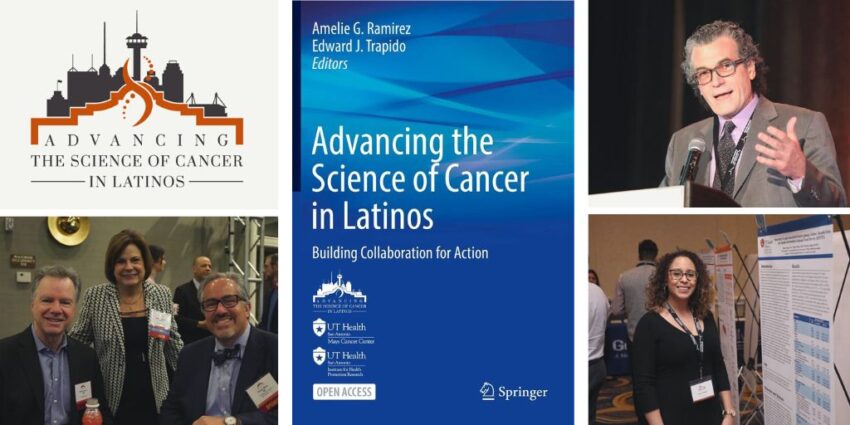
U.S. Latinos face heavier burdens of stomach, liver, and cervical cancers, and worse outcomes for many cancers, than their White peers. But why? Unfortunately, many factors cause these disparities, from poverty and a lack of healthcare access to cultural barriers, acculturation, and genetic heritage. That's why it takes everyone working together to address Latino cancer. To this end, UT Health San Antonio has published a new open-access book, Advancing the Science of Cancer in Latinos: Building Collaboration for Action. The book is a collection of articles based on presentations at the 2nd biennial Advancing the Science of Cancer in Latinos conference on Feb. 26-28, 2020, in San Antonio, co-hosted by Mays Cancer Center and the Institute for Health Promotion Research (IHPR) ...