New cooking classes at Weymouth Middle School are helping kids think twice about how to make a pizza crust and how to eat at home with new ingredients in their recipes. John Mullaney, the health class teacher said this idea came up after brainstorming ideas, and he discussed the idea of creating new healthier recipes with the school district's dietitian, Kelsey Massis of Chartwells Food Service. He wanted to help kids come up with new ingredients that use less sugar and less flour with his student's recipes while cooking in class. Mullaney hoped that kids would be creative, and they were. Students like Brook Pelley used skim milk and low-fat cheese in her macaroni and cheese, and Brook Ferbert who used a salsa that had a variety of fresh vegetables. Other students used ...
A new study from the University of Iowa is researching if obesity rates are affected in communities where restaurants label calorie counts on menus. Since 2011, the study has collected calorie-labeled menus from various restaurants where local ordinances require restaurants to publish calorie counts. Researchers have revealed that early evidence from the study suggest that the body mass index (BMI) has fallen over time in areas with required menu labeling, compared to nearby counties. However, David Frisvold, the main researcher and assistant professor of economics at the Tippie College of Business, said in an article that most of the early studies on local menu-labeling laws have evaluated items ordered at large chain restaurants and shows no to little changes in diner's ordering ...
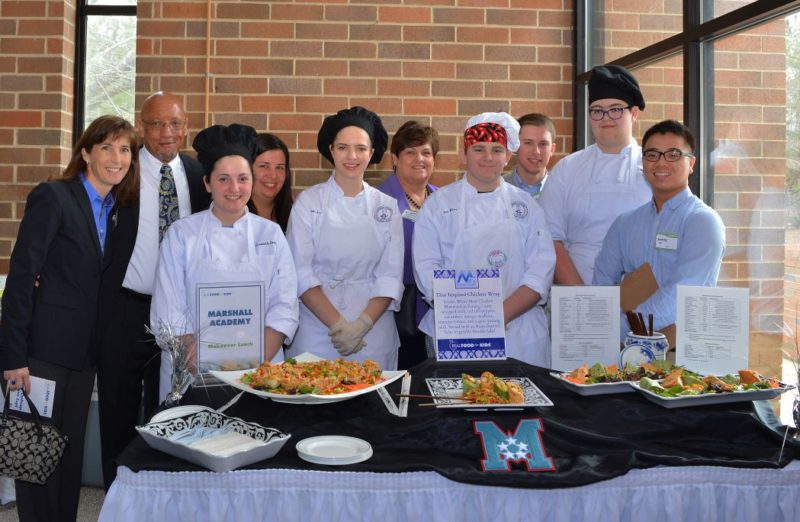
Healthy cooking challenges are not just popular on TV. Now schools in Fairfax Count, Va. are cooking up healthier meals in the Real Food For Kids (RFFK)'s Culinary Challenge and Wellness Expo to change school menus, offering kids the chance to cook up something different, healthy and tasty. To help change school menus to offer more healthy and tasty foods, the challenges gives kids the chance to cook up something different, healthy and tasty and help sprout new ideas into the school menu, all while staying in school budget limits. Twelve Fairfax County Schools competed for awards in three categories, including Smart snacks, Grab 'N Go, and Makeover Lunch Challenge. The challenge was to make a meal that would work within the schools nutrition, portion and cost standards. ...
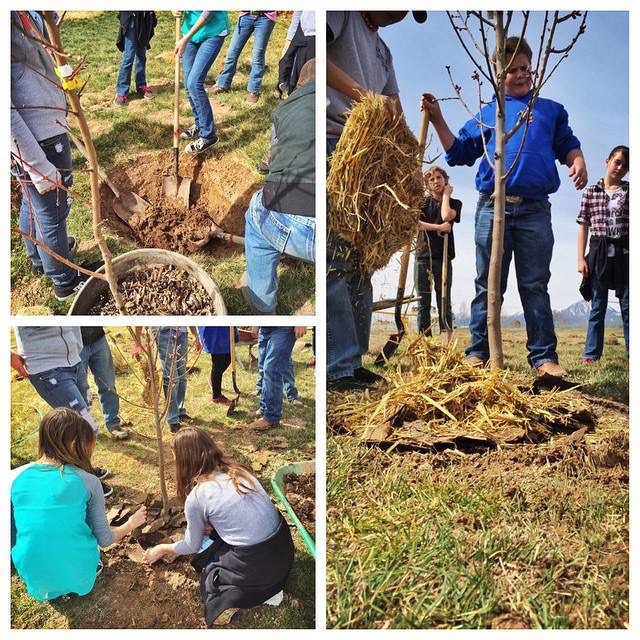
Montezuma County (12.2 % Latino), Colorado, was once well known for its blooming apple orchards. Back in 1904, three Gold Medals were awarded to the county at the St. Louis World’s Fair. But for years, these fresh apples weren’t always available to kids at local schools. Now, with the help of farm-to-school leaders like Sarah Syverson and other groups, Cortez Middle School is growing a garden and an entire apple orchard to bring new fresh foods to local school cafeterias and to the school’s farmers market.
Fresh Fruit and Produce and the Community
Awareness: Sarah Syverson, director of the Montezuma School to Farm Project (MSTFP) in Montezuma County, Colo., was proud of the school garden at Cortez Middle School (CMS). Established in 2013, the schools garden was a place ...
A study from Preventing Chronic Disease showed that after district-wide policies were implemented across Boston schools, students had less access to sugar-sweetened beverages. The data showed that after a ban of sugary drinks in 2004, 89.6% of all schools studied met beverage nutrition standards, with elementary schools showing the most compliance at 93.6 percent. Through the study, researchers also found that when these nutrition standards were met at 85.5 percent of schools studied, only four percent of students had little to no access to competitive beverages or sugary beverages at school. Rebecca S. Mozaffarian, MS, MPH of the department of social and behavioral sciences at Harvard T.H. Chan School of Public Health explained in a recent article that these findings from the ...
Gaby Medina, a mom and health educator in the neighborhood of Westwood, in Denver, Colo. (79.36% Latino), didn’t have a lot of faith in the safety of local tap water when she arrived here from Mexico. Much of Denver's foreign-born population similarly distrust the safety of tap water. However, Gaby eventually learned to trust the water. She then took a big step to make sure her family, friends, and fellow residents across the community understand that tap water is far safer, healthier, and more affordable than sugary drinks.
Is tap water safe? Gabriela “Gaby” Medina is your average mom who wants to help her 10-year-old daughter and her family live happy, healthy lives. In Mexico, tap water is not always safe to drink. “Initially, yes, I was hesitant [about ...
Part of the company Reebok's core values is fitness and health. Now they are standing for health at company headquarters by banning all soda, fried foods, candy, sugary beverages and white breads and pastas. Reeboks headquarters are in Canton, MA. The athletic company and staff will now enjoy nuts, fruits, and vegetables in the kitchens across the company campus and promote the importance of a healthy workplace across their company brand. Brands that stand in their values for health in and out of the workplace can not only help benefit their brand, but also help benefit the health of their employees. To learn more about this change, click ...
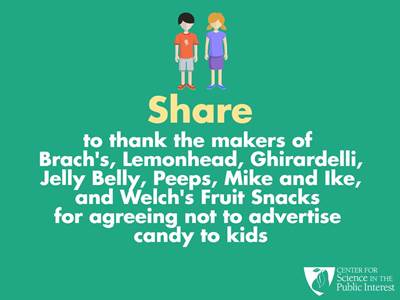
Marketing companies often promote junk food ads to kids, who are at risk of not growing up with a healthy weight. The Council of Better Business Bureaus announced that six candy companies have now agreed not to advertise their brands to kids. These brands, Brach's, Lemonhead, Ghirardelli, Jelly Belly, Mike and Ike, and Welch's Fruit Snacks, are all now part of the first companies to participate in the Children's Confection Advertising Initiative. One way to ensure that the candy industry uniformly rejects advertising to children, explains the Center for Science in the Public Interest (CSPI), is to recognize the progress these companies have made. CSPI encourages those interested in supporting these healthy efforts, to share a "thank you" to these companies on social ...
In 2013, Shaun Lee wanted to start a company that would allow people access to fresh healthy foods in and around San Antonio. Lee's company, Truckin' Tomato, is a trailer-turned-farmers market, that delivers online ordered foods to homes in San Antonio on a weekly or bi-weekly basis. Lee works with various local farms across the state to pick in season vegetables that are at their peak in freshness, allowing people to have fresh local foods. But some areas of the city are hard to reach with limited funds to expand his business. Working to expand his deliveries, Lee is using a crowdfunding campaign to help him reach new delivery sites in San Antonio and work on ways to address the needs of the larger community to learn about healthy eating and cooking habits. In some delivery ...