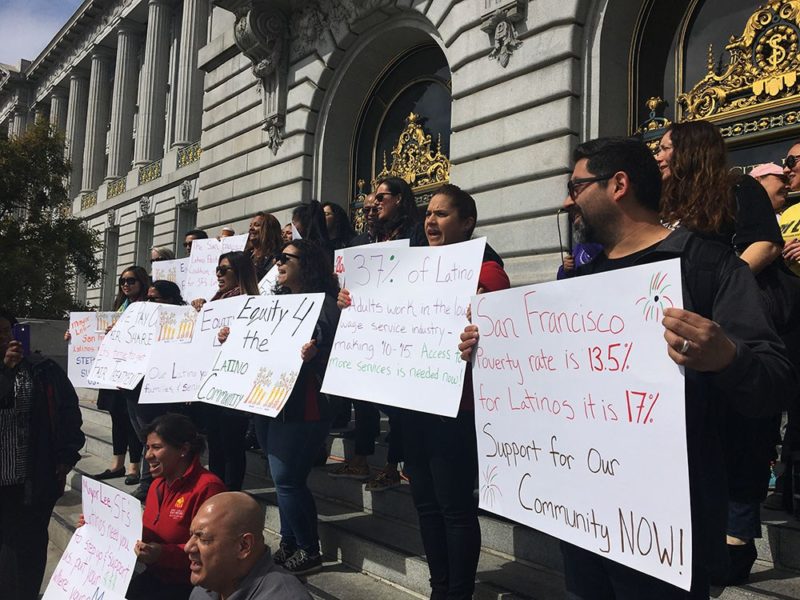
The city of San Francisco (15.1% Latino population) has long been a hub for the Latino community. However, as the city by the bay has grown in importance as one of the centers of the U.S. tech industry, many long-time Latino residents are struggling to keep up with the cost of living there. A new organization has been formed to help serve the low-income Latino communities in the area connect to community resources. The San Francisco Latino Parity and Equity Coalition conducted a study of heavily Latino-populated neighborhoods in the city (including the Mission, Bayview, Tenderloin, and Visitacion Valley areas). The coalition, which is made up of over a dozen groups, including the Central American Resource Center (CARECEN), Jamestown Community Center, the Mission Language and ...
"When it comes to predicting how long you will live, your ZIP Code is more important than your genetic code," George Takei narrates in A Tale of Two Zip Codes, an animated short film by the California Endowment's 10-year Building Healthy Communities initiative. Where you live determines your opportunities, thus your health and life expectancy. Consider not having healthy food options, clean air, safe sidewalks, nearby parks, quality schools, public transportation and preventive health care. The root causes of inequity in access to opportunities are due to racial and economic discrimination. Struggling so much to find healthy options can be an overwhelming source of chronic stress, which is a serious health risk in itself. If we are all going to be healthier, we need to look at ...
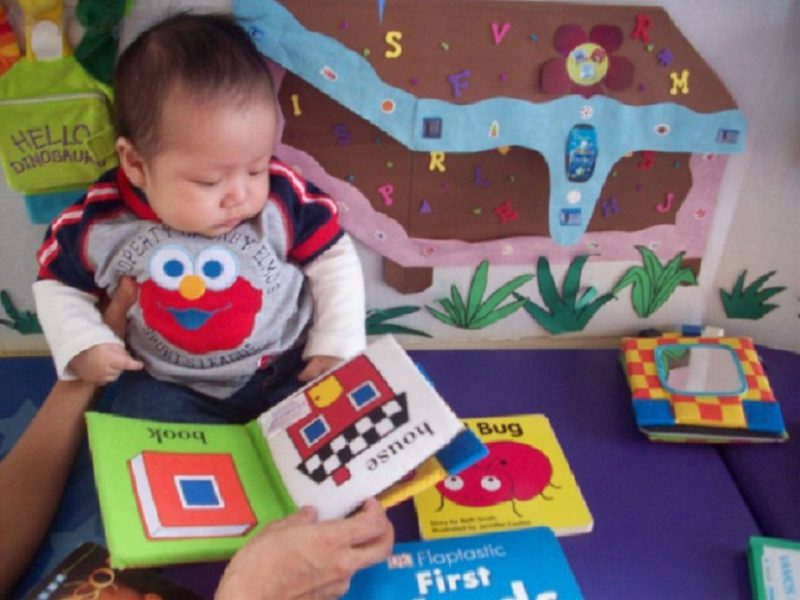
Not all kids start kindergarten equally prepared to succeed. By a child's third birthday, 85% of their brain is fully developed. Children of migrant workers and Latino children growing up exposed to adverse childhood experiences, such as domestic violence, substance use disorder, neglect, and poverty, as well as limited access to healthy food and safe places to play, are at increased risk for developing physical, mental, behavioral, psychosocial, and/or cognitive issues. High-quality early childhood programs can help level the playing field for Latino children on vocabulary and on social and emotional development. With federal funding, the East Coast Migrant Health Start Project serves 3,145 children annually through 26 Head Start centers in Alabama, Florida, North Carolina, ...
Latinos have made great strides in education in recent years, with more enrolling two- and four-year colleges and universities than ever before. However, there is still a significant gap between Latinos and other racial and ethnic minorities in obtaining college degrees. Education is one of the main determinants of health; the more education you obtain, the better your chances for higher paying jobs, financial stability, upward mobility, and better long-term mental and physical health. Overall, the economy has rebounded from the mid-2000s economic downturn. However, according to a new report by the Federal Reserve, those households that do not have a college degree are struggling more than ever. As reported by Reuters, the annual report serves as “temperature check” on the ...
Hannah Lieder, foster mother and founder of Minneapolis Swims, has been working since 2010 to keep open the local Phillips Pool in a disadvantaged neighborhood in Minneapolis, Minn. Why? Lieder knows that children living in low-income, Latino, or minority neighborhoods have historically lacked convenient access to physical activity spaces, particularly swimming pools, compared to white or high-income neighborhoods. These social and environmental inequalities contribute to disparities in drowning rates, physical activity levels, health outcomes and academic achievement. Phillips Pool was in disrepair and under constant threat to be concreted over. Now, six years later, Lieder’s legacy lives on, through Denny Bennett, as crews will break ground on the Phillips Aquatics ...
A few years ago, only 1 in 10 Latino children were screened for autism when they came in for well-child visits at Unity Health Care's Upper Cardozo Health Center in Washington, D.C. None were flagged for autism. The problem? Latino parents often misunderstood the center's written autism screening questions. Questions were designed for English speakers and, even when translated into Spanish, tended to mystify or confuse Spanish speakers, Spectrum News reports. The answer? A Georgetown University researcher created a culturally and linguistically tailored oral screening test where clinicians asked Latino parents the autism questions. Trained multilingual interviewers, and later center clinicians, gave the oral screening to parents. Of 1,400 children screened, 4% were ...
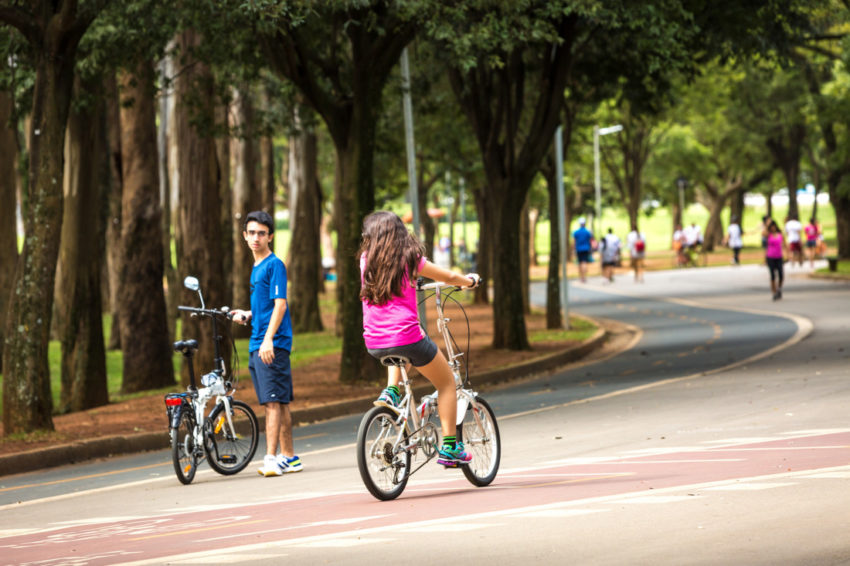
We shouldn’t have to shake up our daily routines to get the mental and physical benefits of physical activity. But for Latino families, physical activity often isn't a daily norm. In fact, Latino-majority schools provide less time for recess and P.E., and Latino neighborhoods have fewer places to walk and play, Salud America! research shows. Let's use #SaludTues on May 23, 2017, to tweet about partnerships, programs, policy changes, and infrastructure that can help Latinos and everyone move more and sit less in the places where we live, learn, work, play, pray, and retire. WHAT: #SaludTues Tweetchat: “Active Living Programs, Policy Changes, and Infrastructure Improvements”
TIME/DATE: 1-2 p.m. ET (Noon-1 p.m. CT), Tuesday, May 23, 2017
WHERE: On Twitter with ...
A study conducted in London from 2010 to 2011 in a secondary girls-only state school found that the SPARK Resilience Program helped prevent depression and increase self-reported resilience in girls 11-12 years old. The study led by Queen Mary University of London (QMUL) looked at over 400 girls reports on their resilience and depression symptoms throughout the study. The SPARK Resilence Program gave students the tools to identify stressful situations and learn how to control negative behavior reactions. SPARK, the acronym behind the program stands for how children can break down their responses to stressful situations and be taught by teachers to their students using the five components: Situation, Perception, Autopilot, Reaction, and Knowledge. School interventions are a ...
Kindergarten is a crucial time for all young students. It is the time when the foundations of fundamental learning skills are laid and can greatly impact the rest of a student’s academic career. Kindergarten is especially crucial for children when it comes to language learning. For Latinos and other low-income kids, they face the additional challenge of having obstacles in place at school and at home. “Children may go from a home with limited physical and psychological resources for learning and language to a school with similar constraints, resulting in a double dose of disadvantage,” said Susan Neuman professor of childhood and literacy education at New York University in an interview with Medine Plus. Neuman and her colleges followed 70 kindergarteners in Michigan (4.72% ...