Cancer screening can save lives by detecting cancer early, when it’s most treatable or before it starts. Watch a webinar about cancer screening at UT Health San Antonio’s webinar, “The Thing that Could Save Your Life,” which took place at 1 p.m. Central on March 4, 2025. The webinar featured experts from the Mays Cancer Center at UT Health San Antonio, Genentech, and a cancer survivor, who explored available cancer screenings and how to access them in South Texas and beyond. Panelists examined common myths and barriers to routine cancer screening, including the non-medical drivers of health, and strategies to overcome those myths and barriers. Panelists also shared other cancer prevention strategies from risk reduction and participating in clinical trials. This is a ...
Dr. Amelie G. Ramirez, leader of Salud America! at UT Health San Antonio, was invited to discuss childhood obesity in Latinos by Noticias Telemundo and the Telemundo network. Ramirez’s appearance was part of a one-hour special described as a critical path for creating a society in which all children can thrive, according to Telemundo. The segment focuses on a variety of issues, such as education, healthcare, and nutrition, in children from different backgrounds. Topics included in the special ranged from children's access to affordable and nutritious foods to the mental health of high school students. The program streamed live on the Noticias Telemundo Ahora streaming channel and Noticias Telemundo’s social and digital platforms: NoticiasTelemundo.com, the ...
From 2009 and 2019, cancer was the top cause of death in the US for Latinos. Now, while new data show that cancer has become the second-leading cause of death in Latinos, only slightly behind heart disease, cancer remains a big threat to the health of the US population (19.5% Latino). Every year, heart disease and cancer cause 17% of Latino deaths in the US, according to the American Cancer Society’s Cancer Facts & Figures for Hispanic/Latino People 2024-2026 report. Let’s dive into the key highlights of the report.
Cancer Incidence
The American Cancer Society estimates 195,300 cancer cases would be diagnosed in Latinos in 2024 with another 50,400 Latino individuals dying from the disease. Here are some key facts from the American Cancer Society report: Among ...
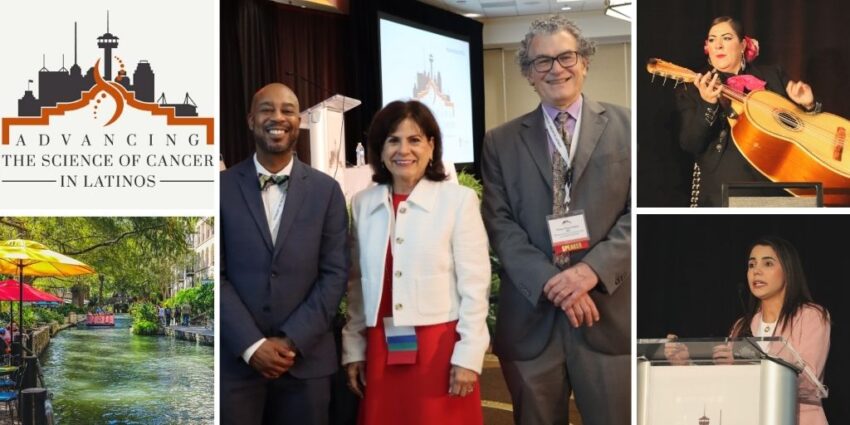
Cancer is a big health issue for Latinos and all people. That’s why Dr. Amelie Ramirez, director of Salud America! and the Institute for Health Promotion Research at UT Health San Antonio, partnered with the Mays Cancer Center to create the Advancing the Science of Cancer in Latinos (ASCL) biennial conference. Read the proceedings from the 2018, 2020, and 2022 ASCL Conferences. The 2024 ASCL Conference on Feb. 21-23, 2024, in San Antonio, Texas, welcomed over 280 prominent researchers, physicians, healthcare professionals, patient advocates, and students from across the globe to address cancer health disparities among Latinos. Conference sponsors included: platinum supporters Amgen, AstraZeneca, Bristol Myers Squibb, Genentech, and Gilead; silver supporters GMaP Region 3, ...
With cancer still rising in the US Latino population, UT Health San Antonio leaders and national cancer experts have published an online book with innovative recommendations to reduce Latino cancer. The book, "Advancing the Science of Cancer in Latinos: 2024 Conference Proceedings," highlights results of the same-named conference that brought 300 researchers, advocates, and survivors to San Antonio in February 2024. A follow-up conference is planned for Feb. 18-20, 2026, in San Antonio. Included in the book are promising research findings on Latino cancer and strategies for new research covering the entire cancer continuum, from advances in risk assessment, prevention, screening, detection, diagnosis, treatment, survivorship, and policy. “Our book, Advancing the Science of ...
Dr. Amelie G. Ramirez, leader of Salud America! at UT Health San Antonio, was chosen as a 2024 recipient of the annual John P. McGovern Lectureship Award in Health Promotion by the Center for Health Promotion and Prevention Research at UTHealth Houston School of Public Health. Ramirez delivered her McGovern Award Lecture on Nov. 4, 2024. Watch the full lecture on YouTube. “We need to do a better job in listening to and hearing our community members about they are truly seeing, feeling,” said Ramirez, who also leads the Institute for Health Promotion Research and community outreach at the Mays Cancer Center at UT Health San Antonio. “What are those concerns that they have?" watch the lecture
Dr. Ramirez & Her Health Promotion Research
Ramirez is an internationally ...
Norovirus, also known as the stomach bug, is surging across the United States. Outbreaks of the virus spiked from 69 to 91 the week of December 5, 2024, according to data from the U.S. Centers for Disease Control and Prevention (CDC). This is a significant rise considering the same reporting period over the last several years showed 65 or less outbreaks per week. However, there are a growing number of cases that haven't been reported, adding to the potential for spreading the virus. With outbreaks and cases on the rise, there are several things you should know about the norovirus surge and measures you can take to protect yourself and loved ones from getting sick.
1. Norovirus is a Foodborne Illness
While norovirus is classified as a “stomach bug” or ...
This content is from the "Advancing the Science of Cancer in Latinos: 2024 Conference Proceedings."
Demographics and Public Policy: Implications for Latino Cancer
Dr. Elena V. Rios is President & CEO of the National Hispanic Medical Association (NHMA) and president of NHMA’s National Hispanic Health Foundation. Unfairness in the healthcare system Dr. Rios’s presentation began by focusing on the changing demographics in the US. By 2035, Latino individuals will make up 1 out of every 4 Americans, meaning that the future of the country is intertwined in the Latino experience. The current 63 million Latino individuals in the US make up 19% of the population; however, only 9% of oncologists are Latino, and only 1/3 of those are women. This is important in light of the high ...
This content is from the "Advancing the Science of Cancer in Latinos: 2024 Conference Proceedings."
Increasing Participation in Pediatric Cancer Clinical Trials
Dr. Paula Aristizabal is Associate Professor of Pediatrics in the Division of Pediatric Hematology and Oncology, Medical Director of the International Outreach Program, and Quality Improvement Lead at the University of California San Diego and Rady Children’s Hospital. Differences in pediatric cancer Dr. Aristizabal’s presentation covered the demographic shift in the US, differences in pediatric cancer, gaps in clinical trial participation in pediatric cancer research, challenges to clinical trial participation in Latinos, and strategies to improve recruitment of Latinos to clinical trials. The Latino population ...