About the Author

Author Picture

Cliff Despres

Cliff Despres, who has more than a decade of experience in journalism and public relations, is communications director for Salud America! and its home base, the Institute for Health Promotion Research at UT Health San Antonio.


Connect with Cliff:
Twitter Link

Articles by Cliff Despres

Free Texting Program Can Help You Quit Smoking


breaking cigarette smoking smokefree

Smoking is a tough opponent to beat. Quitxt is a new free text-message service that turns your mobile phone into a personal coach to help you quit smoking, using interactive and entertaining texts, online support, and music and videos from researchers at the UT Health Science Center at San Antonio. The service’s text messages help with motivation to quit, setting a quit date, finding things to do instead of smoking, handling stress, and more. To join, text “iquit” to 57682 or visit quitxt.org. “Text-message applications have scientifically proven to roughly double one’s odds of quitting smoking, so we developed Quitxt specifically for young adult Latinos to help them quit for good,” said Dr. Amelie G. Ramirez, study leader and director of the Institute for Health ...

Read More

Apply Now: Latino Cancer Research Training and Internships


Participants gather for a group photo at a past Exito Summer Institute.

Apply now for the 2017 Éxito! Latino Cancer Research Leadership Training program and optional $3,250 internships at the Institute for Health Promotion Research (IHPR) at the UT Health Science Center at San Antonio. Éxito! (English: Success!) recruits trainees annually for a culturally tailored curriculum to promote pursuit of a doctoral degree and cancer research career. This year, program leaders will select 25 master’s level students and professionals from across the country to take part in a five-day summer institute June 5-9, 2017, in San Antonio to provide resources needed to take the next step in their education and apply for doctoral programs. The summer institute also brings Latino researchers and mentors to teach participants about cancer prevention, research, and ...

Read More

Tell Grocers: Mark the Way to Fruits & Veggies!


mom in grocery store with fruits and vegetables

Does your supermarket prominently feature unhealthy foods? You’re invited to sign a Salud America! and Care2 letter campaign asking grocery stores to use labels, floor arrows, and other marketing strategies to promote fruit and veggie options for Latino families. Fruits and veggies are critical to help kids grow up at a healthy weight. Access to, and purchases of, affordable healthy foods tends to improve when healthy food offerings are expanded and promoted in underserved communities, according to Salud America! research. But some grocers’ marketing, placement, and store design nudges families toward unhealthy foods. The new letter campaign asks members of state grocery store associations to consider changes like: adding green arrows on the floor to guide ...

Read More

Can Salad Boost Latino Health in NY’s Least Healthy County?


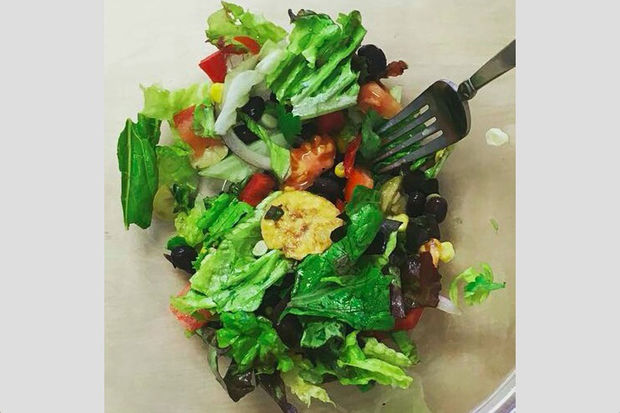
Restaurant owners and a nonprofit group are working to push a new salad on menus in hopes of improving health in the Bronx, New York's least healthy county. The Bronx Salad aims to appeal to the large local Latino populations with familiar ingredients, including plantain chips, corn, beans, red onions, cilantro, and a dash of hot sauce, according to a report by NY1. The salad was created by Chef King Phojanakong. "When you think of the Bronx, maybe think of hot dogs, Yankee Stadium, a lot of fast food," Phojanakong told NY1, noting the Bronx salad as a healthy alternative that locals can make easily themselves with lettuce from a rooftop garden and veggies from other community gardens. "We didn't want to create a salad with things that are so difficult to get." Access to ...

Read More

The Diverse Beauty of the Hispanic Workforce


latino hispanic man

The United States is home to 24 million workers of Hispanic descent. These workers, often referred to as a single entity, come from a variety of ethnic backgrounds, each with their own unique labor challenges in terms of education, poverty, location, language, and access to health and retirement benefits, according to a new report by the Center for Economic and Policy Research. Key findings are below in each topic area: Demographics Workers of Mexican descent are by far the largest subgroup of the Hispanic workforce (14.9 million). Women make up only 43.3% of the overall Hispanic workforce, but they are a majority of several subgroups, including Panamanians (58.1%), Bolivians (53.2%), and Paraguayans (51%). About two-thirds of Hispanic workers are U.S. citizens – ...

Read More

Noviembre: Mes de Doncientización sobre el Cáncer y la Salud Masculina


Existen muchos tipos de cáncer que afectan en mayor medida a los hombres, y entre ellos muchas afecciones que son más comunes entre la población hispana. GobiernoUSA.gov le entrega información útil sobre la salud masculina y la forma de prevenir el cáncer durante noviembre, mes en que muchos hombres se dejan crecer la barba o el bigote como forma de participar en las campañas de concientización sobre esta enfermedad. Es importante que los hombres hispanos sean proactivos en su cuidado de salud. El cáncer de próstata, por ejemplo, es el de mayor presencia en todas las razas. El cáncer colorrectal es el segundo de mayor presencia entre los latinos, mientras que el cáncer de pulmón es tercero en prevalencia entre los hombres hispanos (según cifras oficiales de los Centros ...

Read More

#SaludTues Tweetchat 1p ET 11/15/16: Is Your Baby’s Food Healthy?


latina mom with baby food bottle

Is the food your baby eats truly healthy? Marketing for baby and toddler food and formula often contradicts expert guidance and “encourages parents to feed their young children products that may not promote healthy eating habits” needed for lifelong health, according to a new report. Marketing of added-sugar baby foods to Latino parents is especially problematic, given Latino children’s higher rates of overweight and obesity and health disparities. Let’s use #SaludTues on Nov. 15, 2016, to tweet about marketing techniques and the truth about the nutritional quality of children’s food and beverages. WHAT: #SaludTues Tweetchat “Is Your Baby’s Food What It’s Cracked Up to Be” TIME/DATE: 1-2 p.m. EST Tuesday, November 15, 2016 WHERE: On Twitter with ...

Read More

Study: Mexico’s Sugary Drink Tax Will Reduce Diabetes, Save $1 Billion in Healthcare Costs


latina girl with sugary drinks

The tax on sugary drinks in Mexico is projected to prevent 190,000 cases of diabetes, 20,000 heart attacks and strokes, and 19,000 deaths among Mexicans ages 35-94 over the next 10 years, according to a new study. The tax will save $1 billion in direct healthcare costs in a decade, the study found. For the study, researchers from UC San Francisco and Mexico created a new simulation model of diabetes and heart disease to make the first long-term projections about the health and economic effects of the tax in Mexico, where 75% of adults are overweight or obese and diabetes rates are extremely high. Mexico adopted a 10% excise tax on sugary drinks in 2014. The tax’s effect on diabetes alone is expected to reduce health care spending on clinic visits and hospitalizations by $983 ...

Read More

Submit Public Comment for Latino Health Equity!


Salud America

U.S. Latinos are a diverse, dynamic, rising population. But without proper and unified data on this population, researchers can’t develop treatments and officials can't create public health campaigns to address Latinos’ high rates of obesity, diabetes, and certain cancers. Add your public comment now as the White House Office of Management and Budget (OMB) considers the first changes in 20 years to federal standards for collecting and reporting data on race and ethnicity. The changes would require federal agencies to collect and report more detailed data on the country’s diverse populations to identify and improve health equity. Not sure what to say? Use this model comment: Latinos are the largest racial/ethnic minority in the United States. In 2016, 1 in 6 people ...

Read More