In Massachusetts, the opioid overdose rate for Latinos has nearly doubled in three years, reaching twice the rate of whites and African Americans, NPR reports. Massachusetts isn’t alone, either. Latino opioid overdoses are rapidly rising across the nation, according to the CDC. Specifically, the Latino death toll for opioid overdoses rose 52.5% from 2014 to 2016. That’s compared to a 45.8% rise among whites. "What we thought initially, that this was a problem among non-Hispanic whites, is not quite accurate," Robert Anderson, who works at CDC's National Center for Health Statistics, told NPR. "If you go back into the data, you can see the increases over time in all of these groups, but we tended to focus on the non-Hispanic whites because the rates were so much ...
Are you a city or county leader who wants to increase local access to healthy food? You are invited to the Healthy Food Policy Project's new webinar—"Supporting Healthy Food Access: Are There Local Laws For That?"—at 1p.m. EST on Wednesday, June 13, 2018.
About the Food Access Webinar
Food access is an important issues in our nation. For example, fast food and corner stores outnumber supermarkets in many Latino neighborhoods, according to a Salud America! research review. This creates food swamps where obesity rises. Cities and counties are using law and policy to support healthy eating in many ways. Laws can focus on socially disadvantaged groups, like Latinos. They can focus on environmental and economic goals, too. The webinar will shocase the Healthy Food Policy ...
Climate leadership comes in all shapes, sizes, and places. The Let’s Lead on Climate guide features stories from faith-based and community groups that engage their constituents to elevate climate action and solutions across the nation. “Whether you are a locally elected leader, pastor, nurse, or other community leader, this guide will help you take the first steps toward local climate leadership,” the guide states.
The Guide Can Help Latinos and Many More
Latinos are worried about global warming, but fewer Latinos view themselves as activists, according to the Yale Program on Climate Change Communication. Latinos thus may not feel comfortable reaching decision makers or taking action. What can they do? The Let’s Lead on Climate shows key insights and lessons ...
If you work in a health field, you know that climate change impacts health. You know climate change causes asthma and lung disease. You know it spurs natural disasters that endanger food and energy sources. You know Latino and other communities are particularly affected. But how can you talk about climate impact to patients? Or to leaders who can drive solutions? Thankfully, Climate for Health and ecoAmerica have a guide, Let’s Talk Health and Climate: Communication Guidance for Health Professionals. “The health and medical community is uniquely positioned to advance the message that climate solutions are a health priority,” according to the guide. “[The guide] can help make health professionals as adept at talking about climate change as they are at addressing ...
The number of Latino-serving colleges and universities has risen 85% of the past 10 years, from 264 in 2007 to 492 in 2017, according to a new report by Excelencia in Education. A "Hispanic-Serving Institution" (HSI) has 25% or more undergraduate full-time equivalent Latino enrollment. In 2016-17, the U.S. had 492 HSIs. That's 15% of all colleges and universities. Here are other key data: HSIs are present in 21 states and Puerto Rico.
HSIs are very concentrated geographically. 84% were located in 6 states and Puerto Rico. California has the most. Then follows Texas, Puerto Rico, New York, Florida, Illinois, and New Mexico. Most HSIs are urban (85%)
HSIs enroll 65% of all Latino undergraduates in higher education.
HSIs enroll 4.2M total undergraduates.
HSIs ...
Zika virus has avoided big news headlines...but it's still here. In fact, as summer travel season arrives, the US Centers for Disease Control and Prevention (CDC) wants you to know that Zika virus is still a concern in Latin America or the Caribbean. If a woman becomes infected with Zika during pregnancy, she can pass the virus to her fetus, which can cause birth defects. How should you prepare for safe summer travel? Let's use #SaludTues on Tuesday, June 12, 2018, to tweet about how to prepare for summer travel while staying safe and preventing Zika virus! WHAT: #SaludTues Tweetchat─Summer Travel and Zika
TIME/DATE: 1-2 p.m. ET (Noon-1 p.m. CT), Tuesday, June 12, 2018
WHERE: On Twitter with hashtag #SaludTues
HOST: @SaludAmerica
CO-HOST: CDC Travel Health ...
Food deserts aren’t the only thing that drag down health in many Latino neighborhoods. “Food swamps” may be a bigger worry. While a food desert is an area more than 2 miles or 15 minutes away from a grocery store, a food swamp includes the food desert AND a high-density of stores and restaurants that offer high-calorie fast food and junk food, relative to healthier food options. Food swamps also are highly linked to obesity, according to new data from the UCONN Rudd Center for Food Policy and Obesity, The Atlantic reports. “Food swamps had about four unhealthy options for each healthy one,” according to The Atlantic. “The relationship between food swamps and obesity was especially strong in areas where people lacked both their own cars and access to public ...
Latino parents were less likely to search for Head Start, preschool, or other early card and education (ECE) programs than their black or white peers, according to a new report. The report, from the National Research Center on Hispanic Children and Families, examined national data to find out why and how low-income Latino parents search for ECE programs. ECE programs play a big role in reducing racial/ethnic disparities in early learning and later school outcomes. Turns out, only 35% of low-income Latino parents searched for ECE in the past 24 months. That’s less than black (49%) and white (41%) parents. “This may indicate that the ECE search process is more burdensome for Hispanic households, particularly if language barriers make it more difficult for them to access ...
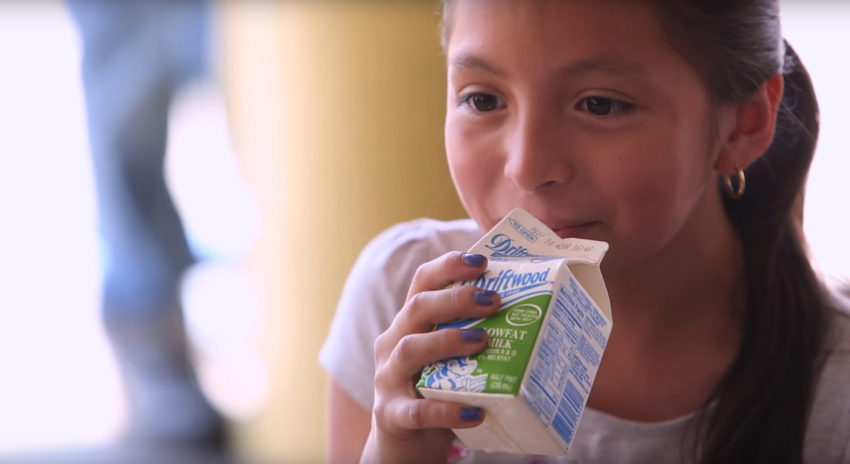
Obese Latino children who consume at least two servings of any type of cow’s milk daily are more likely to have lower fasting insulin, indicating better blood sugar control, according to a new study. The study points to milk's importance for kids, despite its declining consumption. U.S. milk consumption has consistently fallen over the past few decades. Adolescent consumption dropped by nearly half – to less than a cup daily – between 1977 and 2006, according to the USDA. “Our findings indicate that obese children who consume at least the daily recommended amount of milk may have more favorable sugar handling and this could help guard against metabolic syndrome,” Dr. Michael Yafi, the study’s first author and professor of pediatrics at McGovern Medical School at ...