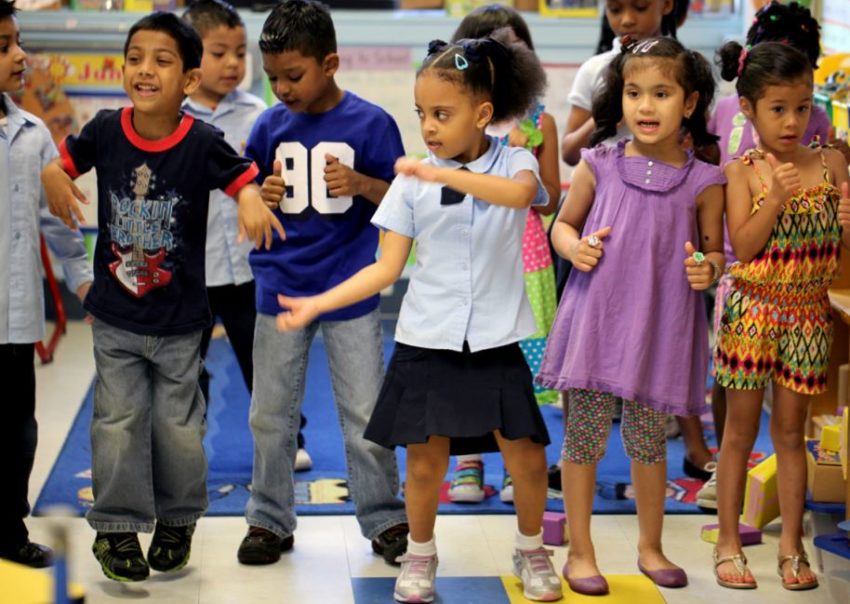
Latino and black children are less likely to get CPR with breaths, which lowers their survival chances, according to a new study, American Heart Association News reports. Study leaders examined records of 3,900 kids who had cardiac arrest at home or in public. A little more than half had not received CPR from parents or bystanders. Bystanders administered CPR 56% of the time for white kids, but only 43% for Latino kids and 39% for black kids. Minority kids were more likely to get just compression-only CPR than conventional CPR (with breaths). Study authors say the results make it "critical that health care professionals step up their CPR education efforts in Hispanic and African-American neighborhoods." "While a lot of the public health efforts have focused on Hands-Only ...
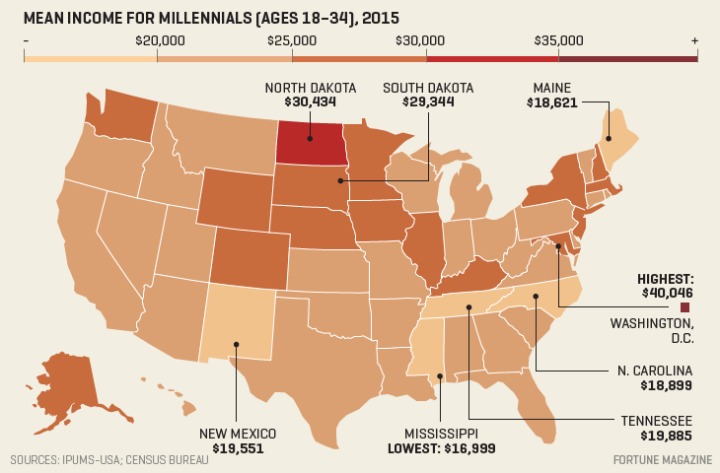
Latinos are the youngest major racial or ethnic group in the United States. According to 2014 Pew Research study, about over 17.9 million of the nation’s Latino population is younger than 18. Nearly 25% all Latinos are Millennials (ages 18-33 in 2014). Overall, nearly six-in-ten Latinos are Millennials or younger. As Millennials become a larger portion of the American workforce the reality of the wage gap becomes clearly apparent. The differences between the average wage for Millennials across the United States is staggering. In Washington, DC (10.16% Latino population), the average wage for Millennials is by far the highest at $40,046 annually. The lowest by far is Mississippi (2.9% Latino population). According to Fortune, North Dakota (which is the second-highest average for ...
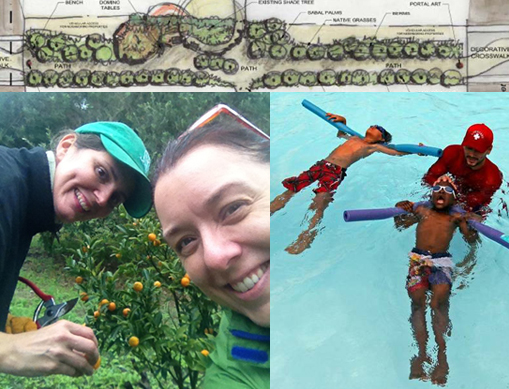
Summertime means fun time for kids. Well...it's supposed to. For Latino kids, it can also lessen already minimal opportunities to get healthy food or access safe places to play, according to Salud America! research. That's why we are spotlighting three heroes who are saving summer for Latino families!
Melissa & Mary
Rescuing Fruit for San Antonio Families Many families in San Antonio (63% Latino) live in food deserts. Ironically, there are lots of fruit trees in people's yards—but fruit often falls and rots. UTSA grad students Melissa Federspill and Mary Minor saw this waste. They wanted to harvest fruit trees to share with families. So they mapped local fruit trees online. They met with neighbors. They recruited volunteers to pick trees. And they contacted ...
Across the country, Latinos suffer vast differences in health conditions than whites. These health disparities manifest themselves in several ways. These inequities are rooted in social disadvantage and affect educational attainment, income and personal wealth, housing, and mental and physical health. Chicago (29.09% Latino population), the third largest city in the U.S., has an unfortunately long history with racial inequities. A new report by the University of Illinois at Chicago sheds light on the current state of these inequities. The report, entitled “A Tale of Three Cities: The State of Racial Justice in Chicago,” tells about the “divergent conditions” of blacks, Latinos, and whites in terms of housing, economics, education, justice, and health. “On virtually ...
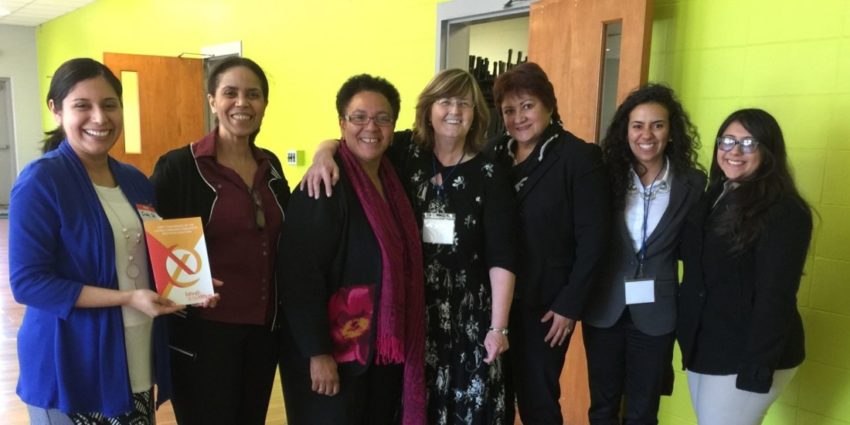
Uniting the Latino community together with university researchers will—in theory—increase the well-being of this at-risk population. That's the idea behind the new Latinx Community-University Research Coalition of Indiana. The coalition seeks to bring together Indiana University-Purdue University Indianapolis (IUPUI) faculty and staff, policy leaders, and community leaders to promote research and programmatic collaborations that are respectful of the needs, cultural identity and interests of the Latino population while removing barriers, according to a news release. Indiana's Latino population has grown from 1.8% in 1990 to 3.5% in 2000, to 6.0% in 2010. The number already had increased further to 6.7% by 2015. "We are all interested in increasing research ...
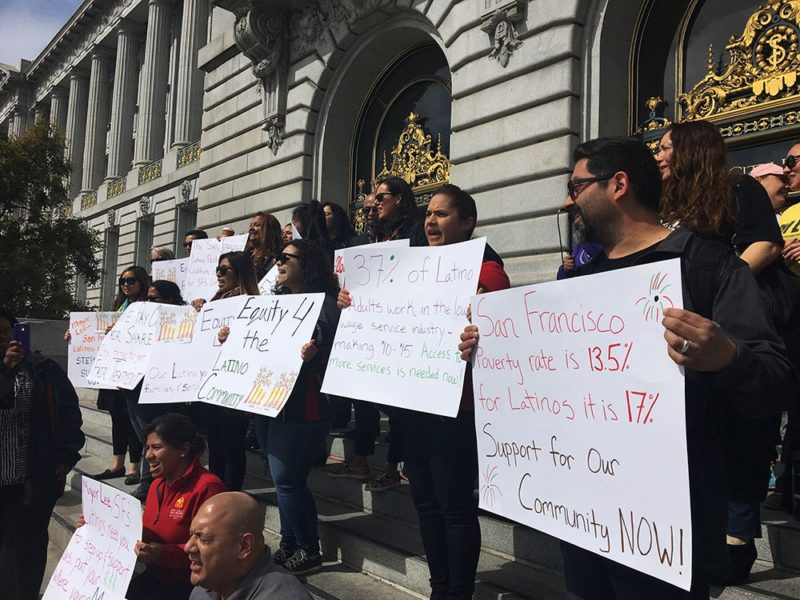
The city of San Francisco (15.1% Latino population) has long been a hub for the Latino community. However, as the city by the bay has grown in importance as one of the centers of the U.S. tech industry, many long-time Latino residents are struggling to keep up with the cost of living there. A new organization has been formed to help serve the low-income Latino communities in the area connect to community resources. The San Francisco Latino Parity and Equity Coalition conducted a study of heavily Latino-populated neighborhoods in the city (including the Mission, Bayview, Tenderloin, and Visitacion Valley areas). The coalition, which is made up of over a dozen groups, including the Central American Resource Center (CARECEN), Jamestown Community Center, the Mission Language and ...
A rising number of middle and high school kids, especially Latinos, are smoking electronic cigarettes, according to a National Institutes of Health report. What are real dangers behind e-cigs and similar products? Can these hook kids into smoking cigarettes? This is a critical question given that Latino kids are 67% more likely than their White peers to start smoking and develop a daily habit, according to a study. Let’s use #SaludTues on June 13, 2017, to tweet how e-cigs and other products affect the health of Latino teens and minority populations. WHAT: #SaludTues Tweetchat: “The Truth About E-cigs and Tobacco Products and Their Impact on Latinos”
TIME/DATE: 1-2 p.m. ET (12-1 p.m. CT), Tuesday, June 13, 2017
WHERE: On Twitter with hashtag #SaludTues
...
By Emilie Bahr
America Walks The car was once seen in this country as the ultimate vehicle of freedom. It was a symbol of unfettered access and mobility that could take an occupant wherever he or she wanted to go in a manner that was glamorous, convenient and fast. Yet roughly 100 years after our automotive experiment began, the thing that was once an expression of status and a tool in attaining the American Dream is losing some of its luster—while walkable communities are experiencing a comeback. This subtle yet meaningful paradigm shift is taking shape in a context in which the unintended effects of our car dependency have become undeniable. These include soaring rates of obesity and chronic disease; communities isolated from access to such essential needs as jobs, ...
Latinos are the nation’s largest racial/ethnic minority group. They are expected to grow from 1 in 6 people today to 1 in 4 by 2035 and 1 in 3 by 2060. The long-term health and success of Latinos is going to be crucially important to the United States for decades to come. In the Pacific Northwest community of Walla Wall, WA (23.68% Latino population), one group has taken steps to ensure their Latino community has all the tools necessary for their success. The Walla Walla Valley Early Learning Coalition is offering a free, 10-week series of parenting master classes aimed at Latinos. Using “cultural perspective” and taught in Spanish, the Abriendo Puertas (Opening Doors) program is designed to support Latino parents in their roles as family leaders and teachers to their ...