We love our frontline healthcare workers. That's why we are excited to share Project Firstline, a training and education collaborative from the U.S. Centers for Disease Control and Prevention (CDC) to ensure all healthcare workers, no matter their role or educational background, have the infection control knowledge and understanding they need and deserve to protect themselves, their patients, and their coworkers. Salud America! at UT Health San Antonio is working with the National Hispanic Medical Association to bring Project Firstline content to frontline healthcare workers. Project Firstline creates resources, including videos and shareable images, web buttons, posters, and print materials. They also have facilitator toolkits to help workers lead trainings even if they are not ...
Cancer can affect anyone. But Latinos experience higher rates of infection-related cancers, ones that are preventable, than their white peers, according to a new study from the American Cancer Society (ACS). In fact, Latinos suffer two times higher rates of liver and stomach cancers—infection-related but preventable cancers—than their white peers. “Addressing this critical gap for Hispanic individuals in obtaining access to high-quality cancer prevention, early detection and treatment is going to be essential for mitigating the predicted growth in the cancer burden,” wrote Kimberly Miller, an ACS scientist, in the report. “In addition, more research is needed to assess not only the impact of the COVID-19 pandemic on the utilization of cancer care, but also the impact ...
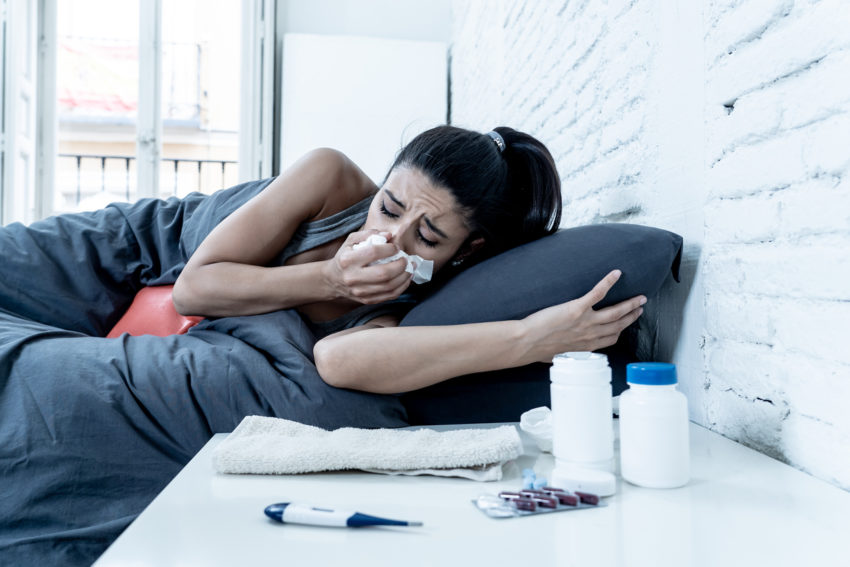
The term “infectious disease” covers a wide range of harmful illnesses. Influenza, chickenpox, and COVID-19 are some infectious diseases caused by germs or viruses that sicken people and can spread to others. Latinos face a heavier burden than their peers for several infectious diseases, from HIV/AIDS to coronavirus to tuberculosis. Fortunately, we can each do our part to prevent infectious disease — including learning more about them. “Infectious disease may be an unavoidable fact of life, but there are many strategies available to help us protect ourselves from infection and to treat a disease once it has developed,” according to the National Center for Biotechnology Information.
What is Infectious Disease?
The kinds of organisms that can transmit infectious ...
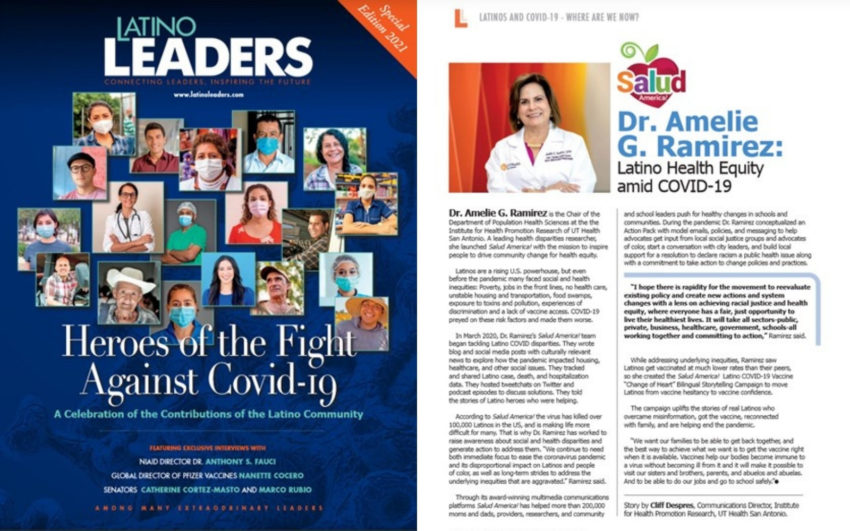
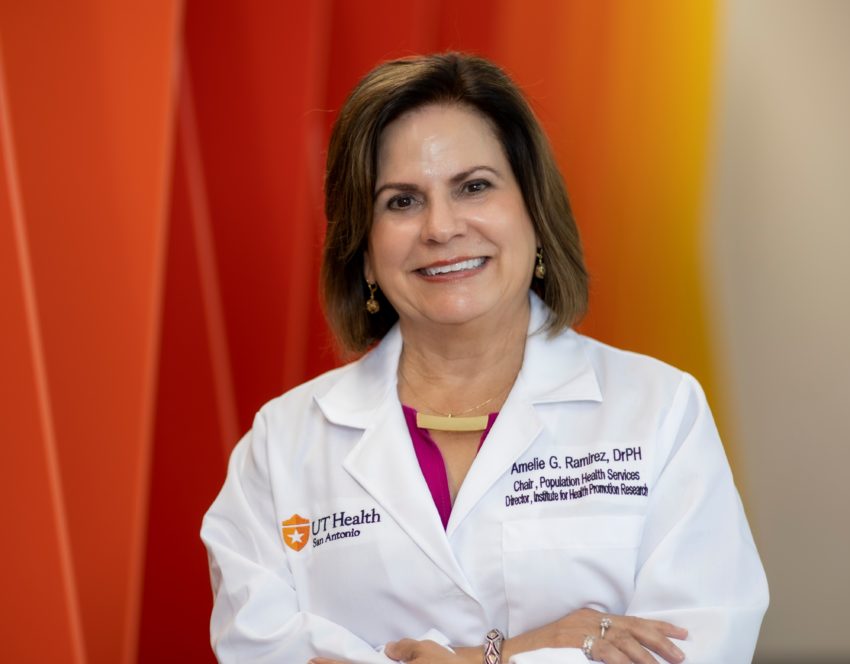
Dr. Amelie Ramirez, leader of Salud America! at UT Health San Antonio, is featured in the latest edition of Leaders, a national magazine that aims to connect and inspire Latino and all leaders. The edition is called "Heroes of the Fight Against COVID-19." Highlights include: Profile stories about health leaders: Dr. Elena Rios, president of the National Hispanic Medical Association; Dr. David E. Hayes-Bautista of UCLA; Joaquin Duato of Johnson & Johnson; Nanette Cocero of Pfizer; Bonnie Castillo of National Nurses United; Dr. Robert Rodriguez of UCSF; Dr. Xiomara Rocha-Cadman of City of Hope; and more
Profile stories about elected leaders: Catherine Cortez-Masto, Arizona, and Marco Rubio, Florida
Data on COVID-19 case and death rates (via Salud America!)
Data on ...
Some groups get vaccinated for the COVID-19 vaccine at much lower rates. Why is this? How can we build vaccine confidence? Dr. Amelie Ramirez and her team at UT Health San Antonio are working hard to promote vaccine confidence and answer big questions about the vaccine. Ramirez is doing this in a variety of ways: Creating the Salud America! COVID-19 Vaccine “Change of Heart” Bilingual Storytelling Campaign to share real people who moved from vaccine hesitancy to vaccine confidence.
Producing Salud America!'s weekly updated post on U.S. vaccination rates, ways to improve confidence, and how to overcome vaccine misinformation.
Joining the Latino USA podcast to answer COVID-19 vaccine questions.
Providing a vaccine Q&A for UT Health San Antonio.
Joining ...
Have you or someone close to you tested positive for COVID-19? You should have gotten a phone call from a local public health worker─a “case investigator” or “contact tracer”─who would give guidance on monitoring symptoms, quarantining to prevent spread, and more. But some cities don’t have enough people to make these important calls. Also, some people don’t answer or return phone calls from unknown numbers and may be uncomfortable answering questions. That is why, to reduce the spread of COVID-19, cities must invest in extensive contact tracing efforts and encourage the public to answer or return phone calls from the health department. “Case investigation and contact tracing, a core disease control measure employed by local and state health department ...
San Antonio Mayor Ron Nirenberg and Bexar County Judge Nelson Wolff announced the addition of Dr. Amelie G. Ramirez, director of Salud America! and the Institute for Health Promotion Research at UT Health San Antonio, to the COVID-19 Health Transition Team, which is working on a plan to slowly reopen the city economy after physical distancing. Nirenberg and Wolff wrote a joint memo that stay-at-home rules have saved lives. Yet they acknowledge physical distancing isn't permanent. "Our community needs a local strategy to reenter into everyday life," Nirenberg and Wolff wrote. "These decisions have critical implications on our community – including our ability to avoid subsequent outbreaks, ensure we protect our ... populations ... and to identify parameters for transitioning ...
Clean hands are critical to reduce the spread of infection, particularly coronavirus (COVID-19). However, washing with soap and water isn’t always option. In 1966, nursing student, Lupe Hernandez, realized alcohol in gel form could be an effective way to clean hands when soap and water weren’t available. She called an inventions hotline to learn about patenting hand sanitizer. Over 50 years later, Hernandez's invention is still saving lives against threatening diseases and protecting brave medical professionals. Hand sanitizer sales and wipes has grown steadily. They expanded beyond hospitals and care homes to supermarkets and personal accessories. The U.S. market of hand sanitizer was $28 million in 2002. In 2009, hand sanitizer sales soared in the wake of ...
The CDC Foundation is celebrating the 10-year anniversary of its Preventing Infections in Cancer Patients program by launching new bilingual resources to improve support for Latino and all cancer patients undergoing chemotherapy.
How Infection Can Happen During Cancer Treatment
If you are getting chemotherapy, you may be at risk for getting an infection. This risk is highest when your white blood cell count is at its lowest (called neutropenia). White blood cells are the body's main defense against infections. An infection during chemotherapy can lead to treatment delays, hospitalization, and sometimes death. About 650,000 U.S. cancer patients get chemotherapy in an outpatient oncology clinic each year. More than 100,000 are hospitalized because of an infection, according to the ...