by
by 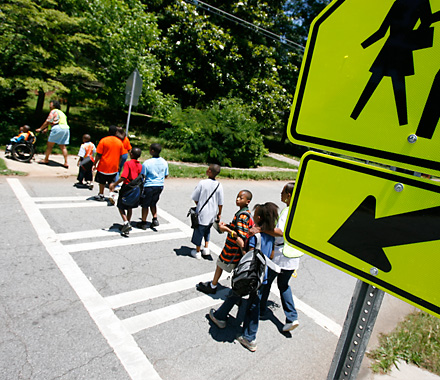
Share On Social!
According to a recent research review, the Safe Routes to School program has been successful in increasing the proportion of students that walk and bike to school.
The Safe Routes to Schools (SRTS) program provides education, encouragement and road improvements to create safe conditions to increase rates of walking and biking. This is particularly important for low-income populations who tend to experience greater rates of obesity and pedestrian injury and tend to live in areas with poor walking conditions.
Participating schools were more likely to be in high-density areas. These areas found fewer rates of child pedestrian injuries and increased rates of walking and biking compared to areas that did not participate in SRTS. Additionally, rates of walking and biking increased over time.
“Each additional year of SRTS participation leads to more students walking and biking,” according to the report.
This means fewer students are riding the bus, which costs school districts $100 to $500 million dollars per year.
Communities can get involved in SRTS by holding a “Walk to School” event, developing an “Eyes on the Street” program, teaching pedestrian or bicyclist safety to students and parents, prioritizing engineering improvements near schools, and gathering political willpower and getting the mayor and city officials on board.
Explore More:
Transportation & MobilityBy The Numbers
27
percent
of Latinos rely on public transit (compared to 14% of whites).