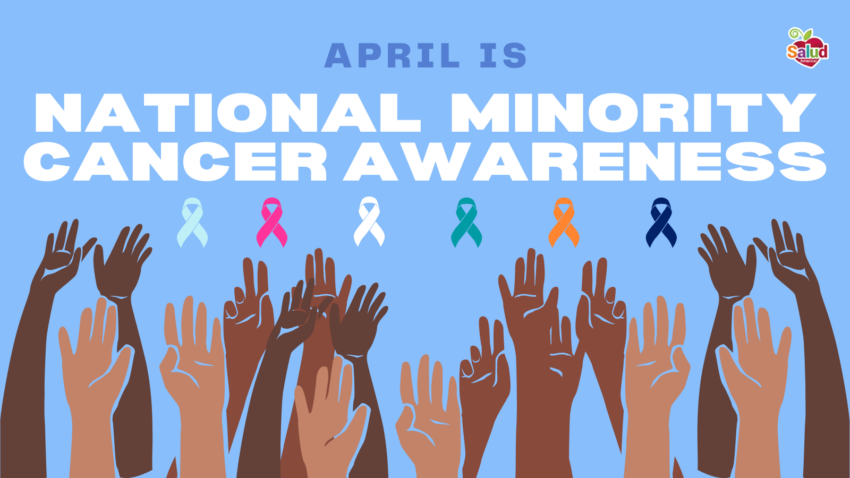
Cancer persists in the US, especially in overlooked communities. Many of these groups suffer disproportionate cancer rates and worse outcomes, due to long-standing issues that formed differences in education, economic status, access to screening and care, and more. That’s why April is dedicated to bringing awareness and solutions to the challenges these communities face in areas such as cancer prevention, diagnosis, and treatment. Here are seven ways to celebrate National Minority Cancer Awareness Month.
1. Learn About Differences in Cancer Outcomes
Did you know that where you live can dictate your health and what kind of health care you receive? Where you live can increase your risk of adverse health effects, such as hypertension and diabetes, that make you ...
April is National Parkinson’s Awareness Month, a great time to share helpful resources that can spread awareness about Parkinson’s disease. Parkinson’s affects more than 1.1 million people in the U.S. and is the second-most common neurodegenerative disease after Alzheimer's disease. With this in mind, let’s learn more about Parkinson’s, how it impacts patients and families, and resources to share during Parkinson’s Awareness Month.
What Is Parkinson’s Disease?
Parkinson’s disease is defined as a “type of neurologic movement disorder, affecting the brain and causing difficulty with movements, or motor symptoms.” While Parkinson’s can be characterized by its most common motor symptoms like tremors, stiffness or rigidity of the muscles, and slowness of ...
With so many unknowns when it comes to Alzheimer’s Disease, researchers continue to investigate potential causes, risk factors, and treatments. Clinical trials are a major tool to help researchers make progress. These are studies with volunteers that enable advances that can slow, manage, and treat diseases such as cancer and Alzheimer’s for current and future family members. However, these trials only benefit everyone if they have a pool of participants that look like the rest of the population. For many reasons, including myths, lack of access to transportation, and time commitments, too few under-researched populations join clinical trials. But closing the gap on clinical trial participation doesn’t have to be a burden. Here are 3 clinical ...
One in 10 US adults older than 65 will experience dementia, and another 22% will have some form of mild cognitive impairment, according to Columbia University researchers. The good news is that you can reduce your risk of Alzheimer's Disease and dementia. Here are 10 positive changes that you can make to lower your risk for cognitive decline and improve your overall health, according to the Alzheimer's Association.
1. Protect Yourself from Brain Injuries Traumatic brain injuries have been linked to an increased risk for developing dementia. According to a published study examining the relationship between injury and cognitive decline, traumatic brain injuries can increase dementia risk between 2-and 4-fold. One of the best ways of preventing traumatic ...
Alzheimer’s and related dementias continue to hurt an aging population, including many older Latinos. One way to address this is to gather the brightest minds to collaborate on important brain health issues affecting older adults. That’s one of the primary goals of the National Institute on Aging (NIA) Research Centers Collaborative Network (RCCN). The RCCN is looking to bring researchers together from the 7 NIA center programs to work on these issues through a series of workshops. The next workshop in the series, “Multidisciplinary Research in Aging/Team Science,” is set for May 20-21, 2026, in Bethesda, Maryland. Travel awards are available for 10 early-career investigators with applications due Feb. 27, 2026. “These workshops will feature the ...
2025 was filled with plenty of ups and downs in the world of health for Latinos and all people. However, there were some significant highs that drove health in 2025. For instance, 2025 gave us two campaigns that put readers in the driver’s seat of country-wide change and Salud America! received several opportunities to help make a difference in the lives of all people. But most of all this year gave us hope in the form of stories of survivorship and perseverance. Here were the top 10 stories driving Latino Health in 2025.
1. Linda Mota Shares Her Breast Cancer Survivorship Story
Breast cancer was the last thing on Linda Mota’s mind. She was diagnosed with stage 3 breast cancer — a disease that greatly affected her ...
UT San Antonio is shining a light on Alzheimer’s disease with a new research center to study an aging Latino population, the university announced in UT San Antonio Today. Funding for the center, called the San Antonio Center for Alzheimer’s Disease and Related Dementias (AD/ADRD) Population Aging and Social Studies (CAPAS), was made available through a grant program from the National Institute on Aging. CAPAS seeks to bridge the gap in Alzheimer’s research by aligning experts in demography, neuropsychology, biology, economics and public health across UT San Antonio’s campuses, including its Health Science Center. UT San Antonio experts will be working alongside experts from other institutes, such as the Biggs Institute for Alzheimer’s and Neurodegenerative ...
Moving Matters! Did you know that physical activity directly impacts your health? The more work you put into your body, the more you reap the long- and short-term health benefits of exercise. That’s true at any age, but especially in older adults, who experience higher risk for diseases such as heart disease and cancer. One of the most serious diseases many older individuals face is dementia and Alzheimer's, which affects nearly 1 out of every 9 seniors in the US as of 2023, according to the Texas Department of Health and Human Services. But with a well-balanced diet and regular exercise, symptoms have been known to ease and those who haven’t been diagnosed with the disease show a reduced risk for developing it. In fact, a new study published by the Journal ...
Physical activity is an important key to overall health. For example, studies have shown that dance can improve memory retention and even 10 minutes of physical activity can help destroy cancer cells. But what happens after you are physically active? Studies also found that increased physical activity was often followed by extended rest, which may reduce long-term benefits. Now, a recent research study has found that replacing rest between exercise sessions with additional ecologically relevant physical activities may help improve cognitive decline among Spanish-speaking Latino adults. Let’s dig deeper into this study and how it impacts older people.
What is Ecological Momentary Intervention?
Dr. Ulf G. Bronas at the Columbia School of Nursing and his research team ...