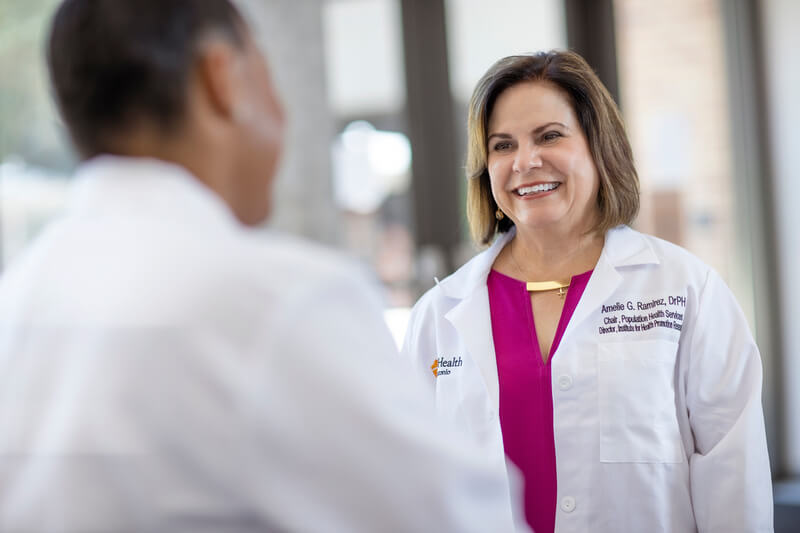
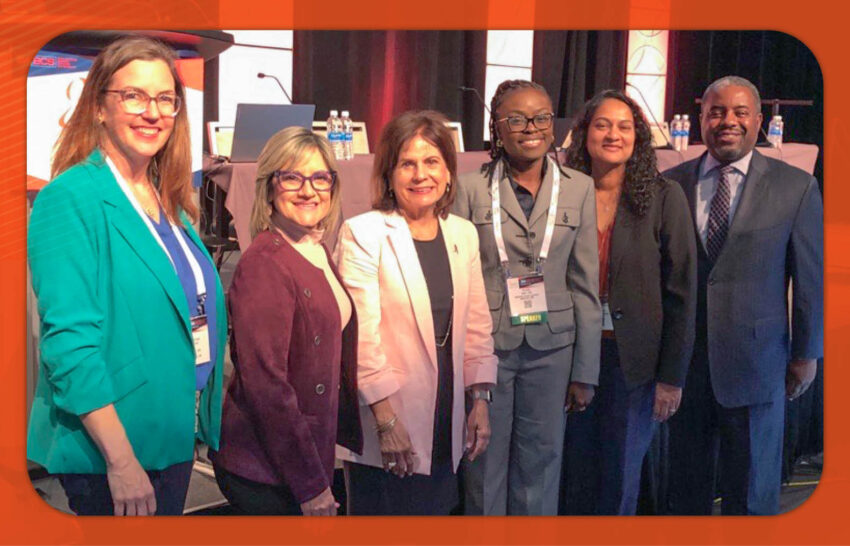
Dr. Amelie G. Ramirez, a native of Laredo, Texas, and leader of Salud America!, delivered the keynote address at the 2024 Commencement of the University of Texas Rio Grande Valley (UTRGV) School of Medicine. Ramirez is an internationally recognized researcher in cancer and chronic disease health challenges among Latinos and all people. At UT Health San Antonio, she is chair and professor of Population Health Sciences at UT Health San Antonio, where she also is founding director of the Institute for Health Promotion Research and associate director of community outreach and engagement at the Mays Cancer Center at UT Health San Antonio. Over the past 30 years, Ramirez has led over 100 studies and programs to reduce health issues, improve health, and increase participation in ...
After careful consideration, the Institute for Integration of Medicine & Science (IIMS) at UT Health San Antonio and UTSA College for Health, Community, and Policy (HCaP) have announced the recipients of new Community Engagement Small Project Grants.
Five grantees were chosen to lead projects covering HIV/AIDS, faith’s impact on criminal rehabilitation, artistic influence on young brain development, and more, according to a recent university news release.
The grants, for one year and up to $5,000, aim to promote, develop, and expand community and scholarly research partnerships that benefit science and clinicians. Each project will meet local needs through community-engaged research or assessment, education, and distributing research results or policy implications.
This ...
Dr. Amelie G. Ramirez, leader of Salud America! at UT Health San Antonio, recently shared the need to help cancer survivors on "Science & Medicine," an audio collaboration of Texas Public Radio and UT Health San Antonio. Bonnie Petrie, TPR's bioscience and medicine reporter, hosted the segment. Ramirez spoke to Petrie about her project to improve care and life for cancer survivors in South Texas, called “Avanzando Caminos (Leading Pathways): The Hispanic/Latino Cancer Survivorship Study.” "Our big goal is to really have more [quality] care for everyone, not only in South Texas, but nationwide, and that their outcomes for survival are also improved,” Ramirez said during the segment. Listen to the full audio here.
About the Avanzando Caminos Research ...
After decades of being overlooked, a spike of positive representation of populations, such as Latinos, has swept into Hollywood and mainstream media.
Latino pioneers like José Ferrer, Edward James Olmos, and Rita Moreno overcame adversity to play defining roles in an industry dominated by White actors, paving the way for future Latino actors and Latino-led projects to break from the mold.
This success has led to a new wave of notable Latino standouts and projects.
America Ferrera, a U.S.-born Latina of Honduran heritage, nabbed an Oscar nomination for Best Supporting Actress in Barbie (2023). Pedro Pascal, born in Chile, delighted audiences in the titular role of The Mandalorian before taking the lead in HBO’s TV adaptation of video game series The Last of Us.
Films such as ...
The Healthy Americas Foundation (HAF) is giving a few scholars funding to research chronic diseases in Latino communities with help from the All of Us Research Program.
The new funding builds on HAF’s effort to improve Latino health by supporting researchers.
In 2022-2023, Healthy Americas Research Consortium awarded $10,000 each to 10 scholars to help understand cervical cancer screening issues, experiences with accessing screening, and ways to increase Pap and HPV screening in Latino and other underserved communities.
Projects utilized data from the National Institutes of Health’s (NIH) All of Us Research Hub.
NIH’s All of Us Research Program is a national campaign to collect and study data from 1 million or more Americans to help inform studies and accelerate research that ...
The National Eye Institute (NEI) is framing the way for future success in a career in health and science for teens by holding its annual Eye on the Future campaign.
Just like last year, the Eye on the Future campaign kicks off with a $2,000 teen video contest.
“We created the [contest] because we want to hear from the next generation of scientists (that’s you!) about why science is so important,” according to the NEI website. “And we want to encourage high school students from all backgrounds to learn more about science.” Submit a Video to the ‘Eye on the Future’ Teen Video Contest
Interested high school students can enter NEI’s Eye on the Future contest by submitting a 30-second-to-3-minute video showcasing one of three categories, as per the contest ...
Today is a great time to protect yourself and others cervical cancer. For Latinos, cancer is the leading cause of death. Latinos also are more likely than their peers to develop cancer in the liver, stomach, and cervix. The good news is you can lower your cervical cancer risk! In celebration of Cervical Cancer Awareness Month in January, let’s dive deeper into how we protect against cervical cancer.
Cervical Cancer Risk Factors and Symptoms
Almost all cervical cancers are caused by human papillomavirus (HPV), a common virus that can be passed from one person to another during sex, according to the CDC. There are different types of HPV. Some cause changes on your cervix that can lead to cervical cancer. Other risk factors include having HIV (the ...
Where you live can have a big impact on your health. In fact, our health is influenced by a variety of non-medical drivers, such as the conditions in which we are born, grow, live, work, and age. These conditions are known as the non-medical drivers of health (NMDoH). Addressing NMDoH is key to improving health for Latinos and all people, said Dr. Amelie Ramirez, leader of Salud America! and the Institute for Health Promotion Research at UT Health San Antonio, in a panel presentation on Dec. 5, 2023, at the San Antonio Breast Cancer Symposium. "What we’re finding is that [issues with NMDoH can] negatively impact our health," Ramirez said.
Screening for Non-Medical Drivers of Health (NMDoH)
Studies suggest that NMDoH accounts for between 30-55% of health outcomes. NMDoH ...
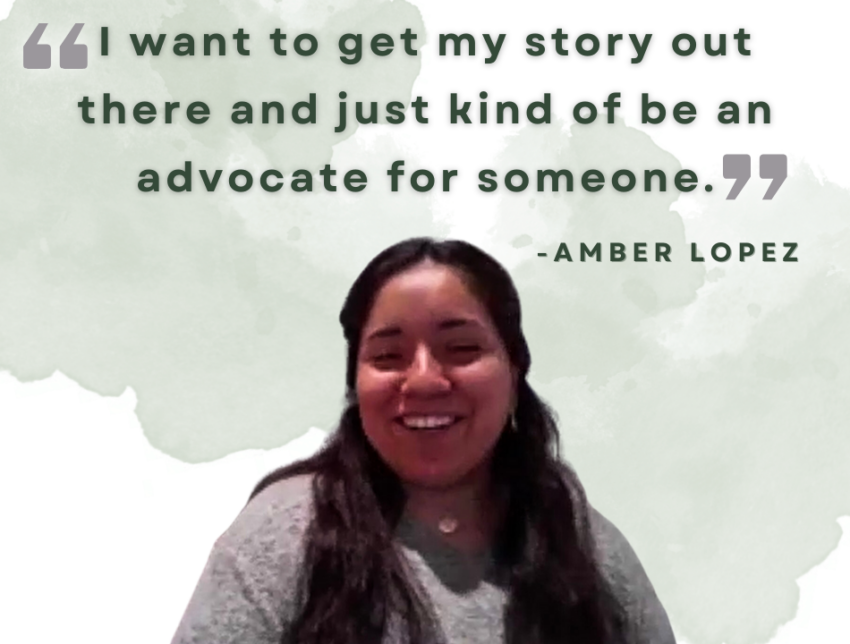
News of a cancer diagnosis is the last thing anyone wants to hear. It can be especially devastating for a teenager with no family history of cancer. That was reality for Amber Lopez. Lopez, a San Antonio resident who began experiencing symptoms around age 14, was eventually diagnosed with cervical cancer a few years later at 18. “When you hear that word cancer, you’re kind of like, 'Oh, my God. OK. So, does that mean like, I’m going to pass away? How does this work?'” Lopez said. Since her diagnosis, Lopez has overcome many challenges in her cancer journey. Now she’s sharing her story through the Avanzando Caminos study at UT Health San Antonio to give hope to other Latino cancer survivors.
Navigating Her Cancer Diagnosis
Latinas ...