Growing up as “the minority kid” in school isn’t easy, but it helped Brenda Frutos develop a passion for fighting for health equity among Latinos. Frutos not only earned her master’s degree in public health from West Chester University of Pennsylvania, she also is working as a certified health education specialist. She provides research and technical support in the Department of Family Medicine at Lehigh Valley Health Network in Pennsylvania, and also has experience helping with interventions in breastfeeding among underserved women. Motivated by the hard work of her significant other who overcame challenges to reach medical school, Frutos wants to continue pursuing more education. Frutos applied for the Éxito! Latino Cancer Research Leadership Training program, which ...
Researchers from the University of California San Francisco recently found the risk of early rapid weight gain and obesity at age 2 years among infants that were exposed to antibiotics in the first 6 months of life. The researchers evaluated the type and frequency of antibiotic exposure at 6 months and 1 year of life and their descriptions of infant dietary intake. The cohort of women studied was 97% Latina and was recruited at prenatal clinics in 2012 and 2014. Recent studies suggest that there are harmful effects of antibiotics on the healthy gut in this developmental period before 12 months of age and can increase obesity risk, reported Childhood Obesity. Results indicated that antibiotics exposure, most commonly amoxicillin was greater among obese 2-year-olds (40%) compared ...
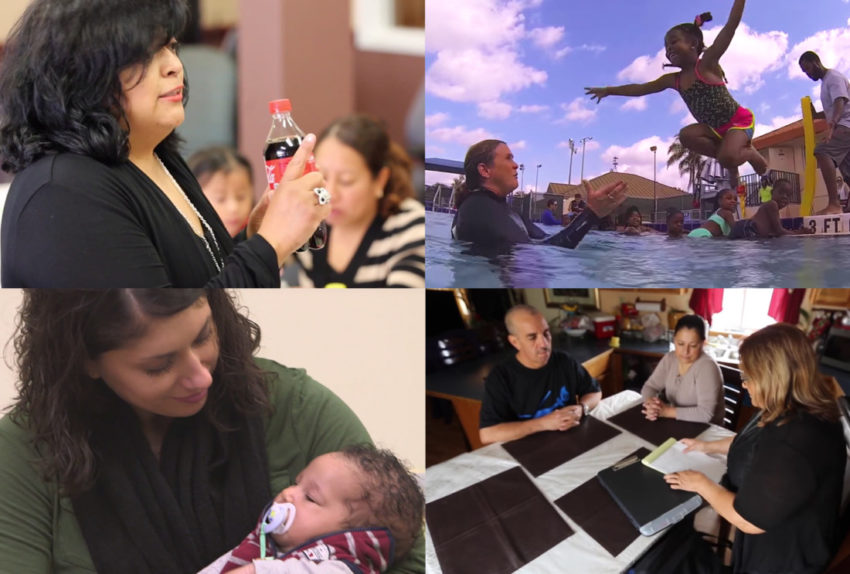
Latinos face cultural and other barriers to healthy lifestyles. That’s why they suffer high rates of diabetes, obesity, certain cancers, and mental health issues. Community advocates are here to help! WATCH and VOTE for six new Salud America! #SaludHeroes of Community Health who work with Latino families and kids to push healthcare, stress relief, physical activity, water, and more. For voting, we’ll enter you into a drawing for a FREE T-shirt and jump rope! Gaby Medina: Water Promotora. Gaby pushes water over sugary drinks to Spanish-speaking Latino families, as part of a Colorado campaign. Baby Café: Breastfeeding Help. Diana Montano and others started a Baby Café with peer counselors to support breastfeeding moms in San Antonio. Felipe Pinzon: Aid for ...
Few groups have benefited more from the passage of the Affordable Care Act (ACA) than Latinos. Since the law went into effect, over 910,000 Latino adults – between the ages of 19 and 26 – who would have previously been without coverage were now eligible to remain on their parents’ plans. Over 4.2 million gained health insurance in that time as well, lowering the rate of Latino uninsured by 7.7%. With the deadline for the latest phase of Open Enrollment coming to a close on January 31, 2017, many are still without coverage. This is partly due to the fact that many do not know what is covered through plans available in the Health Care Marketplace. What Marketplace Plans Cover All plans that are available through the Marketplace cover the same set of “essential health ...
After Nikki Van Strien delivered her first son in Mesa, Ariz. (30.5% Latino), she realized the discharge package given to all new moms by the hospital could undermine a woman’s breastfeeding goals by pushing formula. She wanted to do something to support breastfeeding moms immediately after delivery. In 2011, Van Strien and some other moms developed the AZ Breastfeeding Bag Project to provide all new breastfeeding mothers with a bag filled with educational material and breastfeeding supply samples. They became a non-profit and recruited volunteers and donations to reach new mothers birthing in the hospital, birth center, or home.
Breastfeeding Rates Low in Arizona
Nikki Van Strien, a new mom in Mesa, Ariz., wanted to connect with other moms for support. She joined a local group she ...
The New York Milk Bank-the first milk bank in New York state (19% Latino)-opened early 2016 and was off to a successful start, at least, in terms of donations and handling. Delivery; however, was a problem. Julie Bouchet-Horwitz, the nurse practitioner and lactation consultant who opened the milk bank, struggled to deliver milk to babies in need in Manhattan (25% Latino) due to traffic. Increasing breastfeeding rates among Latina mothers could reduce risk of obesity, diabetes, and heart disease, and improve overall health for mother and infant. Additionally, breast milk is linked to significant early brain growth in premature babies. Bouchet-Horwitz thought about motorcycles weaving their way through traffic jams with the precious cargo. “So I did a ‘Google search’ ...
This is part of our Sugary Drinks & Latino Kids: A Research Review »
Early childcare settings are diverse
The National Household Education Survey reports that 60 percent of all U.S. children ages 5 and younger not yet enrolled in kindergarten were in some form of non-parental care at least once a week in.69 Among these children, 56 percent were cared for in a center such as a day care center, Head Start program, preschool, prekindergarten, or other early childhood programs. Children in full-time child care programs obtain typically half to three-fourths of their daily energy in these settings.70 The types of child care facilities and programs available in the U.S. vary considerably, including large and small child care centers, family day care homes, Head Start facilities, ...
This is part of our Sugary Drinks & Latino Kids: A Research Review »
More sugary drinks is linked to higher body weight
Those who consume a greater amount of SSBs tend to have higher body weight than those who drink less.5 A recent systematic review and meta-analysis of 32 studies, including prospective cohort studies and randomized controlled trials, associated SSB intake with risk of weight gain in children and adults.22 Similarly, a meta-analysis of 88 studies found a clear association between soft drink consumption and weight.23 By contrast, a recent systematic review of papers focused on regular soda consumption among children and adolescents and published between 2004 and 2014 did not find an association between regular soda consumption and weight among all age ...
Childhood obesity is one of the leading health concerns plaguing the Latino community. New research shows from several federal agencies show that obesity among toddlers from low-income families is declining. New research from several federal agencies, the American Academy of Pediatrics (AAP) reports. However, despite the decline, the prevalence of obesity for low-income toddlers is 14.5%. This number far exceeds the national average. “Continued initiatives to work with parents and other stakeholders to promote healthy pregnancies, breastfeeding, quality nutrition, and physical activity for young children in multiple settings are needed to ensure healthy child development,” according to the authors from the Centers for Disease Control and Prevention (CDC) and the U.S. Department ...