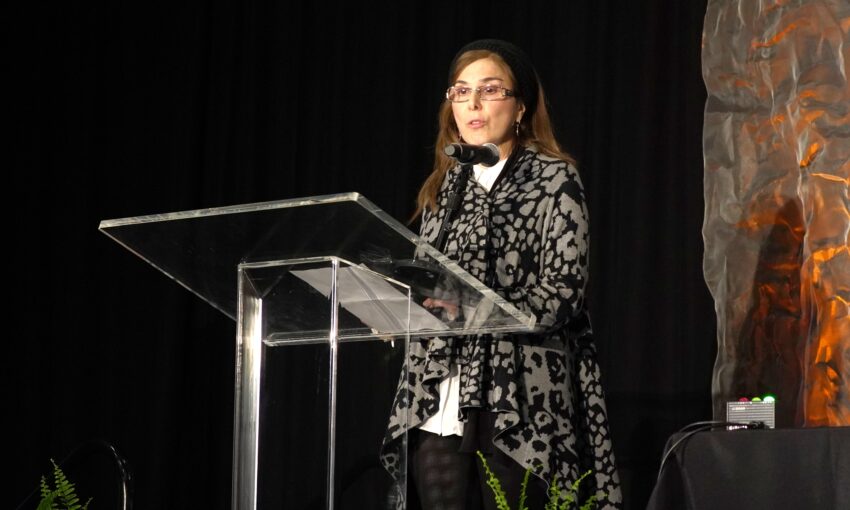
Dr. Patricia Chalela, a researcher at the Institute for Health Promotion Research (IHPR) at UT Health San Antonio, has been named the IBC Foundation Endowed Professorship in Health Promotion Research. The International Bancshares Corporation (IBC) Foundation is a private foundation affiliated with IBC and its subsidiary banks. It is dedicated to supporting charities that enrich the community and improve the health and wellness of people in Texas and Oklahoma. The foundation made a $2 million donation that established four endowed professorships at UT Health San Antonio. Dr. Chalela's endowment, which is for $500,000, aims to help her advance novel research in health promotion. "I am deeply honored and sincerely grateful to be nominated as the recipient of the IBC Foundation ...
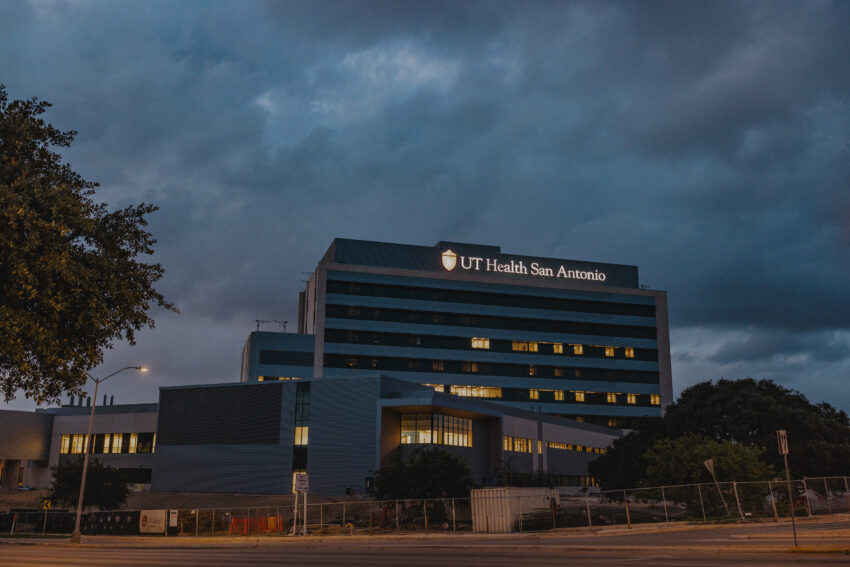
After years of anticipation, the brand-new UT Health San Antonio hospital is set to open its doors to the public on Dec. 10, 2024. The UT Health San Antonio Multispecialty and Research Hospital is the first of its kind. Serving patients in South Texas, the hospital aims to be a hub for innovative therapies and treatments for cancer and other diseases while granting visitors access to experts in their fields of study. Let’s break down all the details about the new UT Health San Antonio hospital and how it will serve Latinos and all people in The Alamo City.
New UT Health San Antonio Hospital
The new $472 million facility stands at eight stories tall to house advanced interventional radiology, a specialized intensive care unit and an integrated imaging center ...
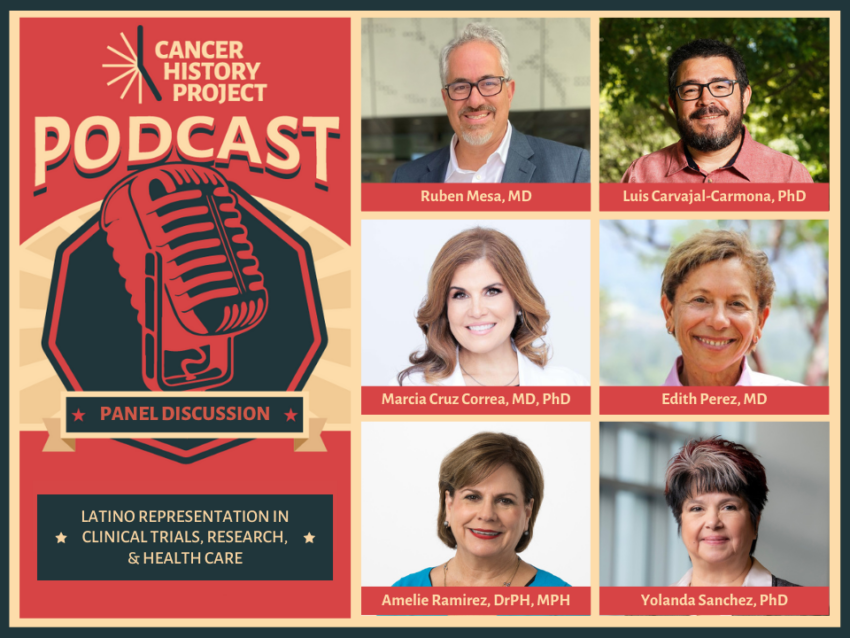
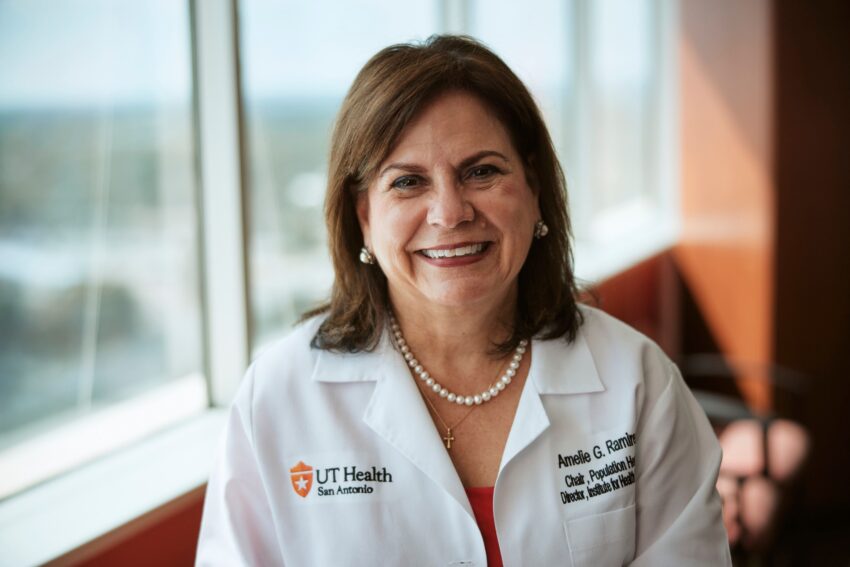
Dr. Amelie G. Ramirez, leader of Salud America! at UT Health San Antonio, joined other cancer experts to discuss participation in clinical trials, research, and healthcare on a podcast episode for the Cancer History Project by The Cancer Letter. The episode features: Dr. Ramirez
Dr. Luis Carvajal-Carmona, University of California, Davis
Dr. Edith Perez, Mayo Clinic
Dr. Marcia Cruz-Correa, University of Puerto Rico Comprehensive Cancer Center
Dr. Yolanda Sanchez, University of New Mexico Comprehensive Cancer Center
Dr. Ruben Mesa, Atrium Health Wake Forest Baptist Comprehensive Cancer Center (moderator) The group explores cancer and clinical care among people with different backgrounds. “The pipeline issue continues to be a huge issue for us,” said Ramirez, ...
Cancer can be many things. Some describe cancer as a journey, a struggle, or a fight. For Brittney Millard, a breast cancer diagnosis was a life-changing event that gave her the passion to help other cancer survivors. “It's really what's in your heart. You can [help] people you know in your daily life, just spreading awareness and taking initiative,” Millard said. Millard, 32, an intern at the Institute for Health Promotion Research at UT Health San Antonio, still faced many hardships with her cancer experience. But now she aims to help others avoid pitfalls she went through. Let’s learn more about her inspiring story and her goals for helping others.
A Major Life Change
A native of San Antonio, Millard described her childhood as difficult. Growing up, ...
Stomach cancer is a fairly uncommon type of cancer.
Yet, every year, 26,000 new cases of stomach cancer are diagnosed in the US, causing the deaths of 11,000 people (42.3%), according to Debbie’s Dream Foundation, a national organization for stomach cancer awareness and fundraising.
For National Stomach Cancer Awareness Month in November, Debbie’s Dream is hosting a Zumbathon fundraiser in San Antonio among other events nationally. Zumbathon Fundraiser
Get ready to sweat for a good cause! The new San Antonio Spurs basketball training facility is about to be decked out in periwinkle for a very special Zumbathon fundraiser.
The fundraiser is set for The Rock at La Cantera, located at 1 Spurs Way in San Antonio, on Saturday, Nov. 16 from 11 a.m. to 1 p.m. CT. Check in for the ...
Volunteering for Thanksgiving, Christmas, and New Year’s helps other people. It gives the volunteer a nice emotional boost, too. So why not volunteer your “digital voice” or “actions”? We at Salud America! invite you to take or start these 14 actions to promote health for Latino and all families this holiday season!
1. Help Prevent Birth Defects: Add a Warning Label on Unfortified Corn Masa Flour
Are the corn masa products you eat fortified with folic acid? Because too many babies in the Latino community suffer from birth defects like spina bifida, UnidosUS and its partners submitted a citizen petition asking the FDA to require a warning label on unfortified corn masa flour and products. The warning would alert consumers when corn masa flour, tortilla chips, ...
In a lifetime, four in 10 US adults will be diagnosed with cancer, according to WebMD. Most of these cancers will be found in the breast, prostate, lung, colon, bladder, kidney, skin, and pancreas. Meanwhile, others may receive a rare cancer diagnosis, such as cholangiocarcinoma, which is a rare form of cancer that affects the bile duct. Due to their low incidence, less is known about these rare cancers and there are fewer opportunities available to change that. To learn more about cholangiocarcinoma, the Cholangiocarcinoma Foundation is partnering with the MD Anderson Cancer Center to put on the 2024 Houston Cholangiocarcinoma Symposium: A Gathering of Knowledge, Support, and Hope on Dec. 13, 2024.
Cholangiocarcinoma Symposium
The 2024 Houston Cholangiocarcinoma Symposium ...
The National Comprehensive Cancer Network (NCCN) provides a multitude of cancer-related resources thought its NCCN Guidelines for Patients. With the guidelines, patients and others can get easy-to-understand information about prevention, screening, diagnosis, treatment, and supportive care for nearly every type of cancer. Now these resources are available in Spanish! Let’s dive deeper into these resources and how they can benefit Latinos and their loved ones with cancer.
The Importance of Spanish-Language Resources for Cancer Patients
Many Latinos experience challenges when it comes to accessing healthcare, including finding Spanish-language content. “Language [gaps] in healthcare lead to miscommunication between the medical professional and patient, decrease the ...
Dr. Amelie G. Ramirez, leader of Salud America!, joined a KSAT News town hall on Oct. 8, 2024, to share insights on a growing effort to address cancer in majority-Latino South Texas. The event, “Revolutionizing Cancer Care for South Texans: A New Era of Treatment,” was hosted by KSAT anchor Stephania Jimenez. It featured Ramirez, Dr. Mark Bonnen, chief medical officer at the Mays Cancer Center at UT Health San Antonio, and Jeff Flowers, chief executive officer at the UT Health San Antonio Multispecialty & Research Hospital. Ramirez shared about the state of cancer and the need to address the non-medical drivers of health in South Texas. She also urged cancer survivors to join the Avanzando Caminos study. The study aims to enroll 1,500 Latino cancer survivors in South ...