Signs of cognitive impairment and early dementia among Latinos and other people from vulnerable populations are often missed by healthcare providers in busy primary care settings. Now, a new test could help improve cognitive care for these patients. Recently, Dr. Joe Verghese and researchers from Albert Einstein College of Medicine created a cognitive assessment tool called 5-Cog. The 5-Cog, which takes five minutes to complete, could help identify cognitive concerns and open avenues for diagnosis and treatment for dementia, according to a news release from the National Institute of Health (NIH). Let’s explore the new test and how it could benefit Latinos with dementia.
How Does the 5-Cog Work?
The 5-Cog test is for older adults who have concerns about their cognitive ...
Cancer is one of the leading causes of deaths for Latinos. Cases of Latino cancer are expected to rise by 142% in the coming years. How can we address this? Ahead of Hispanic Heritage Month, we are bringing attention to Latino cancer care differences. Let’s use #SaludTues on Sept. 3, 2024, to explore the background gaps in cancer prevention, screening, care, and treatment, as well as share ways – from clinical trial participation to patient support to survivor support – we can create better cancer outcomes for Latinos. WHAT: #SaludTues Tweetchat “Creating Better Cancer Outcomes for Latinos” WHERE: Twitter/X WHEN: 1-2 p.m. ET (12-1 p.m. CT), Tuesday, Sept. 3, 2024 HOST: Salud America! at UT Health San Antonio ...
An estimated 795,000 Americans suffer a stroke each year, amounting to one stroke every 40 seconds, according to the Stroke Awareness Foundation. Every 4 minutes, someone dies from a stroke, according to the American Stroke Association. Due to background differences that affect many Latinos, stroke is the fourth-leading cause of death in Latino men and the third for Latina women. Stroke is also a top cause of serious, long-term mental or physical challenge. The Stroke Awareness Foundation found that within 5 years of a first stroke, 25% of survivors will face another, complicating health for more than 7 million survivors. This makes access to care critical, especially for Latinos, who often lack health insurance. However, Latinos were less likely than ...
Health literacy is defined by the CDC as “the degree to which individuals have the capacity to obtain, process, and understand basic health information and services needed to make appropriate health decisions.” In today’s world, health literacy is crucial for community members and health professionals, alike, to make everyday decisions and achieve health fairness. However, many communities around the country face challenges to health including access to health care, financial instability, and housing/transportation insecurity endangering their health. That is why Jason Rosenfeld, DrPH, MPH, and Melanie Stone, DrPH (c), MPH, MEd are helping build Health Confianza – a partnership between UT Health San Antonio, The University of Texas San Antonio, and the San Antonio ...
Latinos continue to be one of the fastest growing populations in the US. Between 2022 and 2023, Latinos accounted for 71% of the population growth in the US, according to new data from the US Census Bureau. Latinos now make up 19.5% of the country’s population. The rise, occurring at an annual growth of 1.8% and attributed to a large number of births, makes Latinos the second largest group in the US. Let’s unpack some of the statistics and what they mean for the future of Latinos.
US Latino Population Growth
In 2023, the Latino population grew by 1.16 million for a total of 65 million. Latinos contributed significantly to the overall population growth in the US, which increased by 1.64 million. “The Hispanic population is expanding at a ...
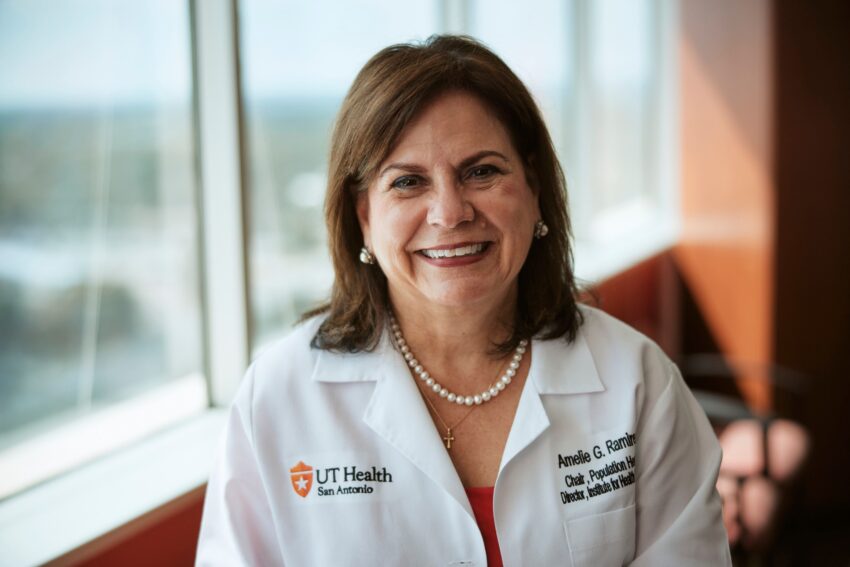
Dr. Amelie G. Ramirez, leader of Salud America! at UT Health San Antonio, shares insights on health on a new episode of the CDC's Listen Up! podcast series for health communicators, by health communicators. Her episode is "Not a Monolith: Empowering Latino Health." She also shares the importance of Salud America! Salud Heroes, how to take action to improve the non-medical drivers of health, and how to build trust and wellbeing within communities. Listen to Ramirez's episode. See the full Listen Up! podcast series, hosted by Dr. Betsy Mitchell in CDC’s Office of Communications. "It's family, faith, and language that are key, important ... issues to keep in mind [when sharing health messages to empower people]," Ramirez said on her episode.
Dr. Ramirez & Her Health ...
Janette Ramirez was looking for a way to help people. In her search, she walked into the Center for Service Learning, Internships & Civic Engagement (SLICE) at California State University, Dominguez Hills (CSUDH). Ramirez jumped into multiple SLICE programs and helped empower the local community to overcome social challenges and differences in health, education, and economic opportunities – and she left with a passion for serving others. “That’s how I came to find my love for community service and serving others, because, you know, it’s just really important,” Ramirez said. Today, Ramirez is still seeking to help as many people as she can. As a medical student going into her second year at Midwestern University in Arizona and as a Robert A. Winn Diversity in ...
As a doctor’s son, Daniel Ruben Flores grew up in his family’s pediatric clinic. He and his siblings hammered away at their math and reading homework after school at the clinic, while their parents helped the sick. Flores often paused to admire the handwritten letters – and drawings of his father with a stethoscope – on the wall from patients thanking the pediatrician for caring for them. “Wow, all these other kids really appreciate my dad and all the work he’s doing,” Flores recalled fondly. “I feel like that just kind of motivates you ... to go into the field.” Witnessing his father’s work and the impact he had on his patients helped spark a fire in Flores to pursue medicine and help people, too. He’s taking big steps now – like ...
You can help create a healthier future. Volunteers for registries, research programs, and clinical trials can help researchers learn how to slow, manage, and treat cancer and other diseases. “With improved research participation, researchers have more opportunity to create better prevention and treatments that work for all people,” said Dr. Amelie G. Ramirez, director of Salud America! at the Institute for Health Promotion Research at UT Health San Antonio. Here are seven research opportunities based in San Antonio and beyond to explore this month!
1. Latina Health Reproductive Health Screenings
University of Texas at San Antonio researchers are seeking Hispanic and Latina women between ages 50 and 65 living in San Antonio to comment about their last Pap ...