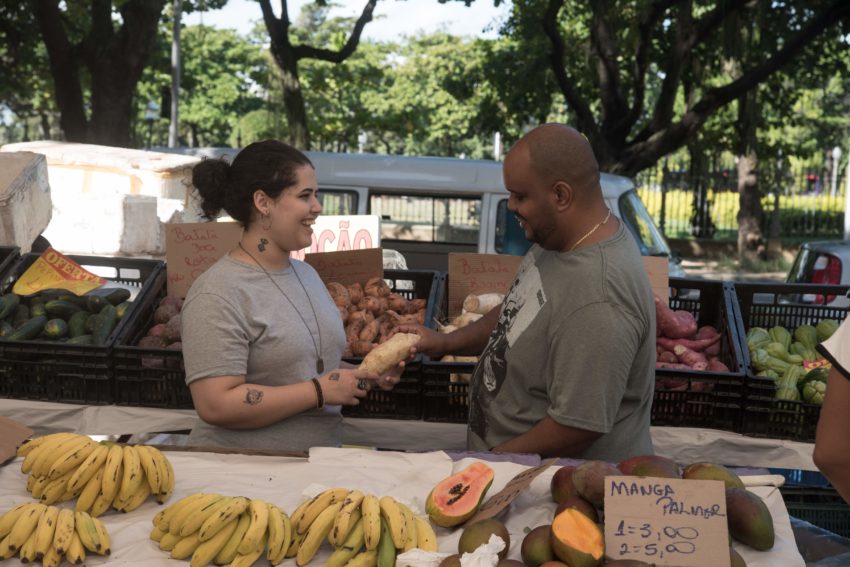
Obesity Care Week 2020 (#OCW2020) is here! From March 1-7, 2020, Salud America!, our Latino health equity program at UT Health San Antonio, is happy to be an OCW2020 Champion to support this awareness week. Obesity Care Week has a global vision for a society that understands, respects, and accepts the complexities of obesity and values science and clinically-based care. Salud America! research shows that U.S. Latinos face inequities in many areas—from poverty and social support to access to affordable housing and transportation—that contribute to higher rates of obesity. Latino adults and children have higher obesity rates (47% and 25.8%, respectively) than whites (37.9% adults and 14% children). Addressing the root causes can help address obesity. #OCW2020 has different ...
Communities are increasingly concerned about the rise of poverty, homelessness, trauma, and opioids among children and families. However, few states address these issues by investing money in Head Start programs, which are proven to strengthen families, promote school readiness, and improve child health. The good news is that lawmakers in 14 states are investing over $400 million each budget cycle for local Head Start and Early Head Start programs, according to a new analysis by the National Head Start Association and Voices for Healthy Kids. These investments will help serve more kids─but millions are still left out.
Crisis of At-Risk Children and Families
Many children and families face difficult situations: persistent childhood poverty
the unrelenting opioid ...
Colorectal cancer, which starts in the colon or rectum, is the third-most commonly diagnosed cancer. It also is the second-leading cause of cancer death in U.S. men and women. Fortunately, if discovered early, it is highly treatable. And you can take steps to lower your risk. Let’s use #SaludTues on Tuesday, March 3, 2020, to discuss colorectal cancer risk, screening, treatment, and survivorship in honor of National Colorectal Cancer Awareness Month in March. Altogether, we can show how everyone can get involved to prevent colorectal cancer! WHAT: #SaludTues Tweetchat: What You Should Know about Colorectal Cancer
TIME/DATE: 1-2 p.m. ET (Noon-1 p.m. CT), Tuesday, March 3, 2020
WHERE: On Twitter with hashtag #SaludTues
HOST: @SaludAmerica
CO-HOSTS: Fight Colorectal ...
Implicit bias against Latinos is jeopardizing the fairness of the U.S. criminal justice system, says a recent report. Latinos already comprise 53% of those charged with federal crimes. Now the fate of those defendants is increasingly complicated by the "behavior of defense attorneys, prosecutors, judges, jurors, and probation and pre-trial service officers through implicit racial bias and racial stereotyping," according to Walter Gonçalves, a federal public defender in Arizona. Implicit bias can affect juries, bail, and sentencing. "Given this reality, defense attorneys should carefully study and become familiar with racial stereotyping and implicit bias. Only in this way will they be able to educate others in the system," Gonçalves writes in a report published in Seattle ...
For years, bike share programs have shown sharp divisions along race and class lines. Bike share stations are often located in whiter, wealthier neighborhoods. Whiter, wealthier individuals are far more likely users than those of color. That’s why cities are working to improve equity of bike share programs. In fact, 60% of bike share systems had specific programs to address equity, according to the National Scan of Bike Share Equity Programs from the Transportation Research and Education Center (TREC). But these systems rarely set or tracked outcomes on equity. Below are six ways to correct bike share’s social equity problem, based on examples from the TREC report to help bike share systems move toward equity and from Shared-Use Mobility Center’s list of efforts to ...
Finding the right message has always been important to Maria Alvarez. That determination is what led her to become a Vice President of Common Sense Media — a national, nonprofit communications network that is "dedicated to helping kids thrive in a rapidly changing world. Independent data on media and technology use and its impact on children's physical, emotional, social, and intellectual development." Alvarez, founded, designed, and continues to lead Common Sense Latino, the Spanish-language-only program of that organization, which creates content for that community specifically. “I’ve been on the ground and in the trenches with these families for over 10 years,” Alvarez said. “So, I know how willing Latino families are in embracing technology, and you see that in the ...
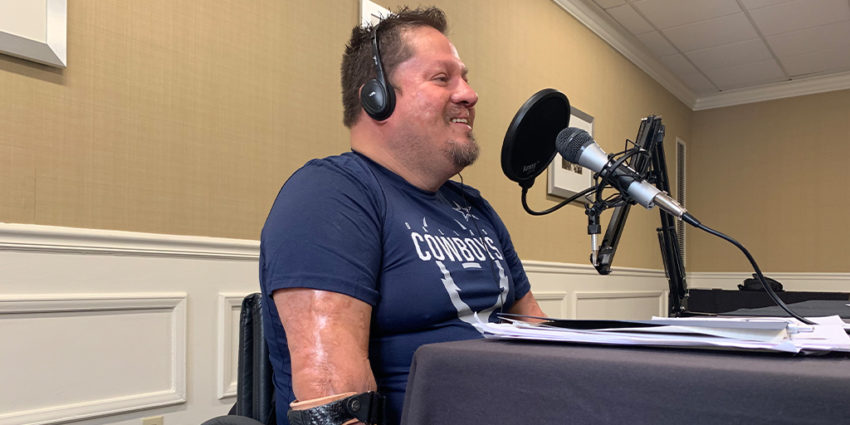
When was the last time you noticed whether or not a sidewalk had a ramped curb cut for those in wheelchairs? Or if an intersection had a Soundsystem for the visually impaired? For over 60 million Americans with disabilities, these issues can become an everyday burden when equal access is not a priority for local, state, and federal governments. Worse, it can make the already more difficult aspects of living life even harder for those in that group. Bob Lujano, Information Specialist for the National Center on Health, Physical Activity, and Disability joins Salud Talks to discuss these issues, and how we all can step up to make life more equitable for his community. Check out this discussion on the Salud Talks Podcast, Episode 20, "A Positive Experience"! WHAT: A ...
A soda tax can stir up controversy. Health experts say they curb consumption of unhealthy sugary drinks. Detractors say they're bad for local businesses. Many don't like taxes in any instance. But most people miss what happens after soda tax revenue comes in. That's why we are excited to share a new video series, Health Investments for Berkeley, which celebrates the community-led public health work paid for, in part, by the nation's first-ever soda tax enacted in Berkeley, Calif., in 2014. The series, created by the Praxis Project, an Oakland health justice group, has four parts: Berkeley Unified School District
Healthy Black Families
Multicultural Institute
Ecology Center "This series is intended to flip the national narrative around soda taxes that ...
Many severe side effects of prescription drugs are not reported, according to new findings from JAMA Internal Medicine. Moreover, the researchers who completed the study comment that current FDA regulatory practices need reform, especially the process used to report harm caused by medical devices. “Over the last 4 decades, the approval and regulation processes for pharmaceutical agents have evolved and increased in complexity as special programs have been added and as the use of surrogate measures has been encouraged,” the researchers write. “The FDA funding needed to implement and manage these programs has been addressed by expanding industry-paid user fees. The FDA has increasingly accepted less data and more surrogate measures and has shortened its review times.”
What ...