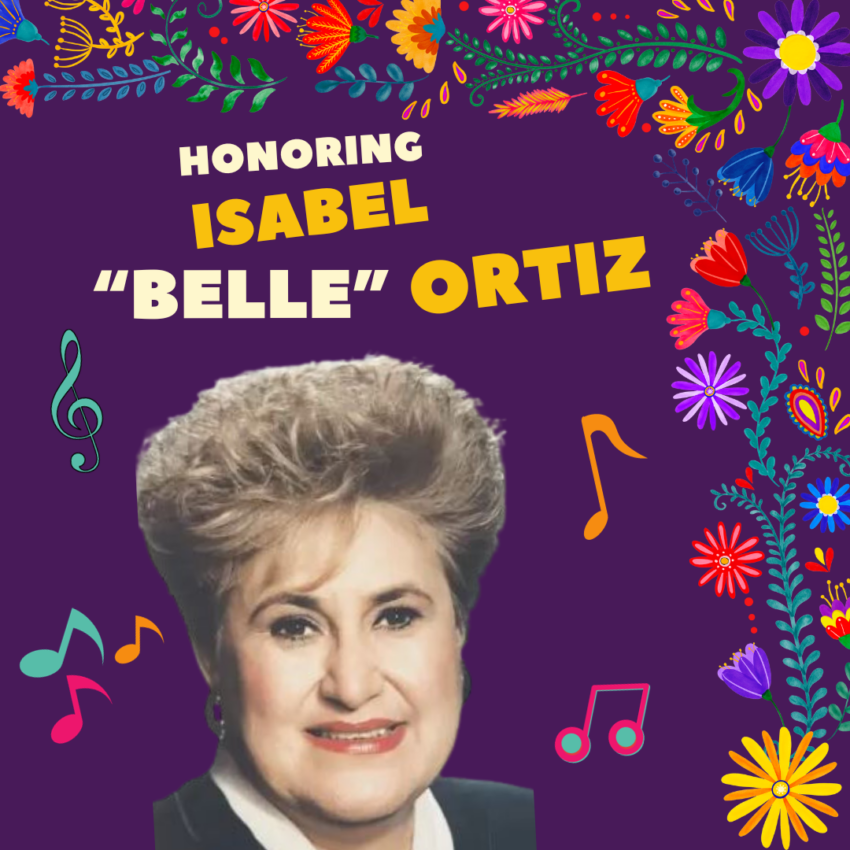
Mariachi music is a hallmark of Latino way of life. Generations of Latinos listen to mariachis – a small Mexican musical ensemble of mostly stringed instruments – and continue to pass on this beautiful part of the Latino lifestyle to future generations. Isabel (Belle) Ortiz, who passed away in July 2023 at age 90, was one of those people dedicated to teaching and sharing mariachi music with others. In honor of Hispanic Heritage Month, we’re celebrating Belle’s life work bringing mariachi music to the forefront of music education.
A Trailblazer in Mariachi Music Education
Belle, nicknamed the “Godmother of Mariachi,” grew up on the west side of San Antonio. She was musically talented and passionate about mariachi from a young age. Throughout her childhood, ...
Hispanic Heritage Month is here! This annual U.S. observance, from Sept. 15 to Oct. 15, celebrates the histories and contributions of Americans whose ancestors came from Spain, Mexico, the Caribbean and Central and South America. We at Salud America! invite you to celebrate Hispanic Heritage Month in these surprising ways.
1. Learn How Hispanic Heritage Month Began
U.S. Congressmen Edward R. Roybal of Los Angeles and Henry B. Gonzales were among those who introduced legislation on the topic in 1968. President Lyndon Johnson implemented the observance as Hispanic Heritage Week that year. U.S. Rep. Esteban E. Torres of Pico Rivera proposed the observance be expanded to cover its current 30-day period. President Ronald Reagan implemented the expansion to Hispanic ...
As a child in Puerto Rico, Alberto Martin dreamed of playing professional soccer. He knew that becoming a soccer pro meant lots of hard work, practice, and willpower to get better even when you’re tired and want to give up. Today, Martin is using those lessons to become a different kind of pro – a doctor. Martin is a second-year medical student at the Universidad Central del Caribe in Bayamón, Puerto Rico, and an intern at UT Health San Antonio’s Institute for Health Promotion Research. He is motivated to share his story to demonstrate how following your dream – on the soccer field or the doctor’s office – can be reality. “Stories and information you get, they just become such a powerful source of drive or inspiration. Because you want to see you, ...
Nemours Children’s Health knows healthcare is more than just medicine. The conditions in which we are born, grow, live, work, and age – known as non-medical drivers of health (NMDoH) – can greatly help or harm our health. That is why Nemours gave multiple leaders, including Kelli Thompson, director of population health management; Na-Tasha Williams, population health specialist; and Alex Koster, senior director of the value-based care data analytics and IT department; the space to begin developing a non-medical drivers of health screening program in 2018. The NMDoH screening program is now fully implemented or being piloted in multiple Nemours locations, including in Delaware, Pennsylvania, and Florida. To screen patients for immediate needs, such as food and housing ...
Latinos face a number of health disparities and inequities in many aspects including housing, transportation, and overall health. While it’s important to focus on the many barriers that Latinos face, it’s also beneficial to highlight the assets of this diverse population. Latinos have many individual and family strengths they can draw on to be resilience in the face of hardship and guard against the negative effects of adversity on their well-being, according to a new analysis from the National Research Center on Hispanic Children & Families. Let’s explore strengths of Latino children, parents, and families!
What Are Latino Children’s Strengths?
The new analysis, which reviewed 35 studies from 2000 to 2022, identified strong social skills as one of the key ...
Latinos and other people of color face heavy burdens of cancer, diabetes, and more. These disparities are driven by systemic racism and discrimination that make it harder for people of color than their White peers to get equitable healthcare, education, and more. That is why Salud America! at UT Health San Antonio is a part of the Collaborative for Anti-Racism and Equity (CARE), a group that provides tools and resources to help people make connections and inform solutions to advance health and racial equity. As part of this group, we are excited to share a new case study from the Greensboro Health Disparities Collaborative (GHDC). The GHDC – a group of community leaders, advocates, public health researchers, and healthcare professionals – resolved racial disparities in ...
The Biden Administration has reversed the 2019 public charge policy changes implemented by the Trump Administration, according to the US Department of Homeland Security. The final rule was published on Sept. 9, 2022 and will go into effect on Dec. 23, 2022. The 2022 “fair and humane” public charge rule will benefit Latino immigrant families, as it will help address the “chilling effects” of the 2019 rule. Here’s what you need to know.
What is Public Charge?
A person is considered a “public charge” if they would be reliant on certain public benefits upon entry into the US. If someone is considered a public charge, officials can deny their entry into the US or modifications to their citizenship status.
What Changed Under the 2019 Public Charge Rule?
Before ...
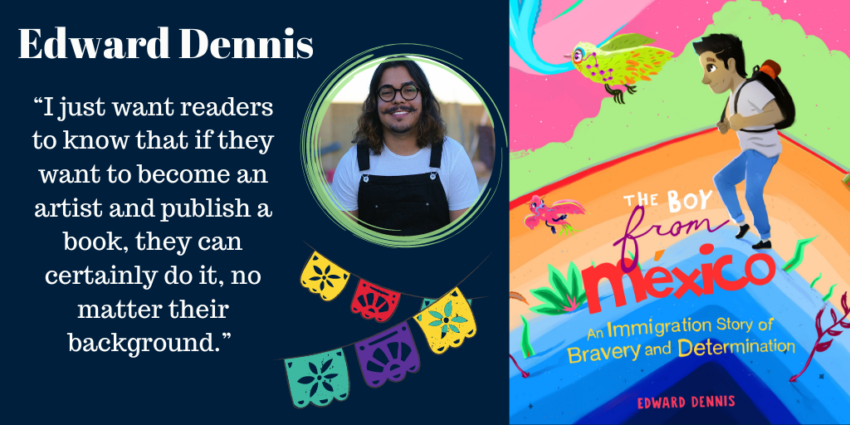
In a modest house in Maryvale, Arizona, a young Latino boy watched wide-eyed as the famous artist, Bob Ross, painted a masterpiece on TV. With each brush stroke and happy little tree, the boy’s excitement grew in anticipation for the end result – a beautiful piece of landscape art. The boy grew even more excited as he realized two of his other artistic role models – Mr. Rogers and Levar Burton from Reading Rainbow – would appear on TV later that day. Feeling inspired, the boy – Edward Dennis – scurried off to sketch some drawings and work on his own passion and talent for art. Now grown up, Edward is a freelance artist with an impressive resume that includes clients like Disney, Shimano, Giant Bicycles, Toyota, and various video game companies. But his ...
By Dr. Fátima Coronado
CDC, Salud America! Guest Blogger Every year, the United States recognizes National Hispanic Heritage Month (NHHM) from September 15 to October 15, to celebrate the histories, cultures, and contributions of generations of Hispanic Americans born in and outside the U.S., who have helped to shape this diverse country. The theme for this year’s NHHM is Unidos: Inclusivity for a Stronger Nation. In Hispanic culture, unidos (in unity, with inclusivity) is associated with positive outcomes. Being unidos is necessary for getting through tough times, for meeting goals and getting things done together. NHHM provides an opportunity to acknowledge that while many health indicators have improved for most people in the U.S., significant disparities in health and ...