1 in 7 American adults are impacted by kidney disease. The month of March is recognized as National Kidney Month and serves as a way to not only bring awareness to health issues like kidney disease and encouraging others to take charge of their health. “Kidney disease is known as a silent killer due to the fact that as many as 9 in 10 people living with the condition are unaware that they have it and do not have symptoms until the later stages,” according to the American Kidney Fund. Let’s dig deeper into this topic and how you can spread awareness during National Kidney Month!
1. National Institute of Diabetes and Digestive and Kidney Disease (NIDDK)
During National Kidney Month, the NIDDK has provided several resources, including a list of healthy lifestyle habits to ...
This content is from the "Advancing the Science of Cancer in Latinos: 2024 Conference Proceedings."
Inclusion in Action: Breaking Open the Leaky Pipeline to Create Pathways & Design Spaces that Improve Representation
Dr. Idalid “Ivy” Franco is works in the Department of Radiation Oncology at Brigham and Women’s Hospital and Dana-Farber Cancer Institute at Harvard Medical School. The effect of oppression on workforce incorporation Dr. Franco’s presentation began by looking at the context and long-standing hurdles to recruitment, retention, and professional success of a workforce that resembles the US population. This historical context started with American slavery, followed by years of segregation, laying a foundation of decades of judgement and mistreatment. This lies ...
Rheumatoid arthritis (RA) impacts some people more than others. In fact, about 70% of people living with RA are women, according to the World Health Organization. That makes it critical to promote education, resources, and support for women when it comes to treating and managing RA. With this in mind, you’re invited to watch “Thriving with RA: Essential Tips for Women’s Health and Wellness,” an online educational session that will empower women with RA to take control of their pain and health, helping them understand treatment options and know when and how to speak up to get the care they deserve. Join us to learn practical ways to improve pain, fatigue, and depression and find support tailored to you—because no one should have to face RA alone. Panelist Victoria ...
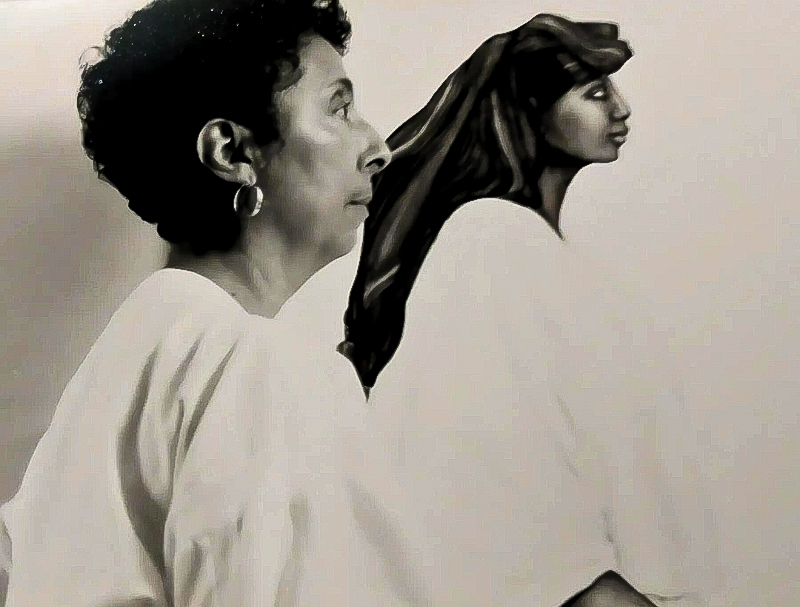
Whether with paint on canvas or a friendly chat in person, San Antonio artist Mary Louise Lopez always spread love and showcased the beauty of the human spirit. Mary Louise was a gifted artist in drawing, painting, sculpting, and batiking. The subjects of many of her paintings are native communities of Texas, Mexico, Central America, and South America, where she often travelled and befriended many locals. Mary Louise, who passed away in November of 2022of pancreatic cancer, portrayed the pride and strength of native Latinos with great affection and care, said Irene Peche, a close family-friend. “She sought to capture their dignity and the work ethic by which they lived. There is an honesty in the depictions of her subjects that captures reality, beauty, and hardship without ...
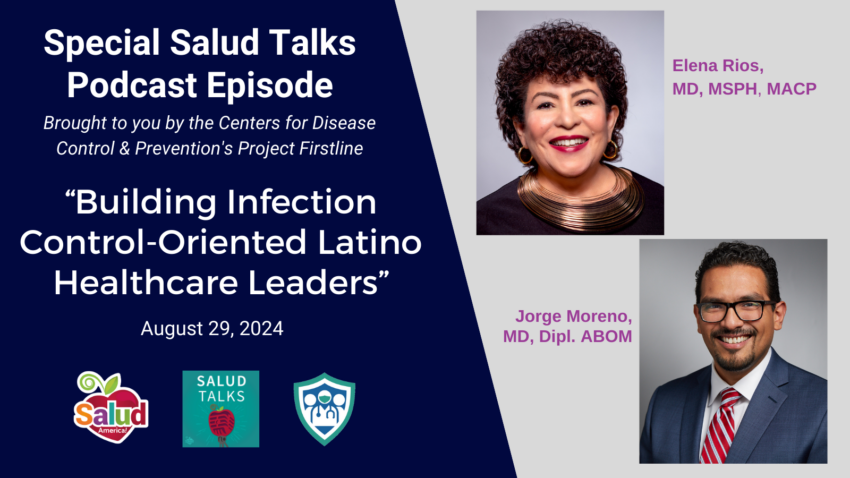
The COVID-19 pandemic highlighted the need for healthcare workers to have easy-to-use, informative, bilingual tools on infection control practices in the healthcare setting. With this in mind, the U.S. Centers for Disease Control and Prevention (CDC) launched Project Firstline, a training and education collaborative designed to ensure all healthcare workers, no matter their role or educational background, have the infection control knowledge and understanding they need and deserve to protect themselves, patients, and coworkers. As part of Project Firstline, Salud America! at UT Health San Antonio and the National Hispanic Medical Association (NHMA) is bringing you a Salud Talks Podcast series, “Behind the Mask,” to explore infection control in healthcare. In this special ...
Health literacy is defined by the CDC as “the degree to which individuals have the capacity to obtain, process, and understand basic health information and services needed to make appropriate health decisions.” In today’s world, health literacy is crucial for community members and health professionals, alike, to make everyday decisions and achieve health fairness. However, many communities around the country face challenges to health including access to health care, financial instability, and housing/transportation insecurity endangering their health. That is why Jason Rosenfeld, DrPH, MPH, and Melanie Stone, DrPH (c), MPH, MEd are helping build Health Confianza – a partnership between UT Health San Antonio, The University of Texas San Antonio, and the San Antonio ...
Latinas account for 17% of all adult women in the U.S. today. Similarly, their population is the largest numeric increase of any major women vulnerable group, growing to 5.6 million from 2010 to 2022. A recent report from the Pew Research Center shows that half of Latinas say the situation in relation to education, employment, and earnings of Latina women in the United States is better now than it was 10 years ago, and a similar share say the situation will improve in the next 10 years. “Still, 39% of Latinas say that the situation has stayed the same, and 34% say it will not change in the next 10 years,” according to the report. Let’s dive deeper into the data and what it means for Latinas moving forward.
Latinas and Education Attainment
The report highlights that ...
The Child and Adult Care Food Program (CACFP) is a federal program that ensures children and adults have access to nutritious meals and snacks by providing reimbursements for nutritious meals and snacks at participating child care centers, day care homes, and adult day care centers. Additionally, the CACFP provides reimbursements for meals served to children and youth participating in afterschool care programs, children residing in emergency shelters, and adults older than 60 or living with a mental or physical challenge and enrolled in day care facilities. The National CACFP Sponsors Association (NCA) provides support and resources for the community and others that administer, organize, and participate in nutrition programs. The CACFP provides Spanish-language resources through ...
As COVID-19 exposed cracks in our healthcare system and health gaps, community health workers rose to the challenge to educate communities on virus prevention, dispel incorrect information, and advocate for the vaccine. Community health workers – called promotoras in Latino communities – are non-medical public health workers who connect people to healthcare and social services. The U.S. Department of Health and Human Services (HHS) Office of Minority Health (OMH) is seeking public comments on the use of community health workers to increase “cultural competency in educational campaigns on public health vaccines and prevention, including but not limited to influenza and COVID-19.” Submit this Salud America! model comment to tell HHS about the importance of using ...