Para vivir una vida saludable, necesitamos convivir y relacionarnos con otros. Sin embargo, muchos adultos mayores enfrentan aislamiento social, o sea, tienen poca interacción con otras personas y casi ningún contacto regular, y también padecen de la soledad, ese sentimiento doloroso de estar solos o alejados de los demás. ¿Cómo podemos evitar el aislamiento social y la soledad al envejecer? Le invitamos a leer nuestra nueva hoja informativa, Guía para Combatir el Aislamiento Social y la Soledad, creada para ayudar a nuestros abuelos, familias y amigos a entender qué son el aislamiento y la soledad, cómo afectan la salud, y qué podemos hacer para prevenirlos y evitar el Alzheimer y otras demencias relacionadas. Esta hoja informativa fue escrita por la ...
1 in 6 Latinos in the U.S. live with a physical, sensory, intellectual, or mental disability that impacts how they navigate life and health, according to the Cisneros Institute. Tailored healthcare resources can help. This includes treatment for alcohol use disorder that addresses the unique needs of people with disabilities – who are diagnosed with alcohol use disorders at more than three times the rate of adults without disabilities, according to a new study by Boston University. Let’s dig deeper into this research and why it matters for overall health. Alcohol Use Disorders among People with Disabilities Alcohol use disorder is “a medical condition characterized by an impaired ability to stop or control alcohol use despite adverse social, occupational, or health ...
While screen time can have some benefits, evidence is mounting of high risks to children’s mental and physical health, according to a new advisory from the U.S. Surgeon General. That is why the U.S. Department of Health and Human Services (HHS) is proposing to refine two objectives to further limit screen time as part of Healthy People 2030. The refinements are to increase the proportion of children ages 2-5 who get no more than 1 hour of screen time a day and increase the proportion of parents who follow American Academy of Pediatrics recommendations on limiting screen time for children ages 6-17. They’re also proposing to add three new objectives. You can comment on the changes by emailing HP2030Comment@hhs.gov. Or you can endorse a comment from Dr. Amelie G. Ramirez, ...
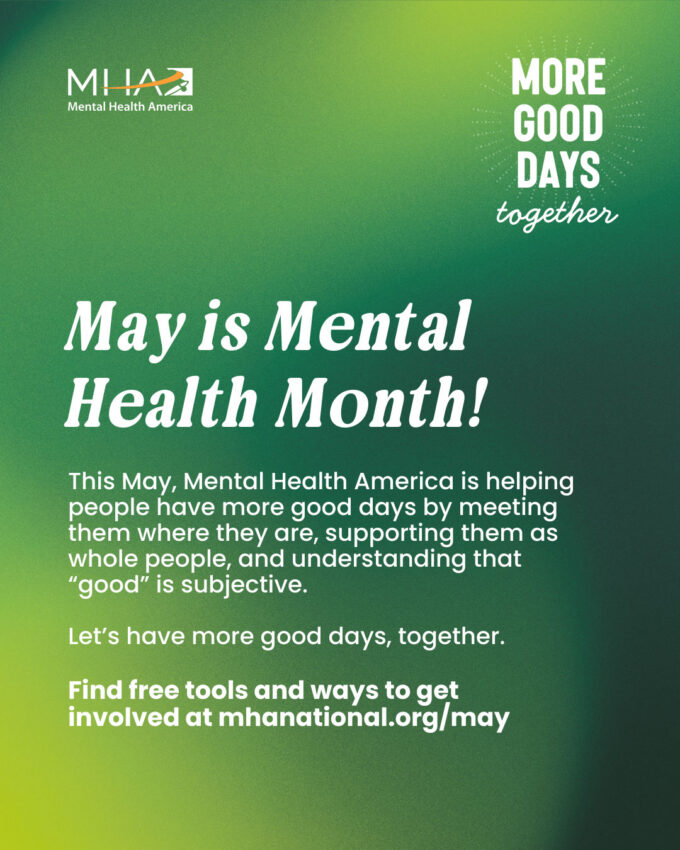
May is Mental Health Awareness Month, a time to spread awareness on the importance of mental health and promote helpful resources. With this in mind, Mental Health America created the Mental Health Month Action Guide. “There’s no right or wrong way to use this guide. Start where it feels helpful, skip what doesn’t fit, and come back as needed,” Mental Health America states. Let’s look closer into this guide and how it can help you and others.
Defining Good Days for Mental Health
The action guide aims to help users reflect on “good days.” “‘Good’ doesn’t have to mean happy or productive. It might mean calm, manageable, or something else,” according to Mental Health America. Through the action guide, Mental Health America provides several resources ...
One in 10 US adults older than 65 will experience dementia, and another 22% will have some form of mild cognitive impairment, according to Columbia University researchers. The good news is that you can reduce your risk of Alzheimer's Disease and dementia. Here are 10 positive changes that you can make to lower your risk for cognitive decline and improve your overall health, according to the Alzheimer's Association.
1. Protect Yourself from Brain Injuries Traumatic brain injuries have been linked to an increased risk for developing dementia. According to a published study examining the relationship between injury and cognitive decline, traumatic brain injuries can increase dementia risk between 2-and 4-fold. One of the best ways of preventing traumatic ...
Last year, the US earned a D+ for preterm birth on the March of Dimes Report Card. The March of Dimes Report Card is an annual report that signifies where states and the rest of the country are in terms of infant and maternal mortality and morbidity. This year, the US is following up its last poor rating with another D+, making it the fourth consecutive year the country has earned the substandard score. Of the births that occurred in the US in 2024, nearly 380,000 babies were born preterm, accounting for every 1 in 10 births, according to the report. Let’s take a closer look at the March of Dimes Report Card and what it means for infant and maternal health in the US.
Preterm Births in the US
March of Dimes, which pushes for better maternal and infant ...
November is National Family Caregivers Month (NFCM)! NFCM is an opportunity to recognize family caregivers across the country and “raise awareness of caregiving issues, educate communities, and increase support for caregivers,” according to the Administration for Community Living. “Being a caregiver can bring joy and purpose, but it can also lead to stress, exhaustion, and worry about mental health for both you and your loved one,” according to Mental Health America. With this in mind, we've compiled a list of where tools and resources for family caregivers can be found.
Latinos and Caregiving
"Family caregivers include parents, friends, neighbors, and even children, and they span across
all ages, races and ethnicities, incomes, and communities," according ...
Drug misuse continues to be a pervasive problem in the US.
Use of illicit drugs can have disastrous health consequences, especially for vulnerable populations like Latinos, and can lead to premature death.
While there are methods to combat addiction, lack of information, lack of insurance, and less access to treatment facilities can get in the way of seeking treatment.
The Department of Health and Human Services (HHS) recently released its annual report on the state of mental health and substance use in the US.
Based on results from the 2023 National Survey on Drug Use and Health, Key Substance Use and Mental Health Indicators in the United States covers mental health and substance use, including tobacco, illicit drugs, and more.
So far, we have covered alcohol, tobacco and vaping, ...
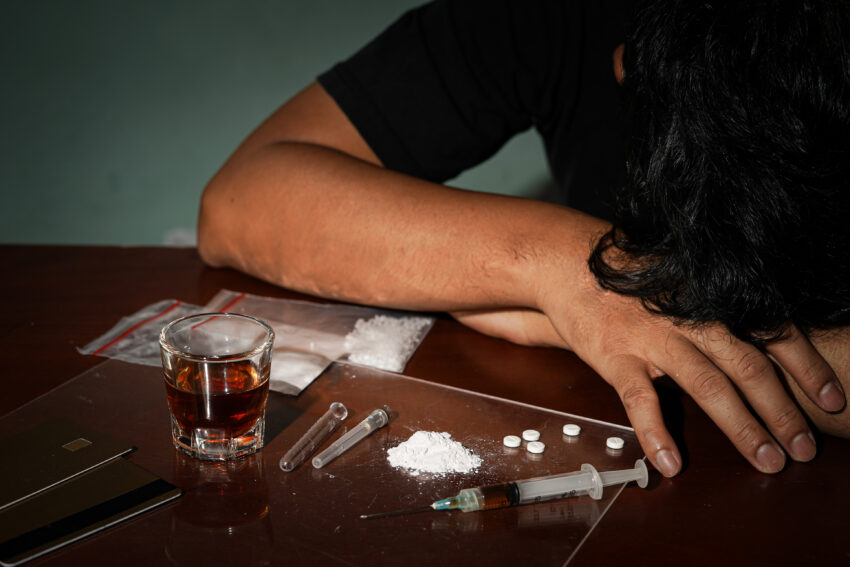
Illicit drug use continues to be a pervasive problem in the US. Use of illicit drugs can have disastrous health consequences, especially for vulnerable populations like Latinos, and can lead to premature death. The Department of Health and Human Services (HHS) recently released its annual report on the state of mental health and substance use in the US. Based on results from the 2023 National Survey on Drug Use and Health, Key Substance Use and Mental Health Indicators in the United States covers mental health and substance use, including tobacco, illicit drugs, and more. So far, we have covered alcohol, tobacco and vaping, and marijuana use among Latinos. In the next part of our series, we’re going to explore the report and find out how using illicit drugs ...







92 People Endorsed Dr. Amelie Ramirez’s Comment to Limit Children’s Screen Time in Healthy People 2030
While screen time can have some benefits, evidence is mounting of high risks to children’s mental and physical health, according to a new advisory from the U.S. Surgeon General. That is why the U.S. Department of Health and Human Services (HHS) is proposing to refine two objectives to further limit screen time as part of Healthy People 2030. The refinements are to increase the proportion of children ages 2-5 who get no more than 1 hour of screen time a day and increase the proportion of parents who follow American Academy of Pediatrics recommendations on limiting screen time for children ages 6-17. They’re also proposing to add three new objectives. You can comment on the changes by emailing HP2030Comment@hhs.gov. Or you can endorse a comment from Dr. Amelie G. Ramirez, ...
Read More