 by
by 
Share On Social!
1 in 6 Latinos in the U.S. live with a physical, sensory, intellectual, or mental disability that impacts how they navigate life and health, according to the Cisneros Institute.
Tailored healthcare resources can help.
This includes treatment for alcohol use disorder that addresses the unique needs of people with disabilities – who are diagnosed with alcohol use disorders at more than three times the rate of adults without disabilities, according to a new study by Boston University.
Let’s dig deeper into this research and why it matters for overall health.
Alcohol Use Disorders among People with Disabilities
Alcohol use disorder is “a medical condition characterized by an impaired ability to stop or control alcohol use despite adverse social, occupational, or health consequences.”
Prior research suggests that people with disabilities are vulnerable to excessive drinking.
“Among adults who currently drink, people with disabilities had higher odds of binge drinking,” according to a research study on association of disability status and type with binge drinking and prescription opioid misuse.
The new study by Boston University School of Public Health is the first to explore differences in alcohol use disorder diagnoses by disability status and type among commercially insured adults.
In fact, the study found that adults with serious mental illness like severe depression, schizophrenia, and bipolar disorder had the highest rates of alcohol use disorder at more than 10 times the rate of non-disabled adults.
Adults with acquired brain injuries, such as traumatic brain injury and stroke, had over 5 times the rate of alcohol use disorder non-disabled adults.
Researchers also identified differences in rates of alcohol use disorder in relation to sex.
For instance, men with disabilities had the highest rates of alcohol use disorder, but women with disabilities had higher rates than both non-disabled men and women.
Improving the Health of People with Disabilities
Alcohol use disorder is a chronic condition that can ultimately lead to additional health issues like alcohol-related morbidity and even death.
These findings also highlight the importance of health providers being aware that patients with disabilities are at high risk for alcohol use disorder and the need for tailored screening and treatment for them, according to the Boston University School of Public Health.
“The disability community is not a homogenous population, and certain subgroups are at even higher risk for [alcohol use disorder] and associated adverse outcomes,” said Rachel Sayko Adams, study lead of Boston University.
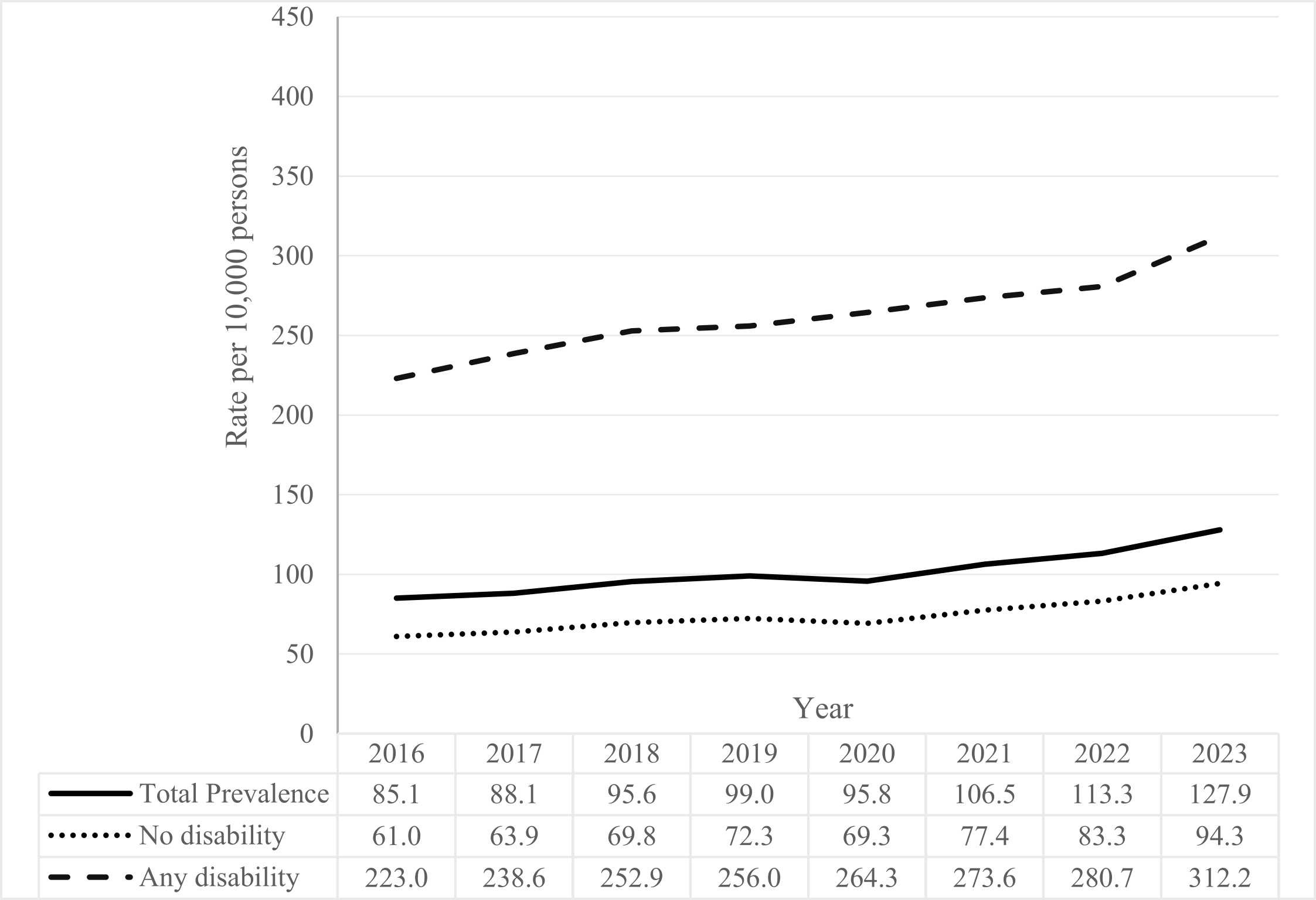
During the study period of 2016-2023, overall rates of alcohol use disorder increased at an annual average of 5.4%.
“Over the seven years of our study, diagnosed [alcohol use disorder] increased by more than 50 percent with no sign of reversing, with disabled people at more than three times the risk of developing [alcohol use disorder] compared to their non-disabled peers,” said Jake Morgan, study senior author of Boston University.
Study leaders said more research is needed.
“While we need more information about why people with disabilities are more likely to develop [alcohol use disorder], this increased risk is likely impacted by the higher rates of unemployment, depression, trauma, isolation, chronic pain, and stigma experienced by disabled people,” said Dennis Heaphy, study coauthor of Camden Coalition.
Above all, researchers called for clinicians and public health professionals to pay attention to disabled patients and their risk for excessive drinking and alcohol use disorder and the importance of screening and treatments for disabled patients when needed.
Explore the full alcohol use disorder study.
Improve Health for All People in Your Community
What is the status of health in your community?
Find out by downloading a Salud America! Health Report Card for your town!
Enter your county name and get auto-generated local data with interactive maps and comparative gauges on several health indicators. This can help you visualize and explore local issues in education, housing, transportation, food, health, and more.
See how your county stacks up compared to the rest of your state and nation.
Then email the Report Card to local leaders to raise awareness, include the data in a presentation or grant proposal, or share it on social media to drive healthy changes in your community
By The Numbers
142
Percent
Expected rise in Latino cancer cases in coming years