The National Institute on Minority Health and Health Disparities (NIMHD) has committed nearly $31 million over the next five years toward launching a new program for “Transdisciplinary Collaborative Centers (TCCs)” that will research health disparities and explore the potential for precision medicine to promote health equity for minorities. “Ultimately, the TCCs will generate new knowledge about precision medicine that resonates from the community level to the national population level,” said Dr. Eliseo J. Pérez-Stable, Director of the NIMHD. Although many scientific and technological advances have improved the overall health of the U.S., several racial/ethnic minority, socioeconomically disadvantaged, and rural populations continue to experience a disproportionate share of ...
In 2012, Travis County (33.9% Latino) voters approved a proposition to raise property taxes to support health care initiatives in Central Texas, which included $35 million annually for the Dell Medical School. Less than four years later, on June 26, 2016, the University of Texas at Austin Dell Medical School opened their doors to their first class of students. Twenty-two percent of the first class identifies with racial or ethnic groups historically underrepresented in medicine, compared to the national average last year, which was 13 percent, according to one source. “We simply cannot create the transformative changes we envision without a strong connection both to vulnerable communities and to clinical programs that provide health care access to those communities,” Dean ...
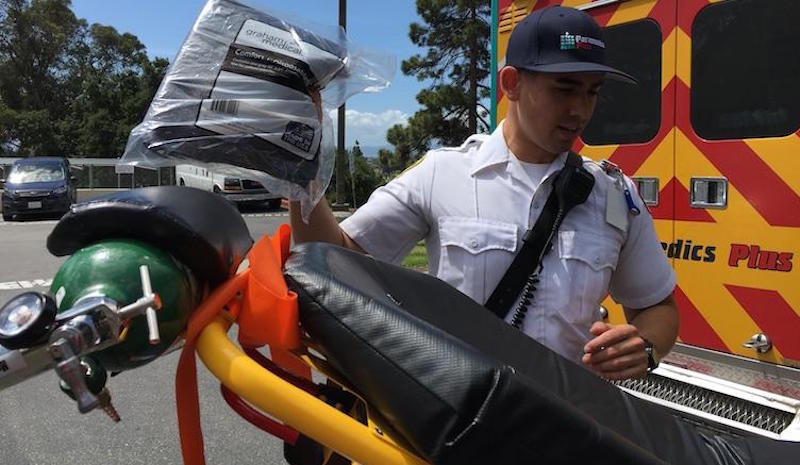
A California program trains Latino young men to become emergency medial technicians (EMTs), creating a path for success in areas where gangs and shoot-outs are all-too common, KALW reports. The five-month stipend program, EMS Corps, is part of the Alameda County Public Health Department. EMS Corps participants, who are ages 18-26 and mostly Latino or another minority, are be trained and educated to become EMTs. EMTs work with paramedics to provide medical care in the field during an emergency. They go through daily classes, tutoring, physical fitness, and professional and career development workshops. They also get life coaching and mentoring. “It takes them on a journey of discovery of who they are—what their strengths are and what they value most in this life,” life ...
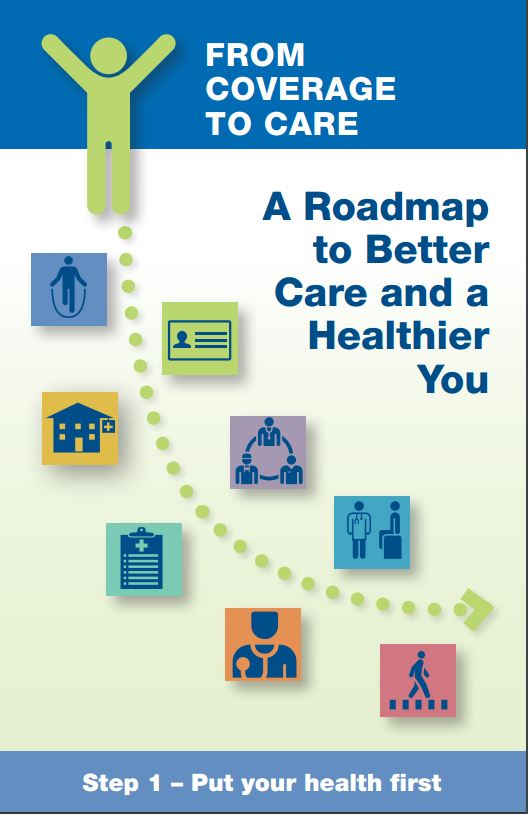
The Centers for Medicare & Medicaid Services (CMS) have released a new set of resources and tools through their Coverage to Care (C2C) initiative that are designed to help people understand their health coverage and connect their primary care and preventive services. Studies have shown that utilizing healthcare services and preventive care can extend an individual’s lifespan. C2C resources are available in several languages and are designed to help people understand how to better used their coverage to care for their health. Some of the available resources include Navigating Health Coverage. Covered in this area is a step-by-step guide to explain what health coverage is and how to use it to get primary and preventative care services. There are also downloadable .pdf bilingual ...
Educational attainment for U.S. Latinos has rapidly changed in recent years as it has begun reflecting the population’s growth. Latinos have experienced growth in the nation’s public K-12 schools and in its colleges and universities. In the past 10 years, the high school dropout rate for Latinos has declined while college enrollment has increased. Latinos still trail other ethnic and racial groups in terms of bachelor’s degrees earned. In a recent poll, roughly 83% cited education as being very important in the upcoming U.S. presidential election, ranking alongside the economy, health care, and terrorism as the top issues for Latinos. Despite the emphasis on education and the gains Latinos have made, there are still obstacles to college enrollment for many. In a 2014 National ...
Several barriers affect Latinos when it comes to accessing quality health care. Finances, communication, and transportation are three of the most prevalent issues. In North Carolina, these issues, especially communication, are especially acute. Latinos who do not speak English often have to pay extra in rural areas of North Carolina to have a translator with them at their doctor’ “Probably one of the biggest problems [at the Greater Hickory Cooperative Christian Ministry (GHCCM)] is communication,” said Sue Troutman, a registered nurse at GHCCM. “If they don’t speak good English, they miss things. Sometimes they don’t know what’s available and that’s partially to the translation barrier.” Even when translators are on staff, the possibility exists that something is ...
Since 2007, Oregon became a beacon of healthy school food, as a state bill helped remove unhealthy foods like candy and soda in vending machines and give the school standards on serving healthier school meals. Now new standards from the US Department of Agriculture will not be a big surprise to students in Oregon. The Oregon Smart Snacks Standard, also helped to implement the Federal Smart Snack program into schools across the state since 2014. The Oregon schools that have 50% or more of the population on free and reduced lunches, will also help serve free lunches to students over the summer months, helping all students have access to healthier meals and be more likely to grow up a healthy weight. Studies show that many Latino schools often offer less access to healthy vending, ...
More Latinos have access to the internet than a few years ago and the digital divide between Latinos and Whites “is now at its narrowest point since 2009,” according to results from a study by Pew Research Center. The study shows that internet access among Latinos increased from 64% to 84% between 2009 and 2015. ”In 2015, immigrant Latinos made up about half (52%) of all adult Latino internet users, up from 44% in 2009. And Spanish-dominant Latinos made up 32% of all Latino internet users in 2015, up from 20% in 2009. In both cases, these shares closely match each group’s share among the adult Latino population overall,” the study authors wrote. Other key findings include: • 80% of Latino adults access the internet from a mobile device
• 46% of Latinos access ...
The Orange County Convention Center was host to the annual National Latino Family Expo in July. Located in Orlando, Fla. (27% Latino population), the event runs in tandem with the National Council of La Raza’s (NCLR) annual conference. The event included more than 125 exhibitors and drew upward of 20,000 attendees. The free expo connects Latino families with local service providers and included a health fair, job fair, and financial services geared toward Latinos. “We like to partner with local organizations in the cities that we're in,” said Enrique Chaurand, deputy vice president of NCLR. In order to reduce health disparities, it is critical to address inequities in programs, practices, and policies. Join our site, connect with others, and get involved. The ...