National Healthy Weight Week is recognized on the third week of January every year and focuses on achieving and maintaining healthy weight through healthy eating, physical activity, optimal sleep, and stress reduction. Obesity affects more than 40% of Americans, placing them at higher risk for heart disease, stroke, type 2 diabetes, and certain types of cancer. Latino adults and children have among the highest rates of obesity. With this in mind, let’s explore resources that can help you start achieving a healthy weight and improve your health!
Get Help Changing Your Habits for Healthy Weight
The National Institute of Diabetes and Digestive and Kidney Diseases (NIDDK) provides a guide, “Changing Your Habits for Better Health,” in English or ...
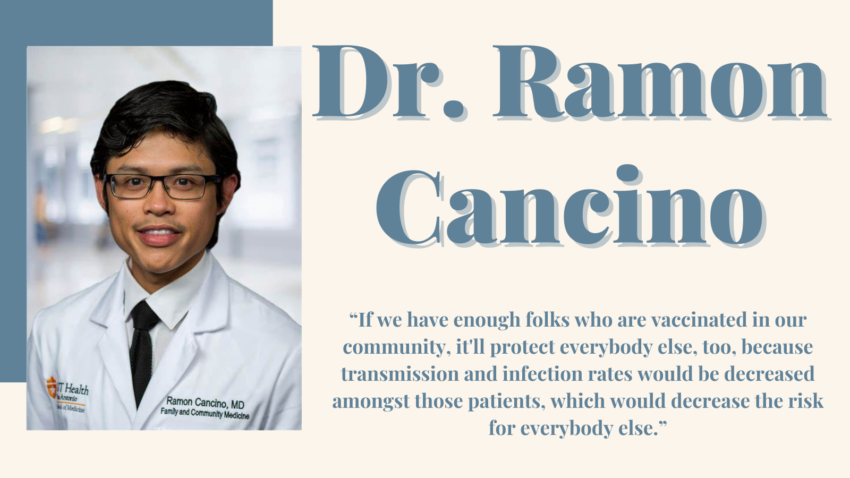
The COVID-19 virus is still a threat for many. U.S. Latinos continue to suffer a from a high number of COVID-19 cases. Fortunately, vaccines are available and free for children and adults, and they’re the best way to protect yourself and your family against the worst outcomes of the virus! Dr. Ramon Cancino, a family medicine physician at UT Health San Antonio and leader of the UT Health Physicians Primary Care Center, stressed the importance of getting vaccinated. “If we have enough folks who are vaccinated in our community, it'll protect everybody else, too, because transmission and infection rates would be decreased amongst those patients, which would decrease the risk for everybody else,” Cancino said. Find a vaccine near you!
Difficulties ...
You are invited to join the Leukemia & Lymphoma Society (LLS) for a free Spanish-language event in San Antonio to help Latinos learn and respond to their cancer risks! The event, "Aprendiendo Sobre Los Cánceres Que Afectan a Los Latinos y Cómo Enfrentarlos," is set for 6-8 p.m. Thursday, Feb. 15, 2024, at Pappadeaux Seafood Kitchen, 76 NE Interstate Loop 410, San Antonio. Dinner is free! Registration is required. "This is a unique opportunity for patients, caregivers, and the community to learn from experts on topics, including learning what cancers that most affect our Latino community," according to LLS. REGISTER FOR THE EVENT!
About the Event on Latino Cancer
Latinos are a dynamic, rising population. But cancer threatens the future health of the U.S. Latino ...
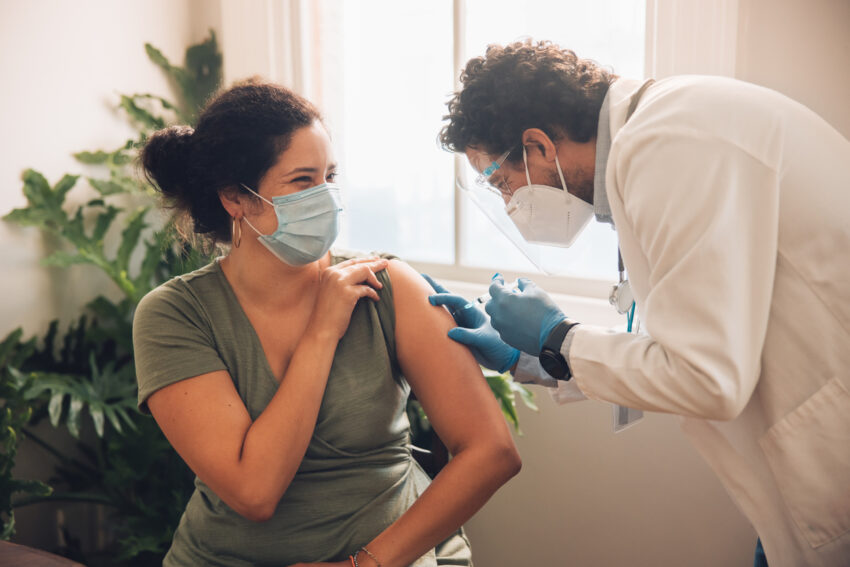
We have come a long way in our fight against COVID-19, in large part thanks to vaccines that help us prevent serious illness and death. But the virus has not gone away. Fortunately, vaccines are available and free for adults, and they’re the best way to protect yourself and your familia against the worst outcomes of the virus! Let’s explore how “You’re Covered” against COVID-19!
COVID-19 Vaccine Recommendations for Adults
CDC recommends everyone ages 5 and older should get 1 dose of an updated COVID-19 vaccine to protect against serious illness from COVID-19. People who are moderately or severely immunocompromised may get additional doses of updated COVID-19 vaccine. Staying up to date with your COVID-19 vaccine is the best way to protect ...
Juanita Mora recalls the exact moment that inspired her to be a doctor. Her mother had fallen ill with kidney disease. A young Mora served as translator between her Spanish-speaking mother and her English-speaking doctor. “I remember turning to my mom and saying 'Mommy, why does it take so long to see the doctor?' And she turns around and says, 'Because there's not enough doctors who speak Spanish,’” Mora recalled. Mora went on to earn her doctorate in medicine, becoming a highly accomplished physician and making a difference for her patients in their own language. As a leader in the field of allergy and immunology and a fellow with the National Hispanic Medical Association (NHMA), she is delivering competent care and practicing infection control to prevent ...
Having fast, affordable internet can improve lives with access to education, healthcare, and jobs, among other important opportunities. But nearly 7 million Texans are being left behind, without high-speed internet. With this in mind, the Texas Broadband Development Office (BDO) is encouraging public comments on the proposed Texas Digital Opportunity Plan. The digital opportunity plan focuses on “closing the digital divide in Texas and ensuring every Texan has the skills and abilities to fully and safely utilize broadband access.” Submit a comment on the draft plan to address broadband access, affordability, and adoption in Texas by Friday, Jan. 5, 2024. Comment NOW!
Why Is the Digital Divide an Issue?
About 2.8 million Texas households are in the ...
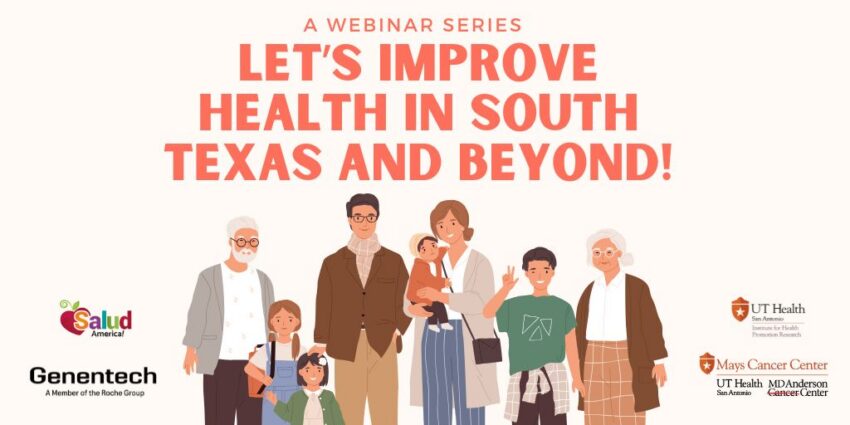
We want all people to be as healthy as possible. How can we reach this ideal, especially as we face high rates of cancer and chronic disease and many people struggle with access to clinical trials, income, health care, food, housing, and other issues? You're invited to a webinar series, "Let’s Improve Health in South Texas and Beyond," a collaboration of the Salud America! program, the Institute for Health Promotion Research at UT Health San Antonio, the Mays Cancer Center at UT Health San Antonio, and Genentech. Here are three webinars from 2026: 7/21/26: Zeroing in on Alzheimer’s, Brain Health, and Caregiving in At-Risk Populations
9/22/26: Exploring Medicaid and Medicare Access for Adults with Intellectual and Developmental Disabilities (I/DD)
11/5/26: How to ...
With the winter season in full swing, it’s peak time for flu, COVID-19, and RSV. Respiratory syncytial virus (RSV) is a respiratory virus that usually causes mild, cold-like symptoms. Most people recover in a week or two. But RSV can be serious, especially for infants and older adults. Latino children also face a “significantly higher burden.” “[A recent study] found that 59% of the burden of respiratory infections [including RSV] was distributed among Blacks and Hispanics,” MD Newsline reports. Let’s dive into how RSV can be transmitted, common symptoms, and how you can protect yourself and loved ones from getting infected.
What Are the Symptoms of RSV?
People infected with RSV usually show symptoms within 4 to 6 days after getting infected, ...
The COVID-19 pandemic hurt public trust in healthcare and science. Trust is especially low among communities that experience health differences and challenges to healthcare, according to Dr. David W. Baker of The Joint Commission in Illinois. “Black and Latino communities faced inadequate testing, financial [challenges] to care, and high rates of COVID-19 cases and deaths, further threatening their trust in physicians, the health care system, public health, and science,” Baker wrote in his article, Trust in Health Care in the Time of COVID-19. Misinformation and a lack of trust in healthcare can spur a cycle of reduced care and ultimately contribute to worse health outcomes. But how can trust in healthcare be restored?
Reasons for Latino Distrust in Healthcare
Several ...