Latinos continue to be one of the most overlooked groups in high-paying jobs, such as careers in science, technology, engineering, and mathematics (STEM).
Of the 34.9 million Americans working in STEM fields, only 8% are Latino as of 2021.
Latinos are fewer than 10% of the workforce in the fields of health careers (9%), life science (8%), physical science (8%), computers and math (8%), and engineering (9%).
The technology industry also lacks Latino visibility.
One in every five US workers is Latino, and only one in 10 of them have a job in tech. There even fewer in leadership tech roles, according to a new Kapor Foundation report.
This paints a stark contrast to the growing number of Latinos in the US.
Latinos currently make up 19.1% of the US population, and are expected to rise to ...
The 2024 calendar year marks a potential turning point in the federal government as the presidential election is set to take center stage in November.
Latino voters could help decide the outcome.
Of the over 246 million Americans projected to be registered to vote in 2024, 36.2 million are Latino, according to data published by Pew Research Center. That’s a 3.9 million increase from the last presidential election.
The recent rise in projected voter registration means that Latinos will have a 14.71% say in what happens in the upcoming election.
So, what’s on the mind of the Latino voter?
To answer, Abriendo Puertas/Opening Doors partnered with UnidosUS and BSP Research to survey 1,500 Latino parents with children 5-years-old and younger to understand the issues driving them to the ...
Latino and Black students have the greatest risk of withdrawing from post-secondary education programs, according to a recent survey by the Lumina-Gallup State of Higher Education.
This finding comes at a time when institutions offering bachelor’s degrees are seeing a significant drop in enrollment — a situation exacerbated by COVID-19.
Over the last decade, college enrollment has declined by 7.4%, which is the equivalent of 1.5 million students, according to Best Colleges.
The biggest decline – 900,000 students – came during the pandemic years of fall 2019 and fall 2023.
While the enrollment of students such as Latinos and Blacks has somewhat improved, they are also considered to be more likely to leave. Survey Results on College Withdrawal
In fall 2023, Gallup surveyed ...
We know you care about the health of people in San Antonio. Watch our webinar, “All of Us in Alamo City Matter: Where You Live Impacts Your Health,” at 10-11 a.m. CT, Wednesday, March 20, 2024! The webinar explored the state of non-medical drivers of health in San Antonio and how we can leverage the All of Us Research Program to promote health and health research. Some studies suggest that non-medical drivers of health plays a role in about 30% to 55% of our health outcomes. This means that nearly half of our health issues are a result of our environment and life circumstances. Hear more from our expert panelists, including representatives from South Texas Blood & Tissue, Mexican American Unity Council, and Salud America! at the Institute for Health Promotion Research ...
The coronavirus, COVID-19, can affect anyone. But reports show Latinos and other overlooked populations are more affected, amid worsening health differences. What are the data really showing? UPDATE 3/5/24: CDC releases new COVID-19 death rates by background. COVID-19 Case Rates for Latinos
The U.S. population recently rose to 19.1% Latino. At the outset of the pandemic, COVID-19 sickened many Latinos. Variants like Delta and Omicron sparked case surges, too. Latinos comprised 24.3% of COVID-19 cases in the United States, second only to Whites (53.8%), according to CDC data on health improvement and cases on April 19, 2023. As of March 5, 2024, CDC is no longer maintaining incidence rates by background on this web page. Several states experienced Latino coronavirus ...
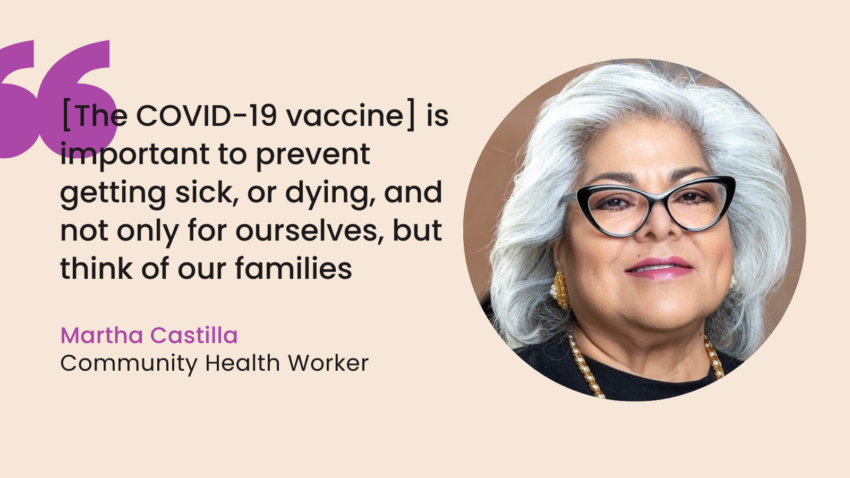
Martha Castilla loves helping people. Her compassion started as a young girl, as her family came to San Antonio from Mexico. “I started helping my brothers and sisters when we got to this country because they didn't speak English,” Castilla said. Today, Castilla works as a promotora de salud, or a community health worker, educating the Latino community about health and wellness. That includes getting the COVID-19 vaccine herself – and sharing how others can, too. COVID-19 vaccines are available and free for adults and children, and they’re the best way to protect yourself and your familia against the worst outcomes of the virus. Because, when the pandemic hit, Latinos like Castilla were on the front lines. “I remember when we went to ...
Why is cancer the top cause of death for Latinos? To unpack this question, Dr. Amelie G. Ramirez of Salud America! at UT Health San Antonio hosted the 4th biennial Advancing the Science of Cancer in Latinos conference on Feb. 21-23, 2024, in San Antonio, Texas. Advancing the Science of Cancer in Latinos drew 280 researchers, doctors, leaders, health leaders, and students for an open dialogue on Latino cancer. Discussion covered new research advances on clinical best practices, effective community interventions, and professional training to eliminate cancer disparities in Latinos. “Advancing the Science of Cancer in Latinos is where we can come together and find solutions for cancer prevention, treatment, and survivorship among Latinos,” said Ramirez, who founded the ...
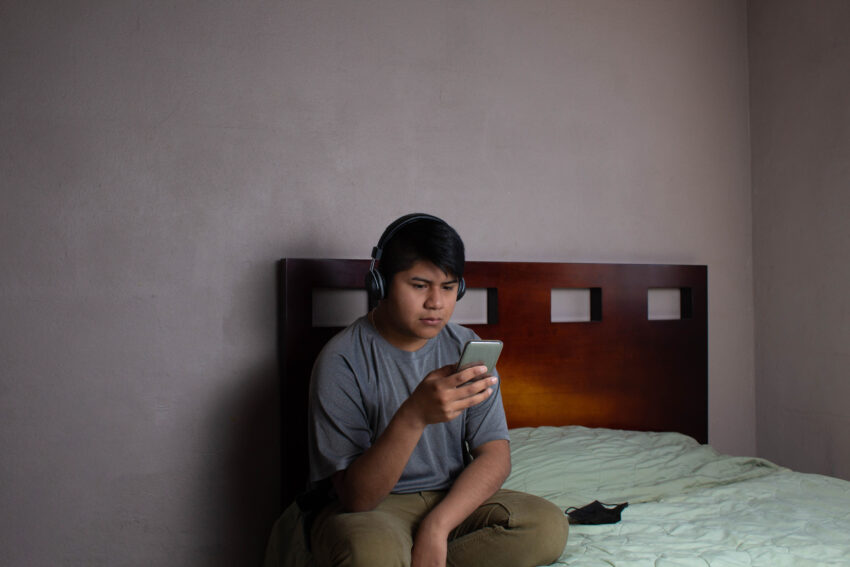
Social media has become a part of everyday life and routine, especially for young Latinos. While social media can offer supportive communities and educational resources, it can also bring harmful impacts and habits. Nearly half of Latino parents are “extremely concerned” over the potential harmful impact that heavy social media use can have on their pre-teen children’s mental health, according to new data from the Brookings Institution. “The Latino community is particularly vulnerable to mental health challenges as a result of social media use,” according to Brookings report. Let’s dig deeper into what the data says and how it affects Latinos.
Young Latinos and Social Media
The Brookings Institution survey, led by the Omidyar Network, ...
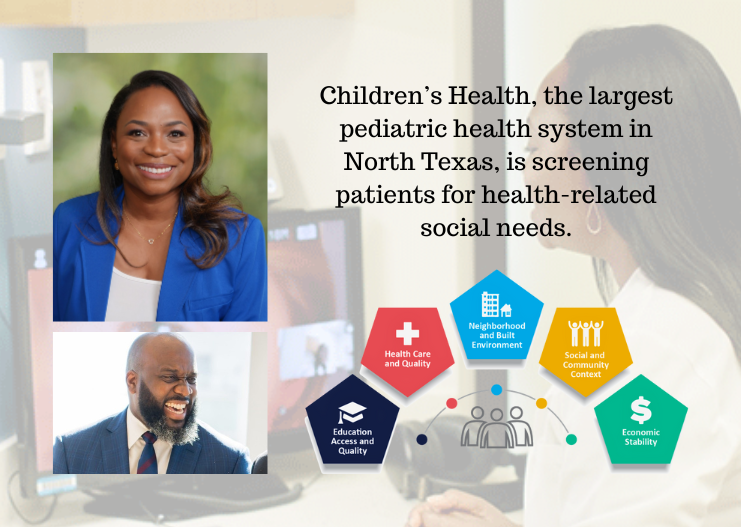
At her annual wellness visit, Dr. Stormee Williams filled out a digital questionnaire that asked about her need for help with housing, transportation, food access, and other non-medical needs. Williams was taking an “Non-Medical Drivers of Health (NMDoH) Screener.” An NMDoH screener is a questionnaire to help healthcare workers identify a patient’s issues with the non-medical drivers of health. These are the conditions in which people are born, grow, work, live, and age, and the wider set of systems that shape life. If a screener finds a patient in need, healthcare workers can then connect the patient to community support and resources. Helping patients address these non-medical needs can help them achieve better health. Williams, fortunately, didn’t have non-medical ...