Paid maternity leave is linked to numerous positive health outcomes for parents and baby, breastfeeding is one. Sadly, in the U.S., only 12% of private sector workers have access to paid family leave through their employers.
The Thing About Paid Family Leave Policies
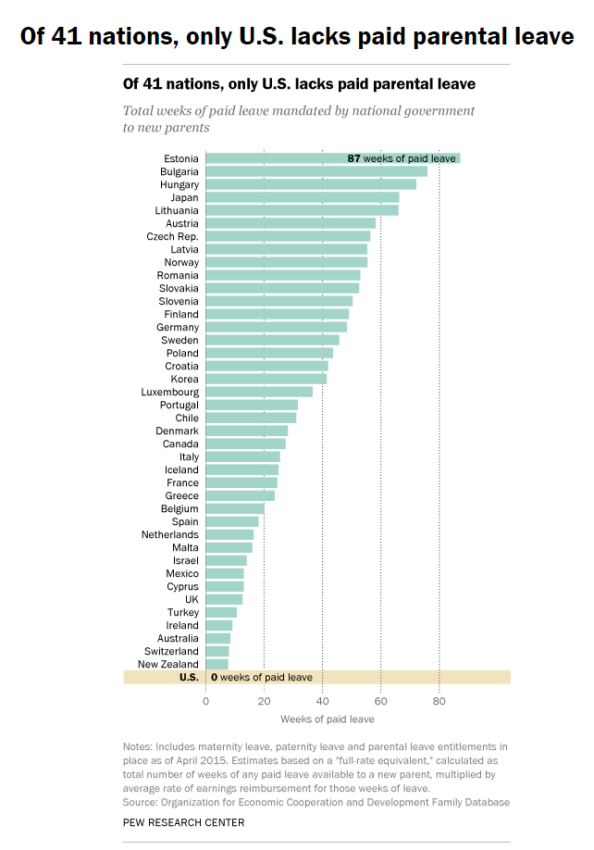
The thing about paid family leave policies in the U.S., is that the U.S. does not mandate paid family leave. California, New Jersey, Rhode Island and soon New York are the only states to have state-mandated paid leave plans in place. Among 41 industrialized nations in the Organization for Economic Cooperation and Development (OECD) and European Union, the U.S. is the only country not to require paid maternity leave. The U.S. provides up to 12 weeks of unpaid leave through the federal Family Medical Leave Act ...
Most Latina and black women do not eat a healthy diet before pregnancy, despite its many benefits, according to a new study. A healthy maternal diet can reduce risk of obesity, preterm birth, and preeclampsia. The study scored the diets of 7,500 women in the weeks leading up to pregnancy. No women in any racial/ethnic group met the Dietary Guidelines for Americans, according to study leader Lisa Bodnar of the University of Pittsburgh. Only about 25% of white, 14% of Latina, and 5% of black women had well-scored diets. Soda was the primary contributor to energy intake among Latina an black women, according to the study. "Our findings mirror national nutrition and dietary trends. The diet-quality gap among non-pregnant people is thought to be a consequence of many factors, ...
More Latino youths are not in school and not working than white youths, according to a new report. These youth—also called "disconnected"—face hurdles as they become adults where they live. This includes lower rates of education, and higher rates of child poverty, unemployment, and teen births. 1 in 8 U.S. youths ages 16-24 are "disconnected." Disconnection, a new measure in the new 2017 County Health Rankings, creates health and economic issues. "Youth disconnected from opportunity—meaning the chance to advance in school, gain work experience, form relationships, and build social supports in the community—represent untapped potential to strengthen the social and economic vibrancy of our communities," according to the report.
How to Help
The County Health Rankings, ...
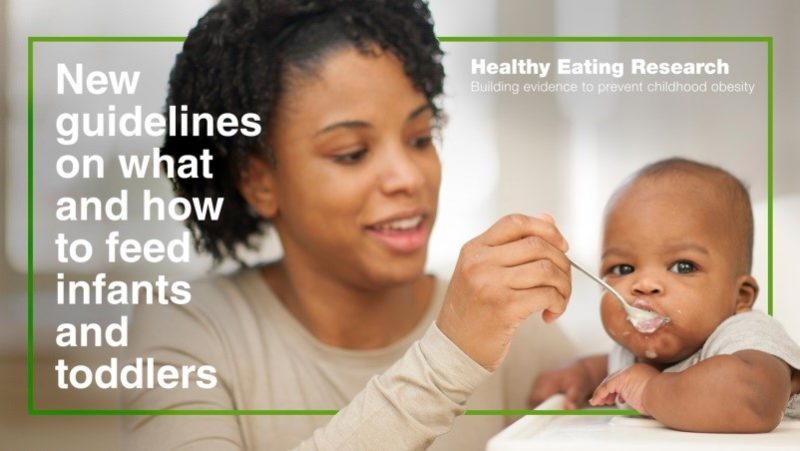
New guidelines are out from Healthy Eating Research (HER) for Health Professionals on infant and toddler feeding. Evidence shows that the first 1,000 days or the period from conception to age two for children are critical in obesity prevention. Many Latino children often deal with unhealthy weights due to more consumption of sugary drinks, less access to healthy foods and limited breastfeeding opportunities. With the new evidence-based guidelines from HER parents can find out what and how to feed infants and toddlers as well as how to address screen time, media use, sleep and other topics that impact childhood weight outcomes. Some of the main recommendations of the review include: Encouraging breastfeeding from birth until 6 months and after adding complimentary foods, ...
In addition to breastfeeding, research suggests that other factors that may also play a critical role in helping Latino kids achieve a healthy weight by kindergarten: mothers’ physical activity and healthy eating habits before and during pregnancy, formula marketing, maternity leave, and kids’ healthy eating and physical activity habits established during early childhood. An expert panel, convened by Healthy Eating Research, a national program of the Robert Wood Johnson Foundation, developed Feeding Guidelines for Infants and Young Toddlers, a report of evidence-based recommendations for promoting healthy nutrition and feeding patterns for infants and toddlers. These guidelines can be used by parents and caregivers in the home, as well as be applied in child-care settings where ...
Growing up as “the minority kid” in school isn’t easy, but it helped Brenda Frutos develop a passion for fighting for health equity among Latinos. Frutos not only earned her master’s degree in public health from West Chester University of Pennsylvania, she also is working as a certified health education specialist. She provides research and technical support in the Department of Family Medicine at Lehigh Valley Health Network in Pennsylvania, and also has experience helping with interventions in breastfeeding among underserved women. Motivated by the hard work of her significant other who overcame challenges to reach medical school, Frutos wants to continue pursuing more education. Frutos applied for the Éxito! Latino Cancer Research Leadership Training program, which ...
Researchers from the University of California San Francisco recently found the risk of early rapid weight gain and obesity at age 2 years among infants that were exposed to antibiotics in the first 6 months of life. The researchers evaluated the type and frequency of antibiotic exposure at 6 months and 1 year of life and their descriptions of infant dietary intake. The cohort of women studied was 97% Latina and was recruited at prenatal clinics in 2012 and 2014. Recent studies suggest that there are harmful effects of antibiotics on the healthy gut in this developmental period before 12 months of age and can increase obesity risk, reported Childhood Obesity. Results indicated that antibiotics exposure, most commonly amoxicillin was greater among obese 2-year-olds (40%) compared ...
Latinos face cultural and other barriers to healthy lifestyles. That’s why they suffer high rates of diabetes, obesity, certain cancers, and mental health issues. Community advocates are here to help! WATCH and VOTE for six new Salud America! #SaludHeroes of Community Health who work with Latino families and kids to push healthcare, stress relief, physical activity, water, and more. For voting, we’ll enter you into a drawing for a FREE T-shirt and jump rope! Gaby Medina: Water Promotora. Gaby pushes water over sugary drinks to Spanish-speaking Latino families, as part of a Colorado campaign. Baby Café: Breastfeeding Help. Diana Montano and others started a Baby Café with peer counselors to support breastfeeding moms in San Antonio. Felipe Pinzon: Aid for ...
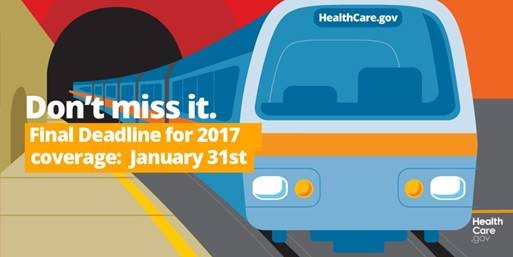
Few groups have benefited more from the passage of the Affordable Care Act (ACA) than Latinos. Since the law went into effect, over 910,000 Latino adults – between the ages of 19 and 26 – who would have previously been without coverage were now eligible to remain on their parents’ plans. Over 4.2 million gained health insurance in that time as well, lowering the rate of Latino uninsured by 7.7%. With the deadline for the latest phase of Open Enrollment coming to a close on January 31, 2017, many are still without coverage. This is partly due to the fact that many do not know what is covered through plans available in the Health Care Marketplace. What Marketplace Plans Cover All plans that are available through the Marketplace cover the same set of “essential health ...