Pregnant women who drink diet beverages on a regular basis during their pregnancy are more likely to have overweight babies by their first birthday, according to a new study, NBC Health reports. For the study, Canadian researchers followed 3,000 women and their children and found that babies whose mothers drank diet drinks on a regular basis had a higher BMI z-scores that “were significantly higher than those of their counterparts.” “To our knowledge, our results provide the first human evidence that artificial sweetener consumption during pregnancy may increase the risk of early childhood overweight,” wrote the authors of the study, which was led by Meghan Azad of the University of Manitoba in Canada. Experts recommend pregnant women to add diet beverages to their ...
Many parents are unaware of the marketing kids see in their schools about food. Many times, kids are marketed unhealthy food options as large food companies sponsor school activities and events.
What does it teach kids when the products are featured in the halls, cafeterias, vending machines and athletic fields are the same ones that their teachers and parents tell them are not good for their health?
The UConn Rudd Center for Food Policy & Obesity has created a set of presentations to help advocates inform their communities on how unhealthy marketing practices contribute to an epidemic of poor diet among youth, and what communities can do to help ensure that their children grow up at a healthy weight.
Among these resources is a downloadable presentation on "Food Marketing in ...
A new report from the Agency for Healthcare Research and Quality (AHRQ) found that the rate of uninsured Latinos under the age of 65 decreased greatly from 2010 to 2015. Overall, numbers for Americans under the age of 65 decreased from 18% to 10%. The new report also shows that more and more Latinos now have a “usual” place to go for medical care. Latinos showed the most gain in this area climbing from 77% in 2010 to 83% as of the first half of 2015. As the cost of healthcare became more affordable, thanks to initiatives such as the Health Insurance Marketplace for the Affordable Care Act (ACA) and the expanded Medicaid coverage that became available in more than half of the States, fewer people overall reported having difficulties paying their medical bills. Individuals age ...
Soda tax considerations in cities are growing in interest across the nation and in other countries around the world. Watsonville, a majority Latino community (81.9% Latino), is working on their own proposals in California, hoping to encourage other small town minority-majority cities, that if they can pass taxes on sugary drinks, any small-town city has a chance. Groups and organizations in the city are all working together to rally voters and get petitions signed that would propose a 2-cent-per-ounce sugary beverage tax. Christian Garcia, one of the organizers, gathered over 2,000 signatures from voters who were "very receptive" for the taxes, Garcia explained in a local video, stating how groups went door-to-door to collect signatures from around the city. Garcia and his ...
Looking for a new resource to spread the word about unhealthy food and beverage marketing to kids in your school or community?
The UConn Rudd Center for Food Policy & Obesity has created a set of presentations to help advocates inform their communities on how unhealthy marketing practices contribute to an epidemic of poor diet among youth, and what communities can do to help ensure that their children grow up at a healthy weight.
Among these resources is a downloadable presentation on "Food Marketing to Youth: What's the Harm?", which explains the importance of eating healthy foods, the truth about how millions is spent in unhealthy food marketing towards kids and how to talk to kids and reduce advertising impacts on kids.
Latino kids often see more ads on TV than their white ...
In 2015, the Kids’ Safe and Healthful Foods Project-a collaboration between the Robert Wood Johnson Foundation and the The Pew Charitable Trusts (pew)-conducted a literature review to assess the potential impact of updates to CACFP nutrition standards in order to develop evidence-based recommendations to improve kid's health. The conclusion was that updates to the CACFP nutrition standards could positively affect kid's health. Pew released a fact sheet on the health benefits of the new CACFP Final Rule. The fact sheet includes: The Health Impact Assessment Process
Probably effects of final rule to CACFP nutrition standards on children's health Increased whole grain intake
Decreased consumption of grain-based desserts
Increased vegetable ...
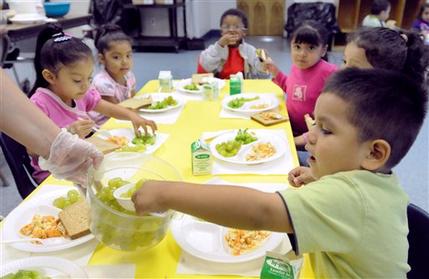
The U.S. Department of Agriculture (USDA) Child and Adult Care Food Program (CACFP) provides 1.9 billion meals and snacks to over 3.3 million children in child care centers, family care homes, and after-school programs. The CACFP program began in the 1960's and hasn't seen significant changes since. Foods served by CACFP providers are generally lower in fiber and higher in saturated fat and added sugars recommended by the U.S. Department of Health and Human Services (HHS) and USDA Dietary Guidelines for Americans for preschool kids. In 2015, the Kids’ Safe and Healthful Foods Project-a collaboration between the Robert Wood Johnson Foundation and the The Pew Charitable Trusts-conducted a literature review to assess the potential impact of updates to CACFP nutrition standards in ...
New York City Mayor Bill de Blasio recently announced the city’s intention to spend nearly $30 million to increase health services to deal with the growing number of homeless students. Funding, which will come from the state, will be used toward new school-based health centers and programs inside homeless shelters that help children with literacy and attendance. Per recent reports, New York City (29% Latino population) has a rising homeless population, including more than 86,000 public school students in temporary housing. That number has risen 25% since 2010. More than 23,000 of New York City’s students live in homeless shelters. “If we can support their well being, they can feel better, attend school, focus on their school work,” said Elizabeth Rose, the head of operations ...
Según datos de Salud America! más del 39% de los niños latinos en EE.UU sufre de obesidad y sobrepeso. Un reciente informe de Voices for Healthy Kids, Robert Wood Johnson Foundation y SHAPE America subraya la importancia de la educación física en la lucha contra la obesidad infantil. Lee más sobre este informe y recomendaciones ...