In recognition of National Minority Health Month, Breastfeeding Medicine is providing FREE access to a selection of high-impact articles now addressing minority health disparities. Racial and Ethnic Disparities in Breastfeeding
Katherine M. Jones, Michael L. Power, John T. Queenan, Jay Schulkin Changing the Breastfeeding Conversation and Our Culture
Gail C. Christopher, Joanne K. Krell Barriers to Breastfeeding in the African American Population of Shelby County, Tennessee
Julie L. Ware, Larita Webb, Marian Levy Impact of Breastfeeding Self-Efficacy and Sociocultural Factors on Early Breastfeeding in an Urban, Predominantly Dominican Community
Melissa E. Glassman, Karen McKearney, Minna Saslaw, Dana R. Sirota Prepregnancy Obesity and Breastfeeding Noninitiation in the ...
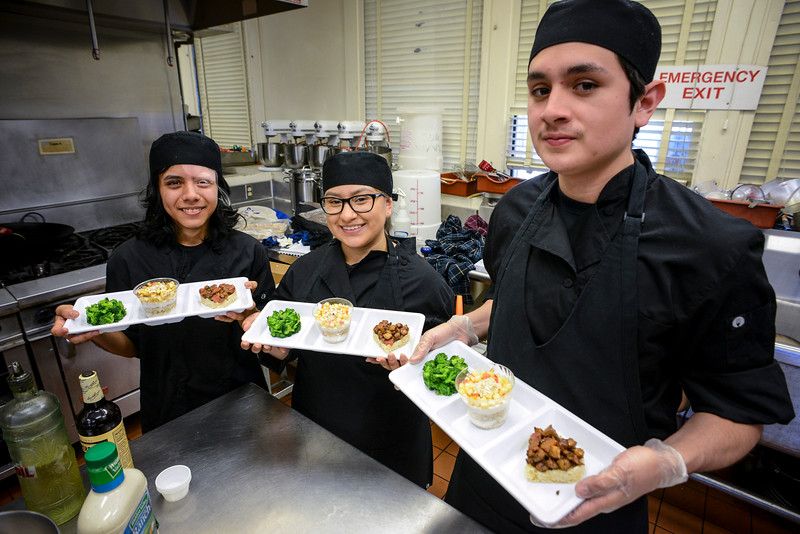
Students across the Los Angeles Unified School District (LAUSD), participated in the Healthy Schools Campaign healthy cooking contests. Students were challenged to create a nutritious lunch that includes fresh fruit and vegetables, meets USDA nutrition guidelines, be under 760 calories and costs less than $1.70. The challenge allows students to win a chance to represent Los Angeles across the state and serve the model meal in an all-expenses paid Cooking up Change competition in the capitol. The winner could go on from there to serve the meal to congress and become a model meal for schools across the country. Having healthy options and creative ways to get kids involved in creating healthy meals is a innovative way to change school food environments. Studies show that when ...
Although Latinos account for nearly one-fourth all estimated new HIV diagnoses in the U.S, their participation and awareness of HIV testing is low. To improve HIV testing and prevention in the Latino community the University at Albany—School of Education has developed a new study that aims to determine the factors that impact HIV testing. The three-year project aims to “determine the combinations of individual, sociocultural and community-level factors that must be targeted within the Latino gay, bisexual, and other men who have sex with men community to maximize HIV testing and prevention efforts.” Study leaders are recruiting Latino men to get insight into their habits. Participation includes three online surveys with gift card incentives for completing ...
A new report from the U.S. Census Bureau offers a look at the differences in educational attainment for the different races and ethnicities. The study found that 93.3% of non-Hispanic whites over the age of 25 graduated from high school and Asians and non-Hispanic whites were more likely to hold a bachelor’s degree than Hispanics/Latinos. For Latinos, there has been a positive trend in terms of education. In 1988, 10% of Latino adults (25 years or older) had obtained a bachelor’s degree or higher. In 2015, the rate rose to 15%. However, compared to non-Hispanic whites (36% in 2015), Latinos still lag far behind. Latinos were the only group where the percentage of the native population with a bachelor’s degree or higher was higher than the percentage of the foreign-born ...
The United States House of Representatives just passed the Global Food Security Act (H.R. 1576) a new bill that takes steps to fight worldwide hunger by empowering and supporting small-scale local farmers. The Global Food Security Act authorizes a U.S. global food an nutrition security strategy to help support farmers in small scale sustainable farming. “In the world’s poorest countries, malnutrition and stunting affect hundreds of millions of people and undermine the development of entire countries. This tragedy is made all the worse because it is completely preventable," Representative McCollum said on her site. "The Global Food Security Act invests in hardworking smallholder farmers around the world to reduce hunger and improve nutrition. In particular, it empowers women ...
The Food and Drug Administration (FDA) approved folic acid fortification of corn masa flour widely used by Latinos, NBC News reports. According to the FDA, folic acid is a B vitamin that when taken by a pregnant woman may help prevent neural tube defects, which are birth defects affecting the brain, spine, and spinal cord. “Increased consumption of folic acid in enriched flour has been helpful in reducing the incidence of neural tube defects in the general population,” said Susan Mayne, Ph.D., director of the FDA’s Center for Food Safety and Applied Nutrition. “Our analysis shows that adding folic acid to corn masa flour will help increase the consumption of folic acid by women who consume this flour as a staple in their diet.” Data from the FDA shows that adding folic ...
According to the Centers for Disease Control and Prevention (CDC), Latinos have different degrees of health risks, including a 50% higher death rate from diabetes, a 23% more chance of obesity, a 24% chance poorly controlled high blood pressure, and Latinos are less likely to be screened for health issues. To meet the unique health care needs of the Latino population in northeast New Jersey, the Clara Maass Medical Center and the Newark Beth Israel Medical Center have each launched programs aimed at improving Latino health. Clara Maass Medical Center has established the Center for Excellence for Latino Health, while Newark Beth Israel Medical Center has created the Hispanic Health Outreach Program. The Hispanic Health Outreach Program was designed to raise awareness about the health ...
Members of Minnesotans for Healthy Kids Coalition, a statewide coalition of around 25 organizations that work on policies to help address childhood obesity, gathered together in March to purpose a healthy food access bill for the many people who are facing little to no healthy food access in Minnesota. According to a 2011 project from the Trust for American's Health and the Robert Woods Johnson Foundation, 14 percent of children ages 10 to 17 were obese in Minn. The coalition talked with several steak holders about what should be included in a bill for healthy food access for Minn. and many wanted the Dept. of agriculture to house the loans, technical assistance and felt the state could house the program with ten million dollars a year, in the form of loans grants or technical ...
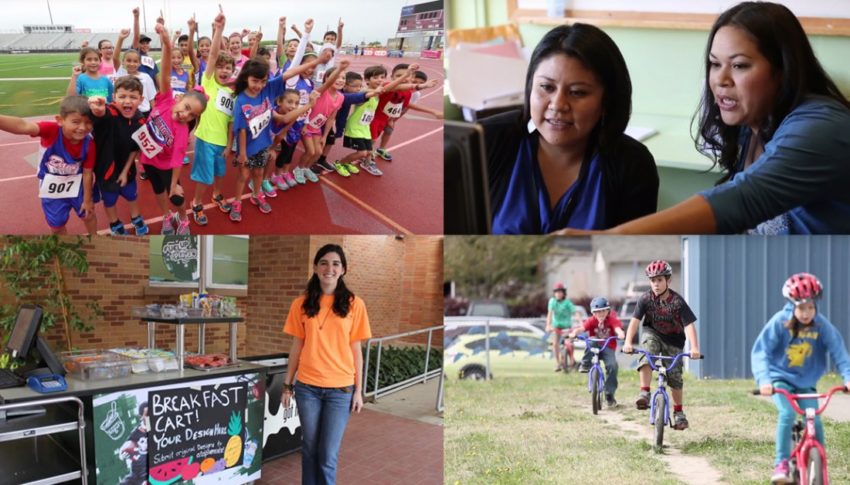
Students consume up to half their daily calories at school. WATCH and VOTE for new Salud America! #SaludHeroes who push healthy food and physical activity at school by April 29, 2016, and be entered in a random drawing to win a FREE T-shirt and jump rope! #SaludHeroes at school are: School Navigators. Rocio Muñoz helped embed bilingual, bicultural health navigators to increase parents’ access to health services into elementary schools in Corvallis, Ore. Breakfast is Back. Michaelie Love, a high-schooler in San Antonio, Texas, worked with her school to get a cart to make eating breakfast easy, healthy and cool. BMX Fun. School principal Doug Johnson used biking and a sweet BMX trail to make physical activity fun for elementary students in Mountlake Terrace, ...