Most people with COVID-19 get better within a few days to a few weeks after COVID-19 infection. But some people, including many Latinos, develop long COVID. Long COVID remains an unresolved threat to the health of Latinos and all people. While health experts don’t yet fully understand long COVID symptoms and risk factors, progress is being made regarding treatment. Let’s learn more about how researchers are working to find the most effective therapies for long COVID through research studies and clinical trials.
Relieving the Burden of Long COVID Symptoms
The National Institutes of Health (NIH) launched the RECOVER research study in 2021 to learn why some people experience long COVID or develop new or returning symptoms after COVID-19 infection. Now, based on ...
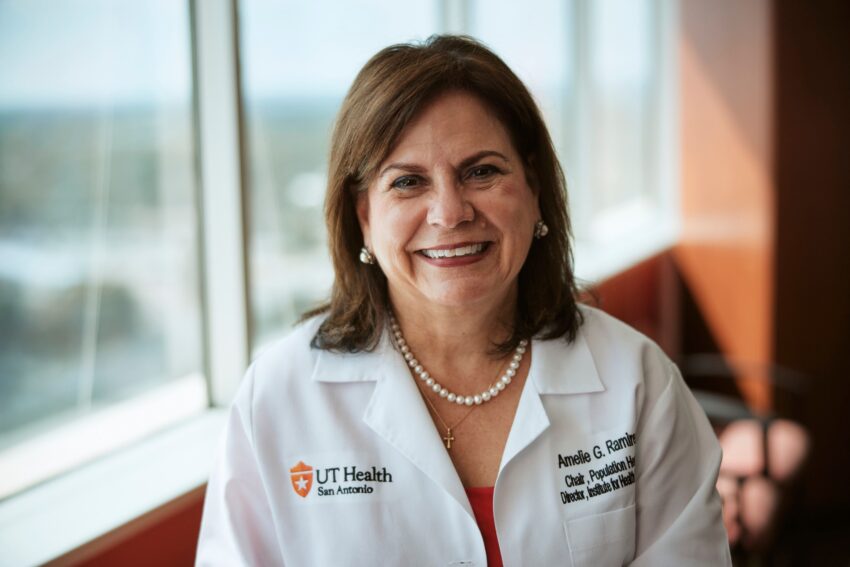
Dr. Amelie Ramirez, leader of Salud America! at UT Health San Antonio, has won the 2023 Association of American Cancer Institutes (AACI) Cancer Health Award. The award recognizes exceptional leadership in promoting health improvement and promoting health and fairness for people of all backgrounds at a cancer center. Past winners are Dr. Robert A. Winn of the VCU Massey Cancer Center and Dr. Electra D. Paskett of Ohio State University. Ramirez, nominated by the award by former Mays Cancer Center Director Dr. Ruben Mesa, will be recognized at AACI's annual meeting Oct. 2, 2023. "I am honored to receive the AACI Cancer Health Award. It recognizes the hard work we do at the Mays Cancer Center at UT Health San Antonio to promote health, study new approaches to reduce health issues, ...
Young Latinos face many challenges when it comes to mental health support and resources. The National Institute of Mental Health (NIMH) has highlighted ongoing projects and resources that contribute to decreasing the issues that plague the Latino youth mental health crisis. “Evidence indicates that Hispanic and Latino youth have pressing mental health needs and are not receiving adequate mental health care,” according to Dr. Joshua A. Gordon, NIMH director, in a blog. Let’s explore the Latino youth mental health crisis and what resources can help.
Latino Youth Mental Health
The COVID-19 pandemic affected youth from minority communities and worsened the health differences experienced by these communities. Factors like not being treated fairly, ...
Latinos and all people face many challenges to good health. Access to healthcare is often out of reach. Unfair treatment is a reality for many, along with financial toxicity, limited health food, and unstable housing, transportation, and childcare. But we have an opportunity to create healthy changes. Let’s use #SaludTues on Tuesday, Sept. 5, 2023, to share how everyone – from healthcare to schools to local decision-makers – can get involved in building healthier communities for Latinos and all people as we near Hispanic Heritage Month (Sept. 15 to Oct. 15)! WHAT: #SaludTues Tweetchat: Building a Healthier Future for Latinos
TIME/DATE: 1-2 p.m. ET (Noon-1 p.m. CT), Tuesday, Sept. 5, 2023
WHERE: On Twitter with hashtag #SaludTues
HOST: @SaludAmerica
...
The drive to Guadalupe Clinic from rural Coffeyville, Kansas, was just over two hours, but it felt like a lifetime for the Pascual family. As their older vehicle putted along the back roads, the Pascuals anxiously awaited much-needed medical care. With no health insurance and limited income, getting basic healthcare was a constant struggle. Finally, the family’s car turned onto St. Francis Street in downtown Wichita, Kansas. Their destination was nestled between two scrap metal yards and surrounded by railroads and small housing lots. Pulling into the parking lot, the Pascuals breathed a sigh of relief. They had safely reached the Guadalupe Clinic and were welcomed with open arms – no questions asked. For families like the Pascuals, Guadalupe Clinic in Wichita, ...
Researchers at UT Health San Antonio are launching a five-year, $15.5-million study to investigate why the region’s older Mexican Americans experience a high rate of dementia. The project, the San Antonio Mind and Heart Study, is led by UT Health San Antonio’s Glenn Biggs Institute for Alzheimer’s and Neurodegenerative Diseases with funding from the National Institutes of Health/National Institute on Aging. Let’s dive deeper Latinos, dementia, and the goals of this study.
A Continuation of Important Data
The new dementia study is an is an extension of the San Antonio Heart Study, conducted at UT Health San Antonio between 1979 and 2006 led Dr. Helen P. Hazuda. Researchers, led by Dr. Claudia L. Satizabal, associate professor of population health ...
Latinas suffer a high burden of cervical cancer, which is often caused by the Human Papillomavirus (HPV). In fact, Latinas have the second-highest rate of dying from cervical cancer, according to the US Centers for Disease Control & Prevention (CDC). Cervical cancer screening – commonly referred to as a Pap smear – can help reduce this disease burden. However, Latinas and other women from overlooked communities face numerous challenges to cervical cancer screening, such as lack of health insurance and fear of cervical exams, which can be uncomfortable and anxiety-inducing. Enter University of North Carolina researchers Jennifer S. Smith and Noel T. Brewer. The duo are part of the research team behind the My Body, My Test 3 clinical trial, which explored the ...
Latinos face inequities in non-medical drivers of health (NMDoH), from housing to healthcare, making it harder to achieve health fairness. Watch the UT Health San Antonio webinar — “How to Address Non-Medical Drivers of Health in Our Clinics and Systems” — which was held at 11 a.m. CST on Wednesday, Sept. 20, 2023, to explore how healthcare settings can care for patients' medical and NMDoH needs. Panelists from UT Health San Antonio, Nemours Children's Health, HOPE Clinic in Houston, the American Cancer Society, and Genentech unpacked NMDoH screening, a strategy that clinics, hospitals, and healthcare systems can use to check patients for social needs and connect them to needed resources. This is a part of a webinar of a series, “Let’s Improve Health in South Texas ...
About half of Latinos who enroll in a four-year college do not end up graduating, according to a new analysis from ¡Excelencia in Education! Latinos’ college graduation rate (52%) also is lower than their White peers (65%). How can we increase Latino college graduation rates? Let’s dive into to the numbers and explore how to close the Latino education gap, and better support Latino students.
Latino College Graduation by the Numbers
28% of Latino adults (age 25 and older) currently have an associate degree or higher, compared to 48% of White adults. To better understand that gap, the new analysis from ¡Excelencia in Education! highlights 4 measures that track degree completion: 1. Graduation Rate: Total percentage of students who graduated within ...