It’s been nine months since President Biden announced his student loan forgiveness plan, and a lot has happened since. Whether you’re for or against the forgiveness, information on the plan’s status can be confusing and overwhelming. So, here’s a simplified summary of where our nation stands on student loan forgiveness.
Have Any Loans Been Forgiven?
So far, only targeted groups have benefitted from loan forgiveness. The billions of dollars awarded to these groups account for just 1% of all federal student loan debt. Most borrowers have yet to benefit from forgiveness, and the current student loan debt amount sits at $1.7 trillion.
What’s the Hold Up with Student Loan Forgiveness?
Pushback on the loan forgiveness plan has occurred across the nation in many states, ...
Nemours Children’s Health knows healthcare is more than just medicine. The conditions in which we are born, grow, live, work, and age – known as non-medical drivers of health (NMDoH) – can greatly help or harm our health. That is why Nemours gave multiple leaders, including Kelli Thompson, director of population health management; Na-Tasha Williams, population health specialist; and Alex Koster, senior director of the value-based care data analytics and IT department; the space to begin developing a non-medical drivers of health screening program in 2018. The NMDoH screening program is now fully implemented or being piloted in multiple Nemours locations, including in Delaware, Pennsylvania, and Florida. To screen patients for immediate needs, such as food and housing ...
Data can drive action for healthy change. But what if we don’t have enough data? Or the right data? Or fair data? Unfortunately, even with more health reports and more health dashboards than ever before, we still face inconsistent and incomplete data. We are lacking sufficient data – especially data disaggregated by background – on non-medical drivers of health, firearm violence, traffic crashes, and adverse childhood experiences. Insufficient data happens for many reasons. Limited funding, limited staff, uncertain methods, logistical challenges, entrenched practices, inadequate analysis, and inadequate or non-uniform reporting after data collection are occurring at the local, state, and federal levels. Let’s explore the most critical missing data and how health ...
The U.S. Centers for Disease Control & Prevention’s Project Firstline program offers training and educational resources on various infection control topics, including risk recognition and infection control basics related to COVID-19. These training and educational resources are designed for all healthcare workers, no matter their role or educational background. Join us as Salud America! explores Project Firstline’s interactive infection control resources for healthcare workers through a three-part series on, “What’s Wrong with This Picture?” Part 1 tackled the emergency room. Part 3 will focus on an outpatient exam room. Today, we will address the nurse’s station.
Can You Recognize Infection Control Risks?
Healthcare workers must be aware of where ...
A young Erik Cardenas sat quietly in his chair, gently swinging his legs back and forth. He clasped his hands together and observed the clinic waiting room. He could hear some patients chattering with family members in Spanish. Others looked like they could doze off any minute. “Cardenas?” called out a nurse holding a clipboard. Erik sprung from his chair and followed his parents and the nurse into the doctor’s office. He was glad the waiting game was over. “As Mexican immigrants living in Houston, my parents didn't have the best access to healthcare,” a grown Cardenas recalled. “I have a lot of memories of waiting hours at community safety net clinics, and after a multiple hour wait, you were lucky to see the doctor for five minutes.” Cardenas also recalls ...
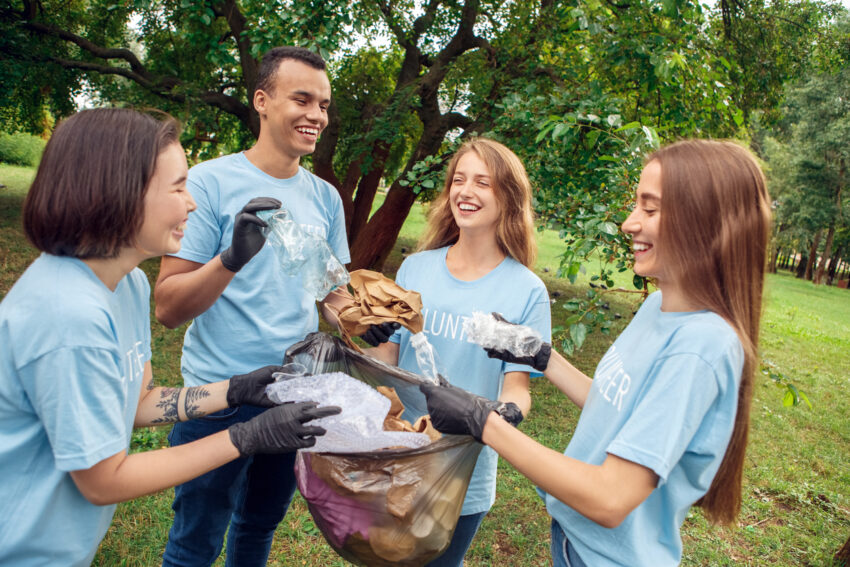
On April 22, let’s celebrate Earth Day! Earth Day honors the achievements of the environmental movement and urges for protection of our planet’s natural resources for future generations. The observance began on April 22, 1970, thanks to Wisconsin Sen. Gaylord Nelson and Harvard University graduate student Denis Hayes. Since then, it has promoted advocacy, education, and conservation around environmental issues like climate change and pollution. As this year’s celebration approaches, Salud America! is sharing five ways you can get involved to preserve and improve the environment.
1. Reduce, Reuse, Recycle
What is the most effective way to reduce waste? Don’t create it in the first place. “Making a new product emits greenhouse gases that contribute to climate change ...
Despite the ever-growing population of Latinos in the United States, only a very small percentage participate in clinical trials. Clinical trials are studies with volunteers that help researchers learn how to slow, manage, and treat different diseases. “[Fewer] Latinos in clinical trials makes it hard for researchers to develop new treatments for this group, which suffers a heavy burden of cancer, Alzheimer’s, and other diseases,” said Dr. Amelie Ramirez, director of the Salud America! program at UT Health San Antonio. Do you know what happens in a clinical trial? How can clinical trial help you and your friends, family, and community? Why is Latino participation in clinical trials important? Get answers and helpful resources in new bilingual videos from ...
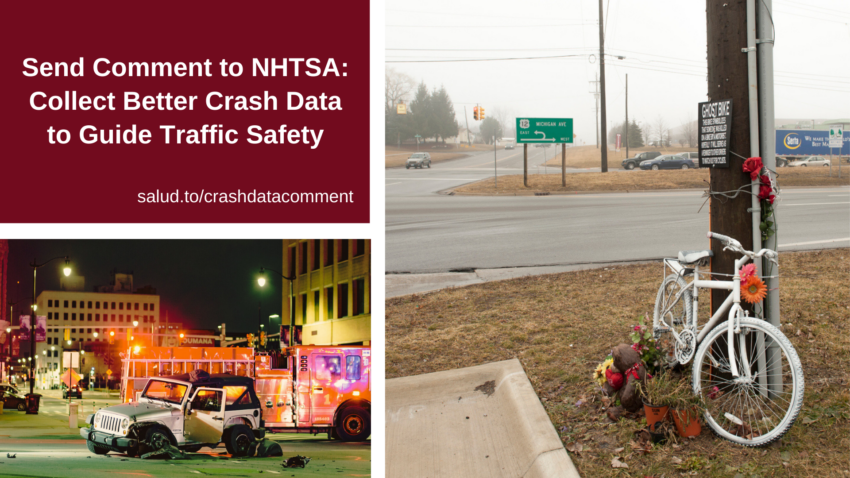
For too long, the blame for our nation’s high traffic fatality rate has fallen on individual drivers and factors, rather than on environmental and systemic traffic safety factors. One of the contributors to and consequences of this approach is insufficient crash data. Insufficient crash data hinders efforts to define and monitor the problem and identify risk and protective factors, and thwarts strategies to prevent these unnatural and gruesome deaths. Now is your opportunity to urge federal leaders to collect better crash data to guide traffic safety. Public comments are wanted by the National Highway Traffic Safety Administration (NHTSA) on revisions to the Model Minimum Uniform Crash Criteria (MMUCC), a voluntary guideline of standardized crash data variables for state and ...
Every year, County Health Rankings & Roadmaps (CHR&R) highlights health differences that impact the quality of life and health outcomes of communities. The report’s data and guidance aim to support community-led efforts to improve health, where everyone has a fair, just opportunity to be their healthiest. This year, CHR&R focused on two health drivers: civic infrastructure and civic participation. Let’s explore the report and see how counties compare across the nation, and how civic infrastructure and civic participation affects the health of Latinos and all people.
What is Civic Infrastructure and Civic Participation?
Civic infrastructure provides community members a place to connect. These places include libraries, civic centers, parks, and schools. Civic ...