by
by 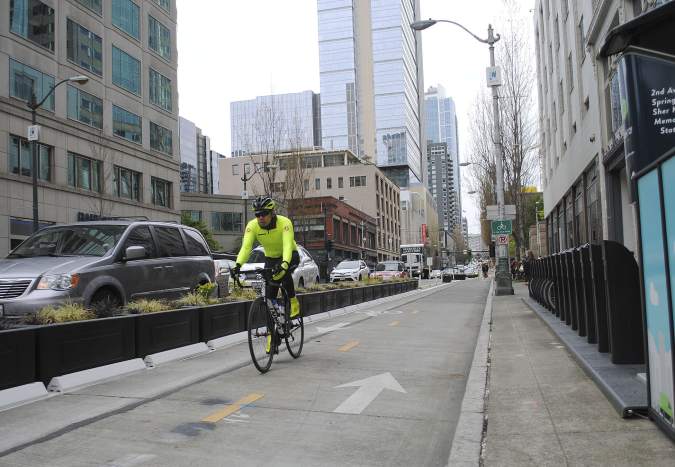
Share On Social!
In September 2014, the Seattle Department of Transportation launched the Second Avenue protected bike lane pilot project. As a pilot project, a two-lane cycle track was constructed on the southbound side of Second Avenue with paint and plastic posts.
The purpose of pilot bike lane projects, like this, are to design and implement demonstration projects that illustrate to the public how new types of infrastructure-bike lanes-could work in the real world, particular how new types of infrastructure could work on real roads.
The demonstration worked.
“If you look at the bike volumes, before there were about 188 folks a day who would ride down Second,” Dawn Schellenberg, the SDOT project developer in charge of the plan said, according to one source. “If you make it a two-way bike lane, you’d think you’d double that. But we’ve seen 744 a day—that’s a 300 percent growth.”
In late March 2016, construction on the bike lane pilot project began again. This time, to make permanent improvements, which were guided by community feedback and observation.
The transition from temporary to permanent includes planter boxes, two-tiered traffic signals, extended bike lanes, and raised bike lanes in front of loading zones and parking garages. Planters, for example, protect bikes lanes from moving vehicles and make the street a more enjoyable place to be.
Connectivity is still a concern in Seattle (6.6% Latino). Developing a network of safe bike lanes is important to ensure not only that residents can safely get to other areas of the city, but that all residents have access to safe biking opportunities.
Whether for leisure or to commute to school or work, biking can have a positive impact on health. Active transportation plays a huge role in increase how physically active people are throughout their day, thus decreases their risk for obesity and chronic diseases, like diabetes and heart disease.
Read more about this successful bike lane demonstration project here.
Copy and share: ‘Pilot’ bike lane project in Seattle gets permanent upgrades. #ActiveSpaces http://salud.to/1rcqJvh @SaludToday
Explore More:
Healthy Families & SchoolsBy The Numbers
142
Percent
Expected rise in Latino cancer cases in coming years