Among the countless disparities Latinos face, the way in which people's brains age might differ based on their race. That is what researchers at University of North Texas Health Science Center at Fort Worth will study after reciving increased funding for large-scale Alzheimer's biomarker study from the National Institute of Health (NIH). Mainly, they will be looking into health gaps in brains aging between Mexican Americans compared to their white peers. "To successfully battle and ultimately prevent or treat a complex disease such as Alzheimer's, we need to understand how this disease and other forms of dementia affect our nation's diverse communities differently," Dr. Eliezer Masliah, director of the NIA Division of Neuroscience, said in a press release. This award was made ...
By Vivian Vasallo
Executive Director of the Delta Dental Institute As a Latina leader in health care, I am proud to celebrate Hispanic Heritage Month and the many contributions Latinos have made to our country, especially in healthcare. This month is a time to celebrate the progress that has been made and soberly examine where we have more work to do to improve disparities in access to care and diversity in the health – and oral health – fields. At the Delta Dental Institute, we aim to close the gap in oral health access and outcomes faced by Latinos in the U.S. through our community engagement, research, and advocacy efforts. Latinos have long been making important contributions to the nation’s health care, going back as early as the 1500s with Francisco Bravo authoring ...
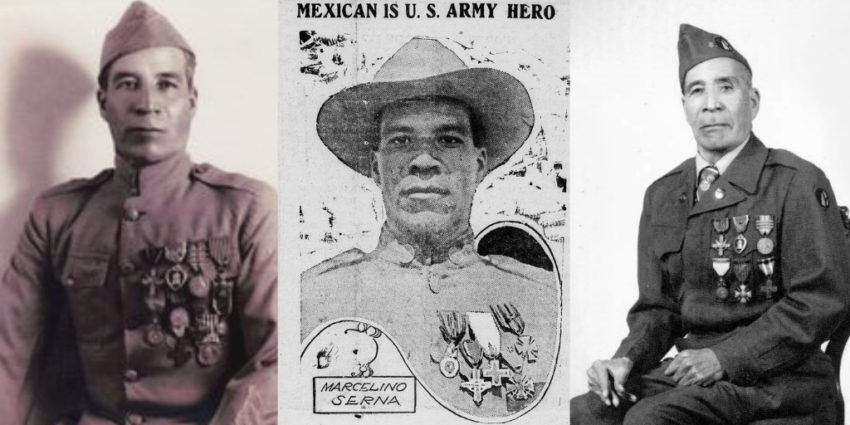
Marcelino Serna is remembered as Texas’ most-decorated World War I veteran. Serna was the first Latino man to be awarded the Distinguished Service Cross and was awarded more than 10 other awards for his bravery and service in the Battles of St. Mihiel and Meuse-Argonne. But he never received the most prestigious military award: The Medal of Honor. Latino advocates are petitioning the U.S. Army and federal government to posthumously award Serna the Medal of Honor, arguing that he was denied the award because he was a Mexican immigrant. “That Private Serna served during a time of extreme prejudice cannot and must not erase his acts of immense bravery and devotion to the United States,” wrote the Mexican American Legislative Caucus of Texas in a letter to the U.S. Army, ...
Dr. Amelie G. Ramirez, director of Salud America! at UT Health San Antonio, has been elected to a five-year term on the board of directors for the CDC Foundation. The CDC Foundation has facilitated over 1,700 partnerships, launched more than 1,000 programs, and raised over $900 million to help the CDC improve health around the world. Ramirez joins Dr. Jeffrey Koplan, vice president for Global Health at Emory University, as a new board member. "As the CDC Foundation continues to play an integral role in addressing domestic and global health challenges, including the current COVID-19 response, we are honored to have both Dr. Koplan and Dr. Ramirez join our board of directors," said Dr. Judith Monroe, president and chief executive officer of the CDC Foundation. "These two ...
For months now, health leaders have asked Americans to flatten the COVID-19 curve by behaving as if they have been exposed─stay home, stop hanging out with friends and family, avoid public places like gyms and bars, and wear a mask when around others. This individual behavior is needed to prevent the spread of the novel coronavirus. But, at the same time, public health departments must do their part, too. They are responsible for “contact tracing”─contacting people who have tested positive for COVID-19 and those in close contact with them to give them critical information to slow disease spread: understand the possibility that they could spread the infection to others even if they themselves do not feel ill;
understand what they should do to monitor themselves for ...
We're seeking a top-notch communications specialist to join our communication team at Salud America!, our national Latino health equity organization based at the Institute for Health Promotion Research (IHPR) at UT Health San Antonio. The position will write, edit, and communicate health content and messages for the IHPR. This includes digital content curation for the IHPR's Salud America! project, as well as assisting in the production of numerous IHPR internal and external communication vehicles, such as newsletters, email blasts, presentations, websites, social media, press releases and more. Apply Now!
Details for the Communications Specialist Position
A bachelor's degree and two years of related experience is required. Also preferred experience includes: Knowledge ...
Dr. Amelie G. Ramirez, director of Salud America! and the Institute for Health Promotion Research at UT Health San Antonio, has been named one of the "The Cancer Health 25: Change Makers" by Cancer Health magazine. The magazine recognizes individuals who "make a difference every day." "They have each experienced cancer, either personally or through someone they love," according to the magazine. "And it has changed them, made them want to give back and given them a mission to make a difference for others living with cancer." Read about Ramirez and the other 25 change makers here.
Dr. Ramirez & Her Health Promotion Research
Ramirez is an internationally recognized health researcher at UT Health San Antonio. Here, she is professor and chair of the Department of Population ...
San Antonio Mayor Ron Nirenberg and Bexar County Judge Nelson Wolff announced the addition of Dr. Amelie G. Ramirez, director of Salud America! and the Institute for Health Promotion Research at UT Health San Antonio, to the COVID-19 Health Transition Team, which is working on a plan to slowly reopen the city economy after physical distancing. Nirenberg and Wolff wrote a joint memo that stay-at-home rules have saved lives. Yet they acknowledge physical distancing isn't permanent. "Our community needs a local strategy to reenter into everyday life," Nirenberg and Wolff wrote. "These decisions have critical implications on our community – including our ability to avoid subsequent outbreaks, ensure we protect our ... populations ... and to identify parameters for transitioning ...
Where we live plays a big role in how long we live. That’s why racial and economic segregation are so harmful. Unequitable distribution of investment and services results in poor social and health outcomes for some. Tonika Johnson saw this in real time as a teen when she commuted from the less affluent South Side Chicago neighborhood where she lived to the more affluent North Side neighborhood where she attended school. “It’s like there was an invisible line dividing the city,” she said. Johnson started the “Folded Map” project to explore neighborhood differences and discuss solutions. In San Antonio, public health group CI:NOW were intrigued by Johnson’s “Folded Map.” How could they use it as model to create their own data tool to help residents, ...