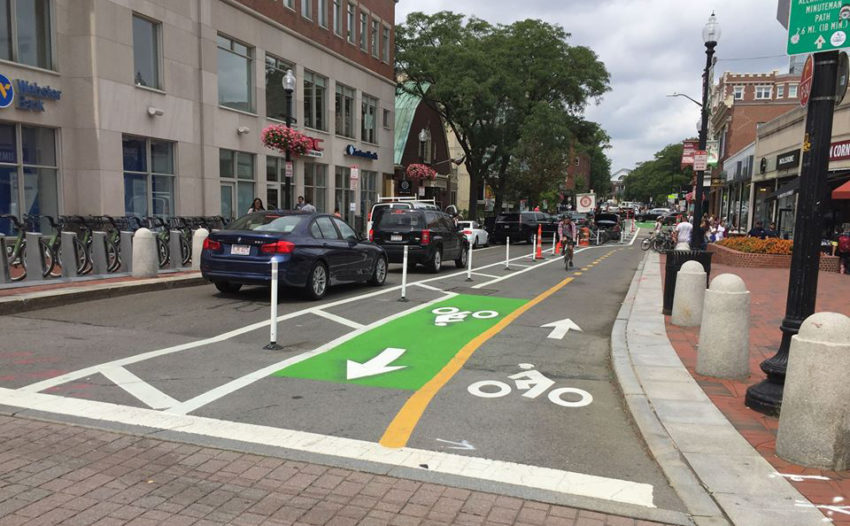
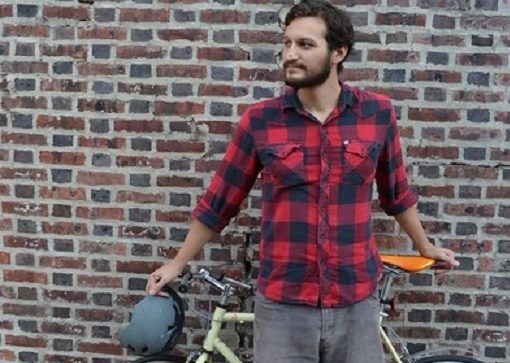
Nathanael Fillmore felt his life was in danger every time he rode his bike on unsafe streets to his job as a computer scientist in Cambridge, Mass. (9.2% Latino). So he took action. Fillmore helped launch the Cambridge Bicycle Safety group, and they eventually pushed Cambridge to become the first U.S. city with a municipal law mandating construction of a network of permanent, protected bike lanes on local roads. They did it in three big steps: Build public support on an issues through community organizing
Translate public support into political support
Use political support to pass a law “Our focus was to work with elected officials to pass legal binding policy to change structural environment among staff and get a network of protected bike lanes built out,” ...
Randy LoBasso is pushing to make bicycling safer and more equitable in Philadelphia. But, as COVID-19 shut down businesses and schools, the bike-as-transportation enthusiast found people crowding local bike trails and making it hard to practice social/physical distancing. LoBasso had a thought. What if Philadelphia (15% Latino) closed streets to car traffic? Could people use streets to freely bike, walk, and be physically activity while also maintaining six-feet distance? LoBasso led an “open streets” petition and got the city to close a major street to cars, and open it for people walking, biking, and rolling. And he’s not stopping there.
LoBasso Understands Need for Biking as a Means of Transportation, Access to Opportunity
LoBasso isn’t a spandex-wearing ...
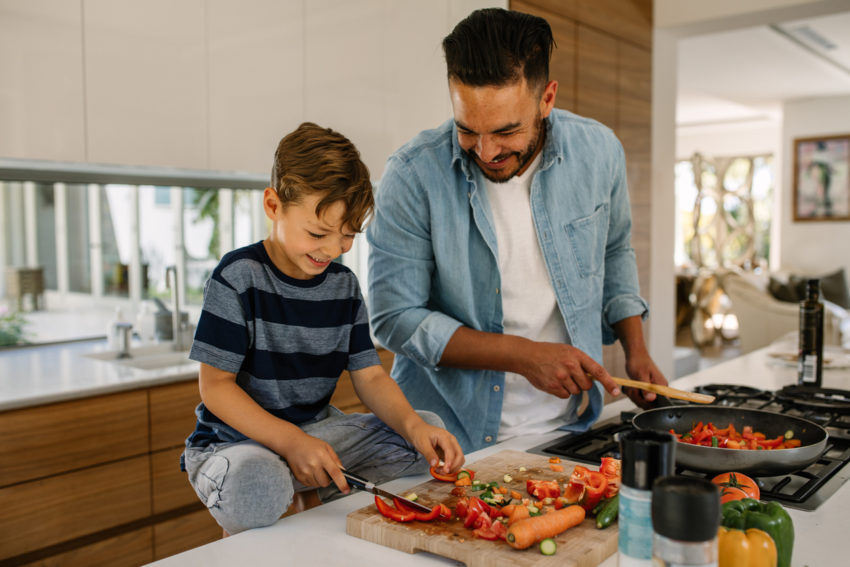
The coronavirus outbreak is making it harder for Latino and other families to get enough food to feed their families, a condition also called food insecurity. People are stocking up on groceries and buying online in hopes of hunkering down and limiting social interactions, to help prevent the spread of COVID-19. But families who rely on nutrition aid can’t stock up. They also can’t buy online. With many schools and farmer’s markets also closing, many families are struggling to replace school meals at home for their children. This is especially impacting Latino and black households, who are more likely to suffer food insecurity (16.2% and 21.2%, respectively) than the national average (11.1%).
SNAP Benefits Not Adapting to Coronavirus Crisis
As many families are piling up ...
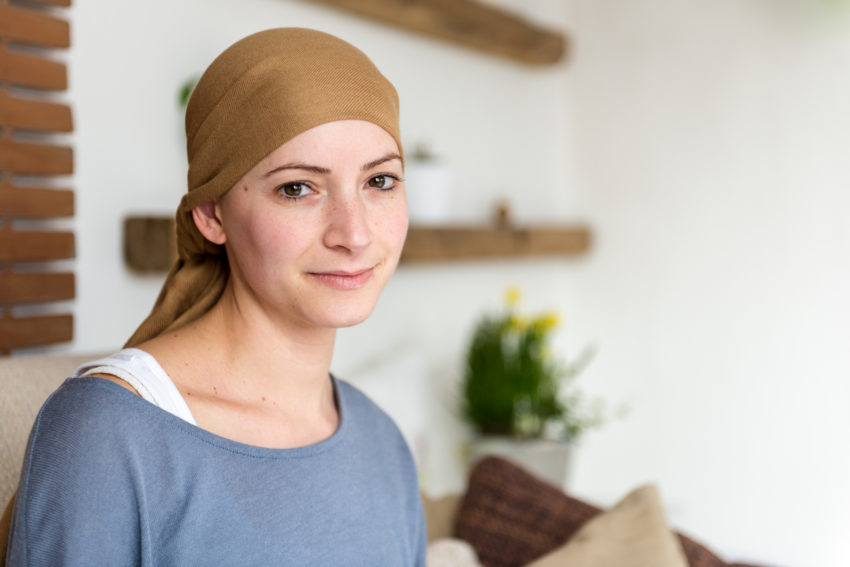
Cancer patients are at higher risk for the new coronavirus COVID-19, as well as more severe outcomes of the diseases, than those without cancer, health experts say. What does this mean for your cancer journey? For treatment? Screening? Clinical trials? Latinos and vulnerable populations? "We don't want to be overly alarming, but the truth is that Latino and all cancer patients should be concerned about COVID-19 because they are at higher risk," said Dr. Amelie G. Ramirez, leader of Salud America! and associate director of community outreach and education at the Mays Cancer Center at UT Health San Antonio. "So we want to help spread truthful, equitable information that will help all cancer patients in their journeys." Here are some important issues for cancer patients and ...
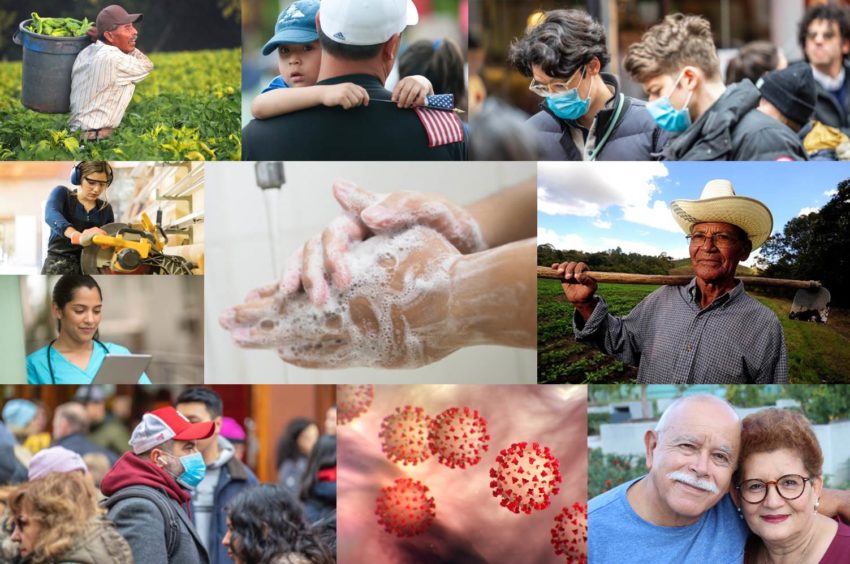
With the rise of COVID-19, our team at Salud America! is digitally curating content about what the coronavirus pandemic means for Latino health equity. We want to ensure Latinos get an equitable share of culturally relevant information. You can do your part! Share our Latino COVID-19 Vaccine "Change of Heart" Bilingual Storytelling Campaign in English or Spanish. We hope to move Latinos from vaccine hesitancy to vaccine confidence through telling stories of real Latinos who ended up getting the vaccine! Share our "Juntos, We Can Stop COVID-19" bilingual campaign to stop the spread! Share our infographic on 8 ways coronavirus impacts Latinos (English | Spanish).
Follow our content that has increased exposure to Latino health equity amid the pandemic, according to a ...
Older people are highly susceptible to the coronavirus COVID-19, but young adults aren't off the hook, either. Almost 40% of U.S. coronavirus patients who were sick enough to need hospitalization were between the ages of 20 to 54, according to recent CDC data. "I think everyone should be paying attention to this," Stephen S. Morse, a professor of epidemiology at Columbia University's Mailman School of Public Health, told the New York Times. "It's not just going to be the elderly. There will be people age 20 and up. They do have to be careful, even if they think that they're young and healthy."
Why Coronavirus is a Concern for Young People
Globally, officials are reporting 246,276 confirmed cases or coronavirus, with 90,000 recoveries and 10,000 deaths. Out of the 508 U.S. ...
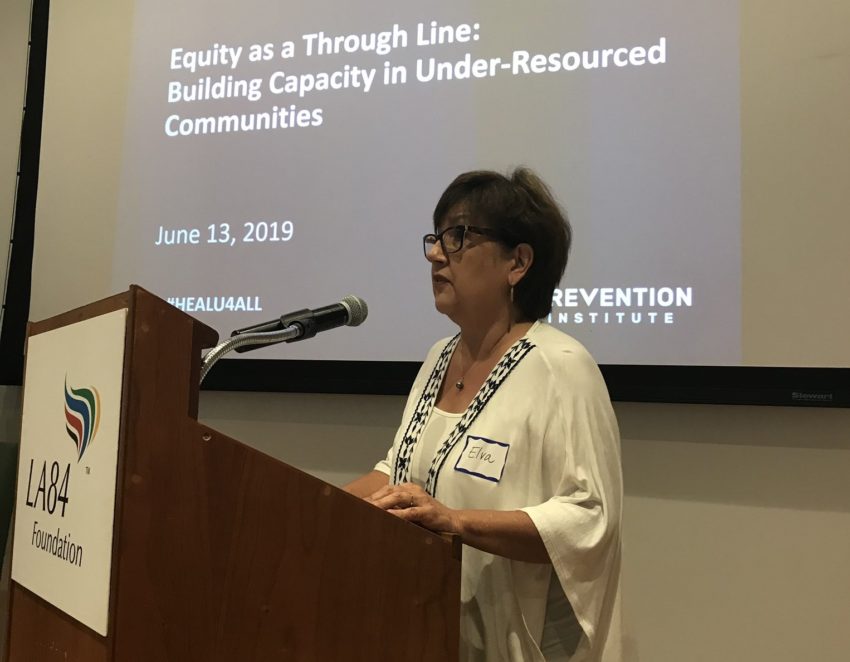
Elva Yañez—with her neighbors and allies—waged a campaign that has lasted over 15 years to preserve one of the last unprotected open green spaces in her Northeast Los Angeles community of El Sereno. Before working on healthy equitable land use issues, she worked in tobacco control. When she recognized similarities in the way tobacco companies and land developers fought to protect private interests from government regulation, she began using tobacco control tactics to fight for environmental justice. With the help of others, she led an effort to stop one particularly harmful residential development in her community that had serious public health and safety consequences. Throughout the campaign she knew she wanted to go upstream and address the systemic conditions that allowed ...
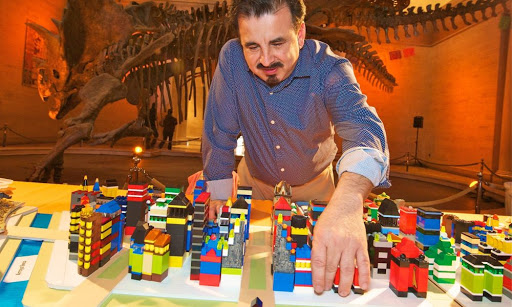
James Rojas loved how his childhood home brought family and neighbors together. The L.A. home had a big side yard facing the street where families celebrated birthdays and holidays. Uncles played poker. Aunts tended a garden. Children roamed freely. Mexican elders—with their sternness and house dresses—socialized with their American-born descendants—with their Beatles albums and mini-skirts. Rojas was shocked to find some would look down on this neighborhood. “Why do so many Latinos love their neighborhood so much if they are bad?” he wondered. Rojas, in grad school, learned that neighborhood planners focused far more on automobiles in their designs than they did on the human experience or Latino cultural influences. He wanted to change that. Rojas has spent ...
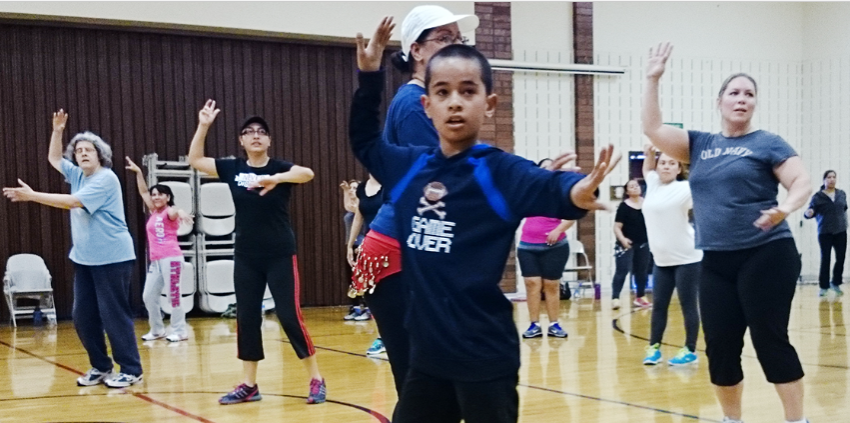
Schools can serve as so much more than space for children to learn. They can even transform community health. That is, if schools share their spaces with the public when classes are out. Fortunately, the team at ChangeLab Solutions is showing how easy and beneficial it is for schools to share use of school grounds with local residents and groups after and before school, and during summer.
What Is Shared Use of Schools?
Playing can help a kid’s healthy brain development. But many communities are not kid-play-friendly. Latino neighborhoods tend to lack safe places that welcome kids and multi-generational families to play. Many schools lock up their facilities after class ends. Shared use agreements—also called open use or joint use—are specific plans and rules that ...