This is part of the Salud America! Achieving a Cohesive Culture for Health Equity in Latino and All Communities: A Research Review»
Latino Families Are More Likely to Live in Poverty
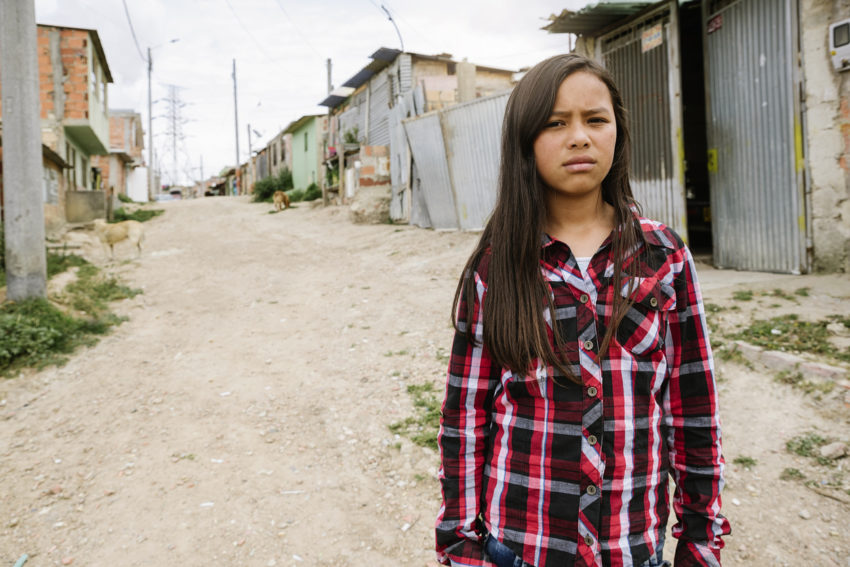
Child poverty rates are more than twice as high for black children than white children (38% vs 14%, 2019 data)10 and Latino children than white children (23.7% vs 8.9%, 2018 data) across the United States,5 according to data published in the 2019 County Health Rankings and Roadmaps Report10 and the 2018 U.S. Census Bureau Current Population Report.5 The Institute for Policy Studies found that between 1983 and 2013 there was a 51% decline in the wealth of the median Latino household (from $4,100 to $2,000); during this same period, wealth of the median white household increased by 14% from $105,300 to ...
This is part of the Salud America! Achieving a Cohesive Culture for Health Equity in Latino and All Communities: A Research Review»
Moral Disengagement Is a Key Mechanism People Use to Excuse Discrimination among People of Color, Those in Poverty
Moral disengagement is the cognitive process of decoupling one’s internal moral standards from one’s actions, thus allowing oneself to conduct unethical behavior without feelings of guilt or distress.65 In simpler terms, it is the psychological process of rationalizing bad decisions, by convincing oneself that ethical standards do not apply within a particular context or situation. Moral disengagement has been studied in relation to cruelty to animals, support for the death penalty, or in cases where victims are said to have “brought ...
This is part of the Salud America! Achieving a Cohesive Culture for Health Equity in Latino and All Communities: A Research Review»
The Benefits of Peer Modeling
Liebkind and McAlister77 designed an intervention to determine whether moral engagement and tolerance of other groups could be improved through peer modeling based on the extended contact hypothesis, which supposes that positive intergroup attitudes can be promoted via the knowledge that an in-group member has a close relationship with an out-group member. The in-group friendship partner becomes a positive peer model that demonstrates tolerance in interacting with the outgroup, while the outgroup friendship partner becomes a positive example that repudiates the negative beliefs or stereotypes about the outgroup.77 In the ...
Although people have been driving less since the COVID-19 pandemic began, the traffic death rate has gone up. Technically, absolute traffic deaths have decreased. But when you factor in the drop in vehicle miles traveled, people are being killed on our roads at a higher rate. Experts blame higher travel speeds due to emptier roads. MARCH 2020 UPDATE: Motor vehicle death rate up 24% in 2020 compared to 2019—the biggest increase in 96 years—despite drops in miles driven, according to the National Safety Council.
People Are Driving Less
Coronavirus took a major toll on health, especially for Latinos. But the virus also forced lockdowns and isolation across the country, slowing the economy and travel. Travel on roads and streets dropped 25.7% in May 2020, compared to May ...
Despite the nation's high rates of coronavirus infections, transitions, and deaths, many U.S. schools reopened for the fall semester. Some school districts have chosen to adhere to stricter guidelines through remote learning, while others are implementing in-person teaching with specific safety protocols, and others a hybrid of virtual and in-person. Whatever type of learning, the bottom line is that COVID-19 has not gone away. Outbreaks are happening, and teaching in school only adds to the risk of spreading coronavirus infection, according to Margie Kochsmier, an infection preventionist with FHN Healthcare System in Freeport, Ill. "Anyone—including children—can get COVID-19. Generally, children tend to have more mild symptoms, but it's important to remember that anyone ...
We already know that smoking cigarettes, cigars, and other tobacco products result in worse coronavirus outcomes. What could be worse? Teenagers and young adults who vape face a much higher risk of COVID-19 than their peers who do not, according to new research from Stanford University. In fact, that data—collected from a May 2020 national survey of 13 to 24-year-olds—showed that vapers are five times more likely to get COVID-19. The risk is seven times higher for dual—smoking and vaping—users. "Young people may believe their age protects them from contracting the virus or that they will not experience symptoms of COVID-19, but the data show this isn't true among those who vape," Dr. Shivani Mathur Gaiha, the study's lead author and a postdoctoral scholar, said in a ...
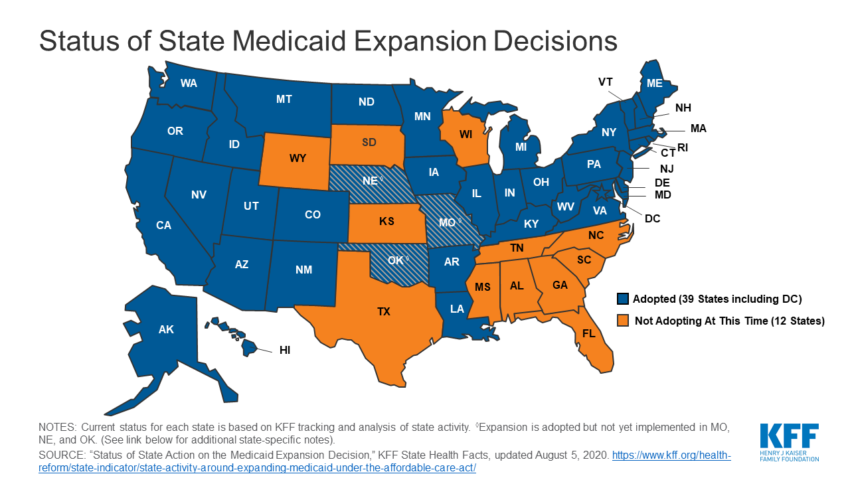
As of June 2020, 14 U.S. states continued to reject Medicaid expansion, leaving many without an affordable healthcare coverage option. Then COVID-19 hit—hardest among low-income, uninsured families, particularly Latinos. In response to surging coronavirus cases, Oklahoma (11.1% Latino), the state with the second-highest uninsured rates, voted to expand Medicaid on July 1, 2020. A month later on Aug. 4, Missouri (4.4% Latino) also voted to expand Medicaid. In these two states alone, roughly 430,000 low-income adults will be eligible for Medicaid. “The American Heart Association supports expanding Medicaid because people living with low incomes are disproportionately affected by heart disease, hypertension, and stroke. Medicaid serves as the coverage backbone for the ...
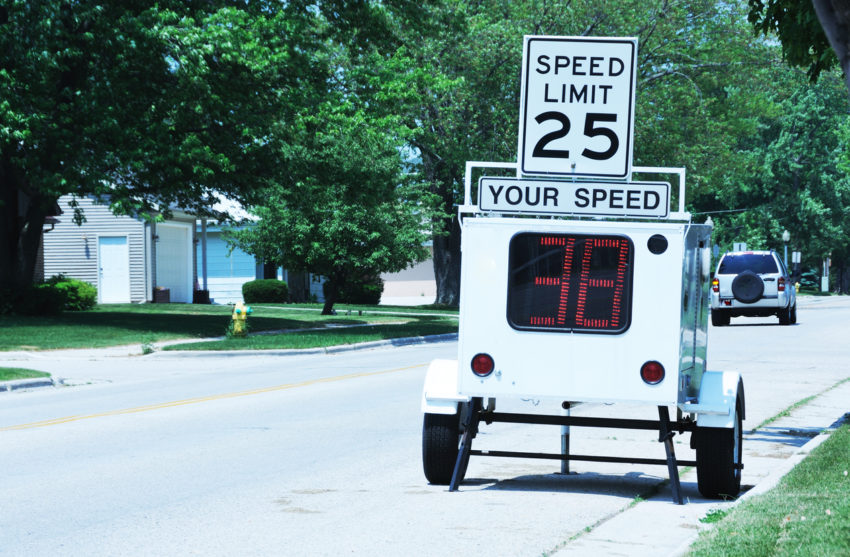
American cities are failing at traffic safety—largely due to unsafe speeds. Urban arterials—roads that link major activity centers and highways—accounted for 29% of all U.S. fatal crashes between 2014 and 2018, despite making up only 6% of roadways. That’s why the National Association of City Transportation Officials (NACTO) developed City Limits, a framework for setting safe speed limits for city streets and providing strategies to manage speed. “Most speeds limits are set using an oversimplified and outdated method: measure 100 drivers traveling without any traffic and set the speed limit based on the 15th-fastest driver,” said Jenny O’Connell, NACTO Program Manager, according to a NACTO press release. “If this sounds like a system that would create ...
1 in 9 young people are at risk for youth disconnection—someone ages 16-24 years who is neither working or in school. The coronavirus is expected to widen this gap, especially for Latinos and communities of color. Without immediate action, the number of disconnected youth could grow to 1 in 4 young people, or 6 million youth. A recent report, A Decade Undone: Youth Disconnection in the Age of Coronavirus, highlights progress made over the last 10 years in connecting youth to opportunity. It also provides new details on findings at the state, county and local PUMAs (public use and microdata areas) level on youth disconnection. On Tuesday, Aug. 4, 2020, let’s use #SaludTues to chat about ways to help Latino youth and their families stay connected amid the coronavirus ...