The number of children living in single-parent households has grown significantly over the past 50 years. In fact, it has actually doubled — jumping from 13% to 32% in 2017, according to a new Pew Research Center analysis of US Census Bureau data. High cost-of-living, including necessities such as food and transportation, can significantly impact single parents. Worse, it can prohibit their ability to break cycles of poverty or build substantial wealth.
Single Latino Parents
In the US, there about half of each sing-parent race group are white, roughly 15% are Black, about one-fourth are Latino/Hispanic, and a small share are Asian. "These gaps are driven largely by racial differences among the large share of solo parents who are mothers," Gretchen Livingston with PEW ...
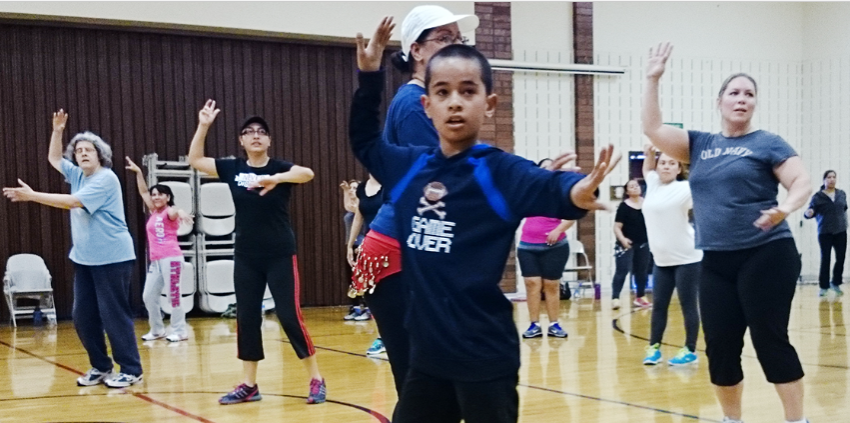
Schools can serve as so much more than space for children to learn. They can even transform community health. That is, if schools share their spaces with the public when classes are out. Fortunately, the team at ChangeLab Solutions is showing how easy and beneficial it is for schools to share use of school grounds with local residents and groups after and before school, and during summer.
What Is Shared Use of Schools?
Playing can help a kid’s healthy brain development. But many communities are not kid-play-friendly. Latino neighborhoods tend to lack safe places that welcome kids and multi-generational families to play. Many schools lock up their facilities after class ends. Shared use agreements—also called open use or joint use—are specific plans and rules that ...
Having worked firsthand with promotoras de salud, Emily Reyes understands the important role community health workers play in addressing Latino health disparities. Reyes, who has a master’s degree in public health from California State University, Fullerton, specializes in health promotion and regularly works with underserved communities to bring health equity and sustainable change through education, services and civic participation. Her interests include improving rural health, public policy, and infectious diseases research─all done with the same resilience and grit as her mother, who earned a master’s degree while raising a family as a single mom. To further her experience and education, Reyes applied for the Éxito! Latino Cancer Research Leadership Training ...
Rural communities throughout the U.S. do not receive equal access to quality medical treatment. Some live so far from the nearest hospital that they will have to take a day off work to make a doctor's appointment, according to our guest Jordan Rassmussen, the Policy Manager of the Center for Rural Affairs. Check out this discussion on the #SaludTalks Podcast, Episode 13, "Healthcare Deserts"! WHAT: A #SaludTalks discussion on the inequities rural Latinos and Americans face in receiving healthcare treatment GUEST: Jordan Rassmussen, Policy Manager of the Center for Rural Affairs
WHERE: Available wherever fine podcasts are downloaded, including Apple Podcasts, Spotify, SoundCloud, Tune In, and others
WHEN: The episode went live at 5:00 p.m., Dec. 11, ...
Over 12 million U.S. babies, toddlers, and preschoolers spend time in child care. Are you aware of how pricey that child care is? The price of child care is sky-high almost everywhere, but certain families face inequities and pay even more depending on where they live, according to the new report from Child Care Aware. California (39.3% Latino) is home to the most expensive center-based infant care. Families here pay 17.6% of their annual income. Nebraska (11.2% Latino) is home to the most expensive family child care. Families here pay 14% of their annual income. Low-income families should spend no more than 7% on child care, according to federal guidelines. "Every family should be able to access affordable and high-quality child care. Yet this is not currently the case, ...
Youth sports are a great way to help kids get the recommended 60 minutes of physical activity a day. But only about half of U.S. kids participate on a youth sports team. Latinos or other racial/ethnic minorities, girls, rural, low-income, and/or youth with disabilities all have lower rates of both physical activity and youth sports participation, data show. For Latinos, cost and local access to places to play are big barriers to youth sports equity. Fortunately, the new federal National Youth Sports Strategy outlines opportunities for youth, adults, organizations, communities, and policymakers to improve youth sports equity. "[The strategy] aims to unify U.S. youth sports culture around a shared vision: that one day all youth will have the opportunity, motivation, and access ...
How important is the 2020 Census? Well, the results will determine political power, representation in Congress, and funding for schools, hospitals, roads, and social services in your community for the next 10 years. Here are some Q&As that emphasize the need to count Latinos and all people! Supreme Court Update, October 15, 2020: The Supreme Court ruled on Oct. 13, that Trump administration can end census field operations early despite delays and difficulties related to the ongoing pandemic. Internet self-response will be available through 11:59 p.m. Hawaii Standard Time (HST) Oct. 15 (5:59 a.m. Eastern Daylight Time on Oct. 16).
Paper responses must be postmarked by Oct. 15, 2020. Coronavirus Update, July 7, 2020: Learn how the Census Bureau is pushing forward ...
In every state, paying for child care continues to strain family budgets, and government subsidies aren’t helping enough with the cost, according to new fact sheets. Even when families can afford it, child care can be hard to find. That’s why the new fact sheets, created annually by the Center for American Progress (CAP), highlight child care prices, gaps in funding and access, and wages of child care workers─as well as policies that could address these inequities for Latino and all families. “Comprehensive early learning policies such as capping the amount families pay for child care, implementing universal preschool for 3- and 4-year-olds, and ensuring all eligible children receive child care subsidies would provide enormous benefits to families and state economies,” ...
Latino children are likely to enter elementary schools this year with fewer white peers than a generation ago, a sign of increasing school segregation, according to researchers in the journal Educational Researcher. In 1998, U.S. Latino children attended elementary schools in which nearly 40% of their classmates were white. That percentage fell to just 30% in 2010. Segregation grows into severe isolation in large urban school districts. In the nation’s 10 poorest districts, Latino elementary students attended, on average, schools that were just 5% white—down from 7% white in 1998. “It's essential that we consider hard evidence as the nation debates questions of fairness, segregation, and immigration,” according to study co-author Claudia Galindo of the University of ...