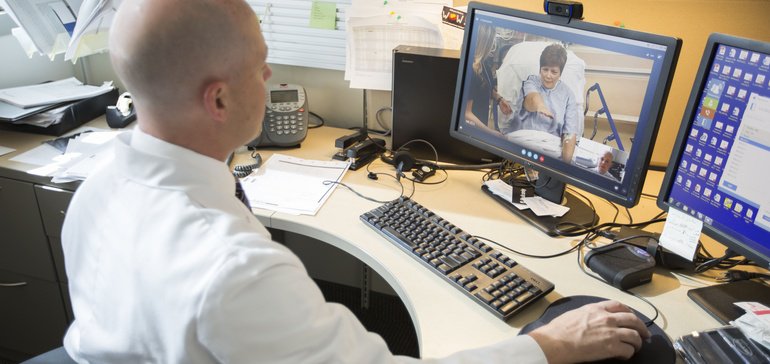
Chances are good you or someone you know has a mental health issue. In fact, during any given year, about 1 in every 4 people in the United States has a diagnosable disorder, two-thirds of which goes untreated, according to the Substance Abuse and Mental Health Administration. Latinos report the highest stress across money, employment, family responsibilities, and health concerns, a recent survey reported. What’s worse, many are unable to get the help they need to either treat their conditions or even get a diagnosis. Telemedicine is an emerging answer to these issues. Doctors are increasingly “linking up” with their patients by phone, email, and webcam more frequently thanks to faster Internet connections. This can reduce some of the cost and rising need for ...
A quality education is key to health, science shows. Latinos are making progress in educational achievement. The Latino high-school dropout rate is at an all-time low. Graduation rates are at an all-time high. More Latinos are enrolling in two- and four-year universities than ever before. But there remains a large educational gap between Latinos and their peers. A new initiative by the Chan Zuckerberg Initiative (CZI), founded by Facebook CEO Mark Zuckerberg and his wife, and The College Board is trying to significantly close this gap. The two-year effort aims to expand access to “unique personalized learning pathways” to help lower-income and rural area students prepare for key “college gateway tasks,” such as the PSAT, SAT and Advanced Placement courses.
What's ...
Mental Health is a growing public health concern in the United States. According to the Substance Abuse and Mental Health Administration, during any given year, nearly 25% of the population has a diagnosable disorder, two-thirds of which goes untreated. According to a new study, an estimated 8.3 million adults in the U.S. (close to 3.5%) suffer from serious psychological distress. What’s worse, many are unable to get the help they need to either treat there conditions or even get a diagnosis. Latinos reported the highest stress across four major sources of stress including money, employment, family responsibilities and health concerns, a recent survey reported. In order to reduce health disparities, it is critical to address inequities in programs, practices, and ...
Latinos are the largest ethnic and racial minority group in the country and their numbers are rapidly growing. They are expected to grow from 1 in 6 people today to 1 in 4 by 2035 and 1 in 3 by 2060. Despite their prevalence in the country, Latinos suffer vast differences in health conditions compared to whites. These health disparities are often rooted in social disadvantage. Health inequities are found in several often unavoidable areas, including housing segregation, access to care, income, and educational attainment. Latino children currently make up roughly 25% of all children in the United States. Given this substantial number, how they fare academically will have a massive impact on the social and economic well-being of the country as a whole for generations to ...
Many know Emmitt Smith was as an NFL Hall-of-Famer, but did you know he is also a real estate and construction businessman and community philanthropist? He is now writing on support for Texas to establish a food retail incentive fund that would help businesses expand healthy retail into low-income neighborhoods and booster development. "When I talk about people in low opportunity neighborhoods, I am talking about my parents as we were growing up. My friends and family. My teachers and role models. I am talking about me as a child," he told the Texas Tribune. Emmit wrote a recent column in the Tribune to encourage State Legislature to help families have grocery stores and access to healthy foods. I am a businessman, not a politician. But if running Texas were my business, I ...
For many Latinos, the dream of going to and attending college is a lifelong dream. More and more are enrolling in two- and four-year colleges and universities. While the numbers don’t quite match other racial and ethnic minorities, more Latinos are earning secondary degrees. However, for many, the college experience quickly turns from dream to nightmarish. Because of the expenses associated with education, many students suffer from food insecurity and are homeless. “‘Homeless college student’ seems like a contradiction in terms,” said Paul Toro, a psychology professor at Wayne State University who studies poverty and homelessness in an interview with The New York Times. “If you’re someone who has the wherewithal to get yourself into college, well, of course you ...
“Telehealth” or “Telemedicine,” as it sometimes called, refers to traditional clinical diagnosis and monitoring that is delivered by technology. It has proven to be an exciting breakthrough in medicine and has been used in wide array of situations to diagnose and manage symptoms, in education, and other related fields of health care, including: dentistry, counseling, physical and occupational therapy, home health, and chronic disease monitoring and management. For those who are infirmed or in hard to reach rural areas, telehealth has proven to be great resource for both the patients and health care providers. According to the Health Resources & Services Administration (HRSA), can best be thought of as a way to increase the contact between a patient and their medical ...
If colorectal cancer is detected early, survival rates are vastly improved. Sadly, colorectal cancer screening rates are low among Latinos. This makes it the second-most diagnosed cancer in Latino men and women and the No. 3 cancer killer of Latinos. Good news: You can help change these statistics! For Colorectal Cancer Awareness Month in March, let's use #SaludTues on March 14, 2017, to see how you can prevent colorectal cancer and learn about the National Cancer Institute's Screen to Save Colorectal Cancer Outreach and Screening Initiative to boost screening among racial/ethnic and rural communities. WHAT: #SaludTues: Screen to Save Colorectal Cancer (CRC) Awareness”
TIME/DATE: 1-2 p.m. ET (Noon-1 p.m. CT), Tuesday, Mar. 14, 2017
WHERE: On Twitter with hashtag ...
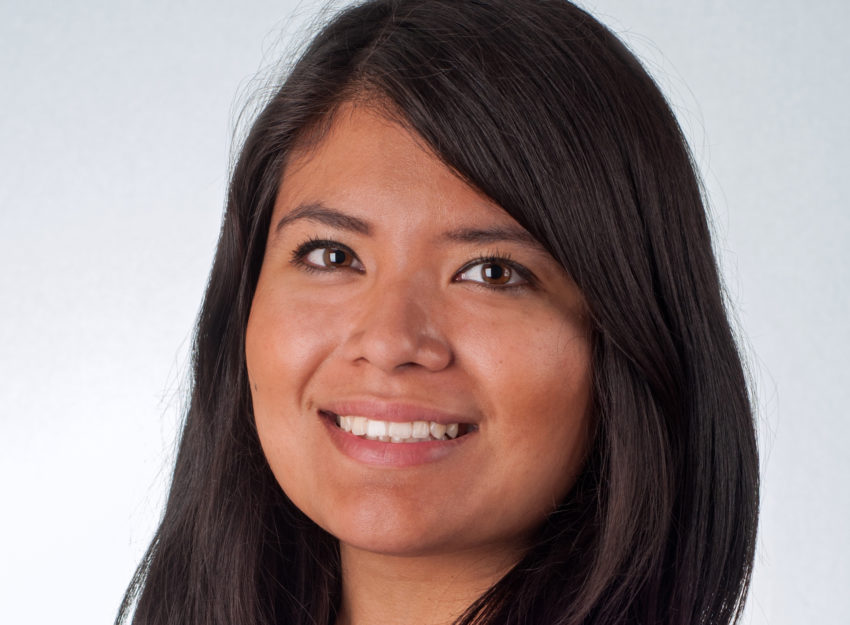
Listening to community needs is critical to solving health disparities. Kendra Cruz embodies this goal, as she has displayed a willingness to listen intently and a passion for addressing any identified health concerns in the community. Cruz is already working on studies on smoking cessation and HPV, and she’s interested in working with rural Latinos to learn their needs and identify ways to best provide resources. Her desire to listen and respond to people’s health needs is just as beautiful, if not more so, than the amazing traditional dresses she keeps from her native Oaxaca, Mexico. Cruz came to the states at age 8 without speaking any English, but was fortunate to learn the language in a school year. At 14, she returned to Mexico to be closer to her family, but at 17 ...