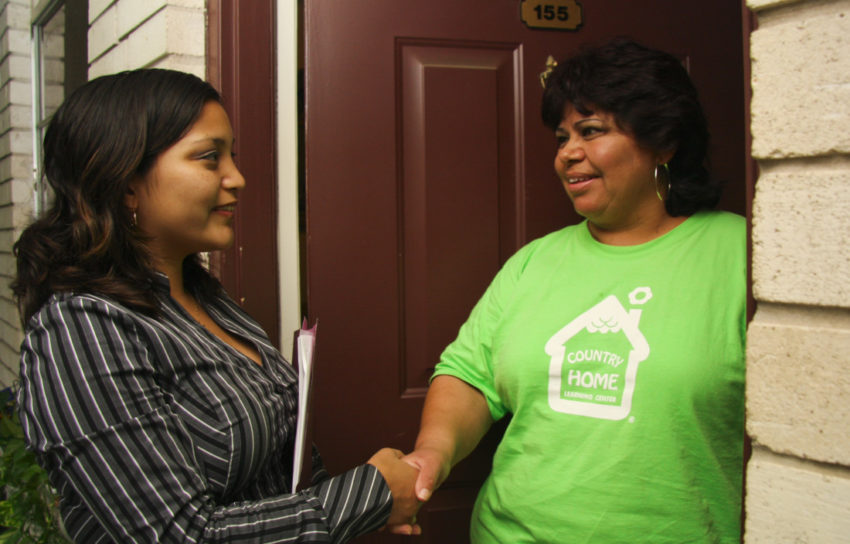
For many years, health programs have used volunteer community health workers called promotoras to deliver culturally sensitive health and wellness information to Latinos. But some Latinos may misunderstand what a promotora is all about. In fact, Mexican-born rural Latinas in rural Illinois communities were biased against promotoras because they perceived them as more like "unwanted salespeople" or "promoters" engaged in for-profit enterprises than legitimate volunteer health liaisons, according to a new study, columnist Esther J. Cepeda reports. The study, led by researchers including former Salud America! grantee Dr. Angela Wiley at the University of Illinois at Urbana-Champaign, found that Latinas' negative perceptions of promotoras kept them from engaging in the researchers' ...
Financial stress, especially the cost that comes from struggling to afford housing payments, is one of the most toxic people can experience. While the financial crisis of 2008 is over and the economy as a whole has by and large rebounded, Latinos are still reeling from its lingering effects. More and more Latinos and Latino families are choosing to rent than buy a home. According to research by The Hill, Latino homeownership rates that declined due to the financial crisis are still on the decline. In 2007, nearly 50% of all Latino households owned their own homes. In 2017, that rate is now 47% and sinking. Research also found that the number of Latino families submitting mortgage applications have plummeted 74% from their peak numbers in 2007. The much stricter financial ...
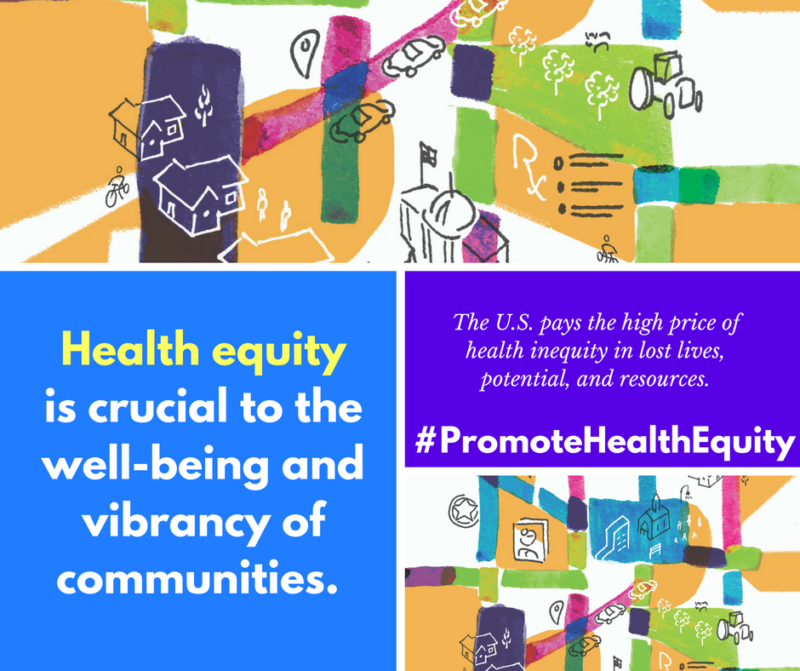
Despite being the country’s largest racial/ethnic group, Latinos suffer from “vast differences” in health conditions compared to whites. These health disparities prevent many Latinos from attaining quality health and well-being, educational achievement, and financial success. A new report from The National Academies of Sciences, Engineering, and Medicine entitled Communities in Action: Pathways to Health Equity addresses the roles that communities can play in helping people achieve health equity. By linking health equity with opportunity, the research for the report has shown that problems ranging from poverty, unemployment, low educational attainment, inadequate housing, and a lack of public transportation among many other factors. In order to reduce health disparities, ...
Any parent can tell you that raising a child requires a lot of time, patience, love, and understanding. In a more practical sense, it also requires an investment of the monetary kind. Raising a child is an expensive undertaking and, according to the U.S. Department of Agriculture (USDA), it has become more expensive than ever. A new report entitled “The Cost of Raising a Child” estimates that, for a child born in 2015, a “middle-income” married-couple family will need to spend anywhere between $12,350 and $13,900 annually until the child turns 17. When it is all added up, families are expected to spend an average of $233,610 on child-rearing expenses. Lower income families are expected to spend $174,690; for higher income families, the cost is anticipated to be ...
As of December 31, 2016, 8.8 million Americans had signed up for coverage through HealthCare.gov since open enrollment began on November 1, 2016. This is up from the 8.6 million during Open Enrollment in 2015. Latinos have benefitted more than just about any other racial or ethnic group since the passing of the Affordable Care Act (ACA). Over 4.2 million Latinos (ages 18-64) have gained health insurance coverage, lowering the uninsured rate among Latinos by 7.7%. In order to reduce health disparities, it is critical to address inequities in programs, practices, and policies. Join our site, connect with others, and get involved. “With 8.8 million Americans signed up for coverage through HealthCare.gov, more than last year at this time, it is clear that Americans want ...
Many Latinos struggle with cultural, language, and other barriers to healthcare, which is why they face disproportionate rates of diabetes, obesity, certain cancers, and other issues. The good news: Promotores are an emerging solution. Promotores, also called community health workers, patient navigators or health advocates, increasingly play an important role in promoting community-based health education and prevention in a manner that is culturally and linguistically appropriate for Latinos. Let’s use #SaludTues on Tuesday, Jan. 17, 2017, to tweet how to utilize, train, and incorporate more promotores for Latinos: WHAT: #SaludTues Tweetchat: “The Power of Promotores”
TIME/DATE: 1-2 p.m. ET (Noon-1 p.m. CT), Tuesday, Jan. 17, 2017
WHERE: On Twitter with hashtag ...
One of the main ways that scientists measure the overall health and well-being of a nation is by tracking the rate at which its citizens die and how long they are expected to live. For the first time in over 20 years, the U.S. has seen a drop in overall life expectancy. “This is a big deal,” said Philip Morgan, a demographer at the University of North Carolina, Chapel Hill in an interview with NPR. “There’s not a better indicator of well-being than life expectancy. The fact that it is leveling off in the U.S. is a striking finding.” Latinos are the nation’s largest racial and ethnic minority group. As a population they are expected to grow from 1 in 6 people today to 1 in 4 by 2035 and 1 in 3 by 2060. As Latinos are becoming a growing “force” in all facets of life, ...
Although she wasn’t allowed to speak Spanish growing up, Zandra Perez’s grandmother made sure she knew her roots by helping her become bilingual. Perez also draws on her faith and believes in the value of all lives. As such, Perez is working hard as a nurse to provide quality care for underserved Latinos. She earned her nursing degree from the UT Health Science Center at San Antonio and is currently one of two educators working to recruit rural area clinics to participate in eradicating tuberculosis by screening and treating for latent tuberculosis. Perez hopes to educate her patients on the importance of health screenings and preventative care. So she applied for the Éxito! Latino Cancer Research Leadership Training program, which recruits 25 master’s-level students ...
While the term “child care desert” isn’t widely known, for many Latino families, the ramifications that stem from this lack of affordable, high-quality child care are fast becoming a major concern. A child care desert refers to an area with at least 30 children under the age of 5 with either no child care centers or there were “more than three times as many children under age 5” as there were spaces in centers, the Center for American Progress (CAP) reports. For working parents, finding quality and affordable child care can already be a daunting task; however, for those families living in rural areas, the problem becomes disproportionately worse. The CAP recently released a report examining the location of child care centers across eight states, which made up 20% of the ...