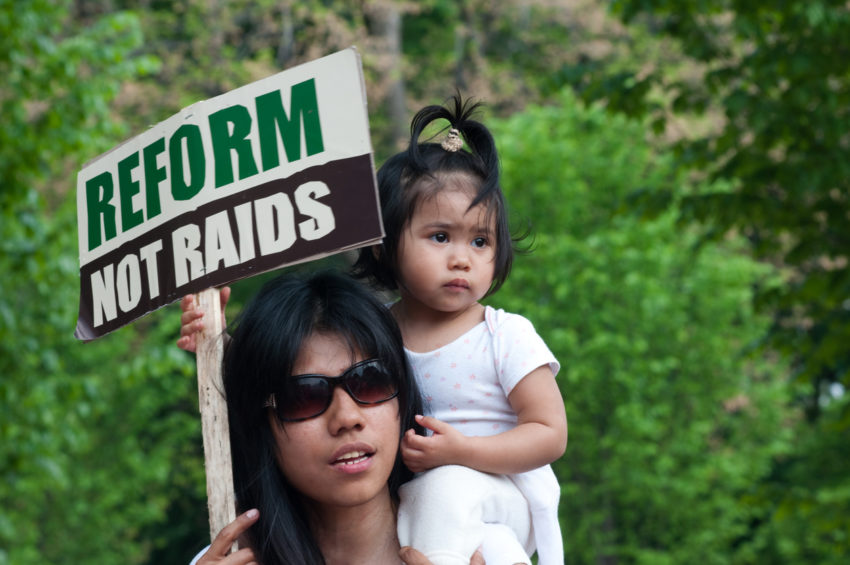
Among the horrific forms of treatment undocumented individuals face, a new report claims that Immigration and Customs Enforcement (ICE) performs hysterectomies on immigrant women. The shocking details, obtained through a complaint filed by Project South, assert that a gynecologist at the Irwin County Detention Center (ICDC) in Georgia performed these procedures — without providing a full understanding of the operation. Sometimes, they didn't even give these details in their native language, according to the report. Dawn Wooten, a former nurse at the detention center and the whistleblower of this complaint provided insight into the alleged practice. "Everybody [that the accused gynecologist] sees has a hysterectomy — just about everybody," Wooten said in the complaint. ...
Bias. We see it in the media every day. We see how police officers disproportionately target people of color. We see how COVID-19 affects Latino and Black people more than white people, which has brought racial disparities in healthcare to light. How do we address this bias? Many states are turning to mandatory implicit bias training for state employees.
What is implicit bias?
Implicit bias is defined as preconceived notions, or stereotypes, that affect our understanding, actions, and decisions about others—at a level beyond our conscious control, according to a Salud America! research review. This kind of bias happens when stereotypes influence your brain processing. Stereotypes like these then influence your actions and judgments: A widely held, simplified, and ...
Latinos are disproportionately impacted by the health and economic impacts of COVID-19. To reduce inequities, local and state leaders need to ensure Latinos and others from highly impacted communities are embedded in response and recovery. That’s where a community-based workforce comes in. During a pandemic, community-based workforce principles can help cities expand contact tracing and identify risk; support psychological, social, and primary care services; and mitigate the impact of unemployment. Join #SaludTues on Sept. 29, 2020, at 1:00 PM EST to tweet about how telehealth providers can reach underserved populations. WHAT: #SaludTues Tweetchat: “How a Community-Based Workforce Advances Health Equity”
DATE: Tuesday, Sept. 29, 2020
TIME: 1:00-2:00 p.m. ...
Latinos face an uphill battle when it comes to their health. They suffer many inequities, which are worsened amid the COVID-19 pandemic. Beyond that, there is a historical lack of targeted research about these inequities and how to address them, and a lack of diversity in clinical trials. This is the focus of a new webinar, "Conversations on Cancer: Latino Community—Achieving Equity in Cancer Clinical Trials," set for 1 p.m. ET Thursday, Sept. 24, 2020. The event is sponsored by the FDA's Oncology Center of Excellence. Register for the webinar. Panelists are: Amelie G. Ramirez, DrPh, Director of Salud America!, Professor and Chair of the Department of Population Health Sciences, and Director of the Institute for Health Promotion Research, all at UT Health San Antonio
...
Our streets are the backdrop for social justice. On our streets, we see discriminatory policing targeting people of color. On our streets, we see protests to dismantle systemic racism. On our streets, there is more danger for pedestrians of color, as the rate of pedestrian deaths per 100,000 is 12% higher for Latinos and 48% higher for Blacks than whites. So why are our street planners mostly white, and mostly male? In fact, 88% of practicing urban and transportation planners self-identified as white, according to a 2013 American Planning Association Survey. That’s why, in the summer of 2020, Portland State University’s Urban Studies and Planning department reviewed the syllabi for core courses to determine how many readings and assignments were on topics of race and ...
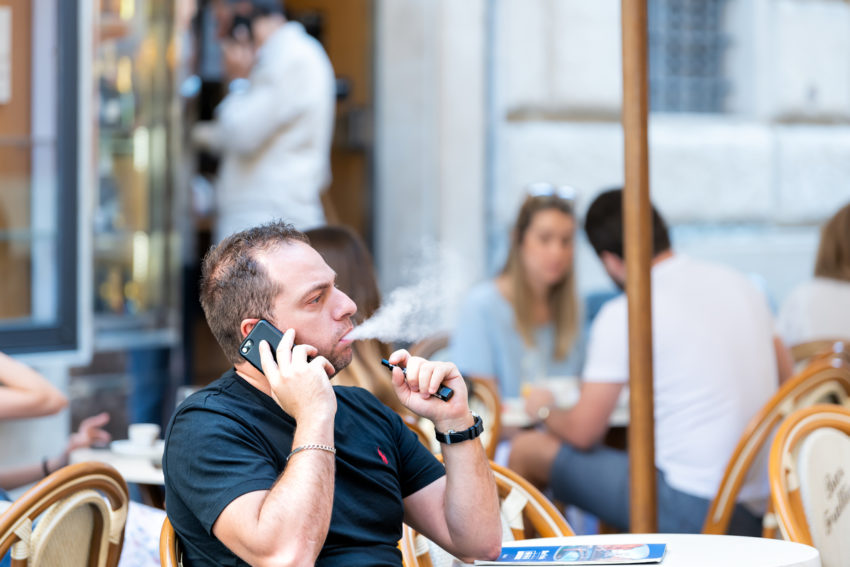
Since the start of the pandemic, many health experts say smoking and vaping increase the risk of COVID-19. This happens by weakening the function of the lungs making it more susceptible to coronavirus — as well as its overall impacts. Moreover, new data from Stanford University shows that young people who vape are more susceptible to COVID-19 than those who do not. That data—collected from a May 2020 national survey of 13- to 24-year-olds—showed that vapers are five times more likely to get COVID-19. Many cities and states across the US are passing bans on flavored vaping products during the COVID-19 pandemic.
Flavored Vaping Bans Across the Country
Last month the California State Assembly passed a ban on the sale of flavored tobacco products, including e-cigarettes and ...
The COVID-19 death toll has nearly reached 200,000 in America — a number that, at one time, was one of the highest estimates from health professionals. Nevertheless, America still finds itself in the grips of a pandemic. Worse, Latinos and other people of color who face the toughest social and health inequities are also experiencing the hardest coronavirus impacts and outcomes across the nation. This is true in California, where the death rate among working-age Latinos has skyrocketed, according to a recent report from UCLA. “As the coronavirus works its deadly way into every nook and cranny of California’s population, its victims’ profiles become clearer and clearer: they are the unsung essential workers,” researchers from the University’s Center for the Study of ...
Health has become a huge priority in the wake of the coronavirus pandemic. People of color, who face COVID-19 disparities as the virus worsens systemic social and economic inequities, are increasingly worried about holistic health. More Black and Latino Texans believe that the areas of life not typically associated with medical care—housing, education, racism, and other social determinants—directly impact their overall health than their white peers, according to a recently published survey from the Episcopal Health Foundation (EHF). "Texans across racial backgrounds agree that many non-medical factors like good air quality and clean water, community safety, and amount of stress are vital to a person's health," EHF writes in a recent press release. "But researchers ...
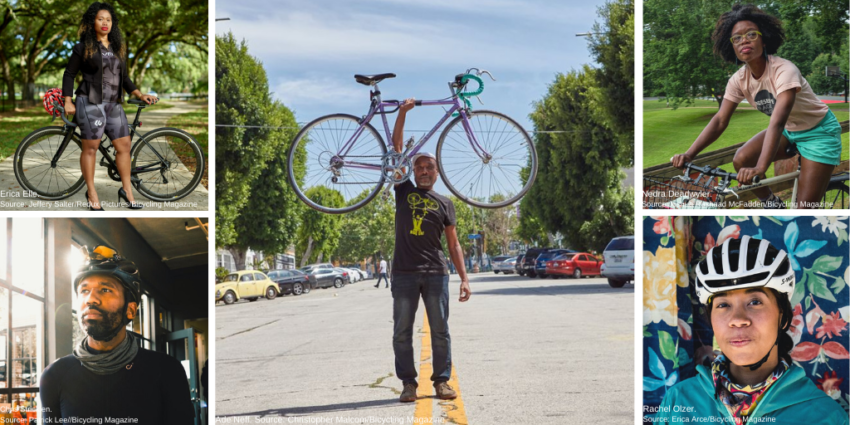
Harmful biases impact the world of bicycling—professional, recreational, doctor-advised, and as a mode of transportation. That’s why we feel it’s essential to promote the stories of 14 riders who shared with Bicycling Magazine about their experiences being Black in the cycling world. These stories, which demonstrate the systemic barriers facing Black riders, are inspiring to many bicycle riders of color, including Latinos, who also deal with physical and silent barriers when it comes to public space. “With the rise of bicycling during this global health pandemic, this is the moment to educate the casual beach cruisers, fully-kitted weekend warriors, the urban planning students who can’t wait to ride back to campus—all of us—on the systemic oppression of Black ...