Educational attainment is one of the key determinants of health. While Latinos have made great strides in attaining greater education – the Latino high school dropout figures are at all-time lows and more are enrolling in two- and four-year universities – there is still a long way to go before they are achieving secondary degrees at the level of whites. In the state of New York (18.4% Latino population) the dream of attending college just got a lot easier for many. Governor Andrew Cuomo introduced a plan for tuition-free college in January and state lawmakers approved the plan mid-April. For residents who earn up to a specific “income cap,” tuition will be free. The income figure will be determined over the next three years. Starting this fall, however, students whose ...
Depression is an illness characterized by constant sadness and a loss of interest in activities one normally enjoys and it is also the number one reason for poor health, affecting over 300 million people worldwide, according to the World Health Organization (WHO).
With a growing youth Latino population in America dealing with depressive symptoms, this also brings a concern to higher rates of suicide, anxiety and other mental health issues for this at-risk population.
In fact, research shows the prevalence of depressive symptoms among Latino youth is 22%, a rate higher than any other minority group besides Native American youth and Latina adolescents have the highest rates of suicidal ideation and suicide attempt compared to their peers.
Common mental disorders are increasing ...
Kids need places to play to be healthy. Physical activity is proven to help control weight, reduce risk of disease, strengthen muscles, and improve mental health. But Latino families are more likely than white families to live in neighborhoods with no recreational facilities, or unsafe ones. This is according to recent research cited by Salud America!, a national Latino childhood obesity prevention network at UT Health San Antonio and supported by the Robert Wood Johnson Foundation. That’s why we at SaludToday are spotlighting heroes who are creating play opportunities for Latino families!
Irma Rivera: First Park in the 92701 Irma Rivera saw a child nearly hit by a car while playing in an empty parking lot in park-poor Santa Ana, Calif (78% Latino). She vowed to do fix ...
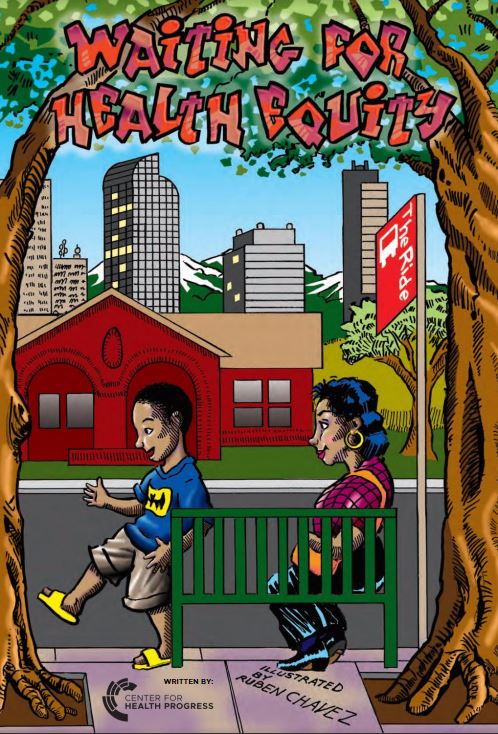
Latinos are the nation’s largest racial/ethnic minority group. They are expected to grow from 1 in 6 people today to 1 in 4 by 2035 and 1 in 3 by 2060. Many Latinos suffer vast differences in health conditions, also called health disparities, compared to whites. Health inequities are at play that create these disparities. Several of these are rooted in social disadvantage based on Latinos’ lack of opportunities for educational attainment, residential segregation, and a lack of access to care. The Center for Health Progress has recently completed a project that looks to tackle the question of health equity and inequity in a unique way. In order to reduce health disparities, it is critical to address inequities in programs, practices, and policies. Join our site, ...
Calling all health champions ages 15-18! The Michael and Susan Dell Center for Healthy Living is awarding 2017 Texas Health Champions that are helping to prevent or deter obesity in their local town, cities, communities, or schools. The Award Ceremony will be held during the Texas Obesity Awareness week, September 11th through the 15th, 2017 in Austin and will honor young Texans (15-18) who have demonstrated exceptional leadership in the community in an effort to raise awareness and reduce the burden of the obesity epidemic. Awardees will also be highlighted on the Michael & Susan Dell Center for Healthy Living website, blog and other media sources, to learn more or apply for the Rising Star Award, click ...
Prostate cancer is the most commonly diagnosed cancer among men of all races, including Latinos. Latino have lower rates of prostate cancer than Whites, but are more likely to die from the disease. One of the reasons this happens is that Latinos are less likely to get “timely, high-quality treatment," according to the American Cancer Society (ACS). New guidelines from the U.S. Preventive Services Task Force (USPTF) have shed new light on how all men should approach prostate cancer screenings. The USPTF’s new recommendations say that all men younger than 70 with no signs of prostate cancer may no longer be discouraged by their physicians from checking their prostate-specific antigen (PSA) levels. In 2012, the task force recommended against routinely checking PSA levels in ...
For many Latinos, the dream of attaining an education beyond high school is unreachable. Whether it is a lack of access, a lack of funds, or a lack of resources, many just do not have the option of going to college. In Massachusetts (10.56% Latino population), some of those barriers are about to be eliminated thanks to an initiative from the state’s STEM Advisory Council. Gov. Charlie Baker announced that the state will pay $326,000 to pay for advanced placement exams in STEM (science, technology, engineering, and math) subjects for low-income students. “Massachusetts has one of the fastest growing innovation economies in the nation, and it is important we continue to develop a strong pipeline of skilled workers to fill critical job openings in STEM fields,” Governor Charlie ...
Getting students eager to try new plant-based foods is not always an easy feat. Yet, when healthy options look appetizing and promote vegetarian dishes in a new way, student's curiosity grows. The University of Pittsburgh culinary team collaborated with the Humane Society of the United States (HSUS), in a two-day workshop. They learned new skills and recipes to serve new plant-based dishes to students, hoping to promote a more sustainable diet. Nick Goodfellow, the Sustainability coordinator with Sodexo at Pitt University explained to Food Management that after learning all the new plant- based recipes the team wanted to keep the momentum around plant-based dishes going, but wondered how. The team's solution? Create pop-up food stations. The pop-up food station helped ...
Minorities often deal with lots of obstacles that prevent them from getting the best healthcare possible. Language, cultural stigmas, lack of access and information, and segregation are just some big issues facing minorities. Having “good” health is a big factor in people excelling in their quality of life. Health factors into education, employment, and long-term success. For National Minority Health Month in April, let’s use #SaludTues at 1 p.m. EST April 18, 2017, to tweet about Latino health issues and solutions. WHAT: #SaludTues Tweetchat: “National Minority Health Month!”
TIME/DATE: 1-2 p.m. EST (Noon-1 p.m. CST), Tuesday, April 11, 2017
WHERE: On Twitter with hashtag #SaludTues
HOST: @SaludToday
CO-HOSTS: The U.S. Office of Minority Health ...