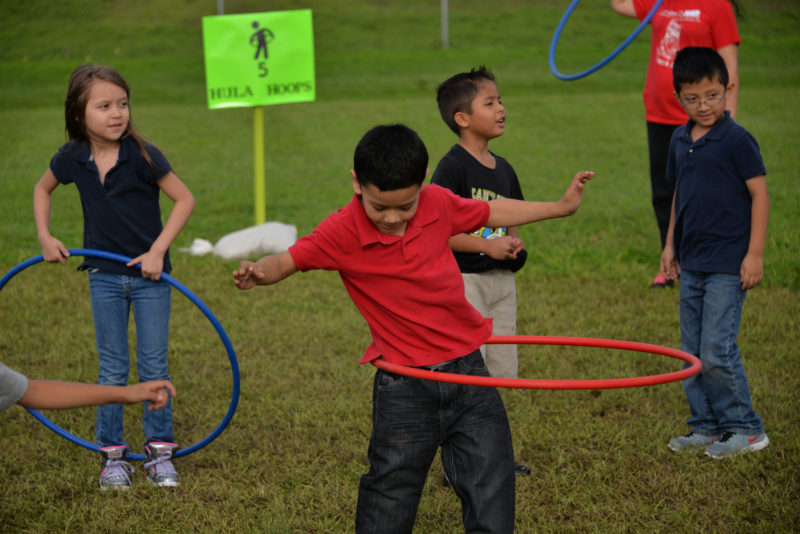
The Coordinated Approach to Child Health (CATCH) program is an evidence based physical activity and nutrition program for schools that promotes healthy food choices among children. For over 25 years, the CATCH platform has been the most cost effective means of preventing childhood obesity, in an environment that’s fun and easy to sustain. They are the originators of "GO, SLOW, and WHOA" for identifying healthful foods. CATCH has a new digital website! In Spanish, too! "The program aims to impact messaging a child receives in physical education, the lunchroom, the classroom, and the home, to form an effective resource that impacts a child’s choices not only in school, but lifelong." Share this with teachers, PE teachers, principals, school administrators, and student ...
A few years ago, Jaxson Martinez and his family got the worst news imaginable. Jaxson, a five-year-old from Uvalde, Texas, was diagnosed with stage 4 high-risk neuroblastoma. This is a rare cancer, only about 300 cases a year in the U.S. He would need at least a four-week stay at San Antonio’s Methodist Children’s Hospital, and also a year's worth of chemotherapy. "Even though it broke our hearts to know our son has cancer, he seems to have no idea he's even sick," said Juan Martinez, Jaxson's father. Jaxson endured seven rounds of chemotherapy, stem cell transplants, tumor removals, 12 rounds of radiation, and had more than 30 blood transfusions! "And to him, at 2 years old, he thought this was all normal," Juan said. Jaxson's story has a happy ending. He had a ...
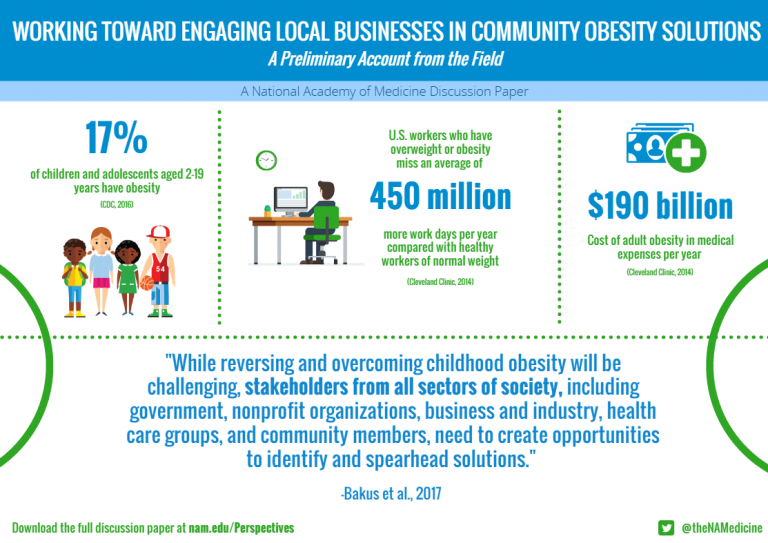
Childhood obesity is a serious public health concern in the United States. About 12.7 million children and adolescents aged 2–19 years, or 17 percent of the population, have obesity. For minorities, the statistics are even more troubling. Nearly 40% of Latino children are overweight or obese (higher rates than both white and black children), placing a significant burden on the current and future state of Latino health. The National Academy of Medicine (NAM) has recently released a discussion paper in which they analyze the role that local businesses can play in alleviating this the childhood obesity epidemic. Per the report (and in line with Salud America’s research) a lack of access to affordable, healthy foods, the absence of physical activity in schools and childcare ...
Health advocates hoping to raise an estimated $28.4 million per year from a soda tax in Multnomah County are working to gather around 25,000 signatures to get the measure on the ballot. The tax would allow for an 18 cent tax for an average 12-ounce soda or 51 cents per liter of soda, with revenues helping to fund early childhood education, reading and literacy initiatives and school programs encouraging nutrition, physical education, school gardens and more. Health advocates like Michael Bloomberg are working together to get the initiative off the ground with seed funding. Also, the American Heart Association, who have helped pass similar policies across the nation have started a local advocacy group called,"Yes for Healthy Kids and Education Coalition" aiming to build support ...
Sleep. Everyone needs it—and wants it. Not getting enough sleep can contribute to heart attacks, diabetes, obesity and other serious health issues that affect Latinos more, CDC reports. For Sleep Awareness Month in April, let's use #SaludTues on April 11, 2017, to explore how much Latinos sleep (or don’t sleep), why sleep is key for good health, and how you and your family can improve sleeping habits. WHAT: #SaludTues Tweetchat: “Sleep for Salud”
TIME/DATE: 1-2 p.m. ET (Noon-1 p.m. CT), Tuesday, April 11, 2017
WHERE: On Twitter with hashtag #SaludTues
HOST: @SaludToday
CO-HOSTS: Dr. Chris Winter (@SportSleepDoc), American Academy of Sleep Medicine (@AASMOrg) We’ll open the floor to questions on sleep like: Why is it good to have a daily ...
The way our communities are designed and built can either support or hinder health. This includes sidewalks, bike lanes, public transportation, housing, schools, parks, employment centers, etc. Everyone deserves healthy communities with safe routes to where we live, learn, work, play, and pray, as well as safe routes to healthy food. The American Public Health Association (APHA) and partner organizations have pledged to work together on the Joint Call to Action to Promote Healthy Communities. Partners include American Institute of Architects, American Planning Association, American Society of Civil Engineers, American Society of Landscape Architects, National Recreation and Park Association, U.S. Green Building Council, & Urban Land Institute. The signatory ...
A recent study uncovered some alarming facts about cervical cancer. Women are dying at higher rates from cervical cancer than previously thought. Cervical cancer is one of the most preventable cancers. By getting regular Pap tests, doctors can find and treat abnormal cells in the cervix before they become cancerous. Latinas already have the highest rates of cervical cancer among all groups of women. Cervical cancer disproportionately impacts the Latino community at 9.7%, compared to non-Latinos at 7.1%, according to the Centers for Disease Control and Prevention (CDC). The American Cancer Society also notes that in just this year alone, more than 12,820 cases will be diagnosed, and 4,210 women will die from the disease. Even more important, perhaps, is that it is the ...
It has long been known that where you live greatly impacts a person’s overall life and their potential future success. Environment affects health, income, education, and access to opportunities. Many Latinos are often forced to live in low-income, high-poverty, and high-crime areas through a variety of obstacles and barriers put into their paths. A report from the Metropolitan Planning Council and Urban Institute attempted to determine the real cost of racial segregation in housing. According to the report, this situation is costing the country as a whole billions of dollars each year. “Our study documents the relationships between segregation and the incomes, educations and safety of a metropolitan region’s residents,” said Greg Acs, the director of the Income and Benefits ...
Looking to make an impact on California Latina's grocery store shopping habits, researchers looked at how watching videos on healthy purchases could help encourage healthier shopping habits among Latina's. As studied by previous researchers, interventions that are focused solely on providing access to healthier foods for underserved people is not sufficient in helping them to eat healthier. However, equipping "food gatekeepers" or those who make the purchasing decisions for food and family meals, with knowledge on nutrition and grocery list planning skills can be a way for low-cost effective interventions. For the intervention, two groups of Latina's were asked to watch two videos, the first one on guided shopping and the other video focusing on mindfulness to support intentional ...