“Don’t stand too close to a microwave – you’ll get cancer!” “You use antiperspirants? Don’t you know that causes cancer?” We’ve all heard these claims. But are they true? Thanks to the Cancer FactFinder, an online resource examining myths and incorrect information about cancer, you can determine what is fact and what is fiction.
The Cancer FactFinder
Led by the Harvard T.H. Chan School of Public Health, Zhu Family Center for Global Cancer Prevention, and the Center for Cancer [Fairness] & Engagement, the Cancer FactFinder provides accurate and reliable information about what does and does not cause cancer. The resource is available in 9 different languages, including English and Spanish, because health incorrect information affects everyone, especially ...
Susan G. Komen, a national breast cancer research organization, has launched its Navigation Nation interactive learning community for patient navigators – those who help guide cancer patients to overcome challenges toward quality healthcare. The program brings individuals through a Patient Navigation Training Program and access to courses, webinars, and other educational events. “The training program gives navigators the tools and resources to overcome [challenges] for those experiencing breast health [inconsistencies] and provides a peer network and support system,” according to the Komen website. Learn more about this free program and what it entails, and how you can join.
What is Komen’s Patient Navigation Training Program?
This program was designed ...
As more healthcare systems consider implementing a non-medical drivers of health (NMDoH) screening program to care for patients’ non-medical needs, we at Salud America! at UT Health San Antonio are sharing important tips in developing such a program. Today, we’re highlighting how often patients should be screened for NMDoH. While there is no evidence-based gold standard for how often screening should be conducted, lived experiences from clinics that have successfully implemented a NMDoH screening program can help healthcare facilities make critical decisions in designing their own screening program. Let’s explore the lived experiences of several of these clinics today!
Considerations in Determining Screening Frequency
Initially, it may seem most effective to screen ...
During the summer months children are at a higher risk of obesity, according to the American Heart Association. This is concerning considering obesity rates are already sky-high in young Latino boys (30%) and girls (23%). But what exactly causes this increased risk for obesity during the summer? Let’s explore four factors that contribute to weight gain in Latino and all children during the summer and how we can break this cycle of poor health into the new school year and beyond.
Increased Sedentary Behavior
During the school year, households operate around a steady flow of activities, like school sports, that help keep children active. During the summer, children may lose access to school-related activities that promote exercise. That’s why visiting parks, lakes, and ...
Medicare can be a complex topic for anyone. Getting health insurance coverage through Medicare has many moving parts, from knowing where to start, to searching through plans, to choosing the right plan for you. Let's dive into Medicare and a few helpful tips to consider when choosing your plan.
What is Medicare?
Medicare is the federal health insurance program for people who are 65 or older, regardless of income, medical history, or health status. The program also covers certain younger people with physical and mental challenges and people with End-Stage Renal Disease (ESRD; permanent kidney failure requiring dialysis or a transplant). “Medicare plays a key role in providing health and financial security to 60 million older people and younger people ...
Despite the heaviest spending on healthcare, the United States has the highest maternal mortality rate among developed nations. Sadly, this historic trend has worsened over time and impacts many women in overlooked populations. The reasons for America’s maternal health crisis is multi-faceted, but a new Centers for Disease Control and Prevention (CDC) Vital Signs survey highlights one potential reason for this worsening health trend – mistreatment of women by healthcare workers during pregnancy and delivery care. Let’s explore the survey results and how mistreatment during maternity care affects Latinas and all women.
Mistreatment During Maternity Care
The survey, which included data from 2,402 women, found that 1 in 5 women (20%) experienced mistreatment by healthcare ...
UT Health San Antonio, including Dr. Amelie G. Ramirez, and seven regional collaborators will leverage $46 million from the National Institutes of Health (NIH) over the next five to seven years to translate scientific discoveries into therapeutic benefits for human health and well-being. A key focus will be reducing health differences among Latinos (particularly Mexican Americans), active military personnel, and veterans. Dr. William L. Henrich, president of UT Health San Antonio, recently announced the funding from the NIH Clinical and Translational Science Awards (CTSA) Program. Henrich thanked partners including The University of Texas at Austin Dell Medical School and College of Pharmacy, The University of Texas at San Antonio and the Texas Biomedical Research Institute for ...
The Zero Breast Cancer (ZBC) organization created Generations, a campaign to give background relevant information to young adults about how endocrine disrupting chemicals and their impact on health across generations. ZBC has now adapted Generations educational tools into Spanish with Generaciones. “At Zero Breast Cancer, we believe that language should not be a [challenge] when it comes to accessing important health information,” according to ZBC. “Our goal is to educate young adults and other community members about the multi-generational impact of [endocrine disrupting chemicals] and inspire simple actions that we can take to reduce exposure.” Let’s dive further into these bilingual resources and why they’re important.
Protecting Future ...
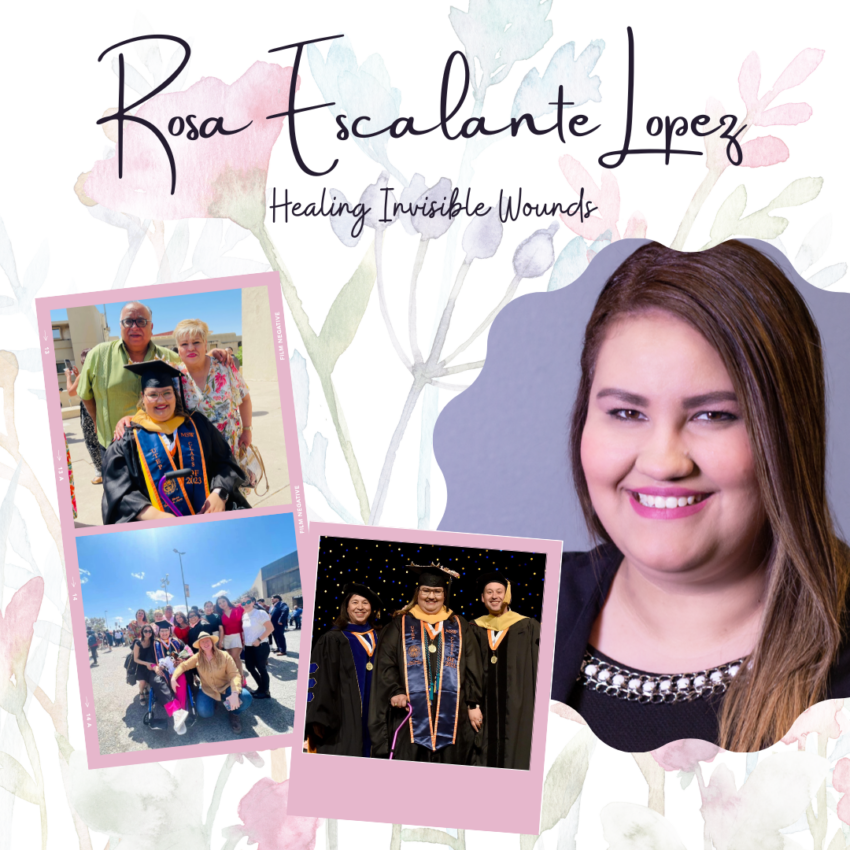
A young Rosa Escalante Lopez curiously looked around the therapist’s room as her mother and the therapist chatted in Spanish. “The elementary school thinks she may have a learning disability,” Rosa’s mother said. “She’s struggling in math.” “According to my evaluation, your daughter is developing normally,” the therapist said with a smile. “She can continue to the next grade; she may just need extra tutoring in her math class.” As the two continued to talk, Rosa reflected on her session with the therapist. She was fascinated with the idea of helping people heal a wound that may not be visible, such as a learning disability or a mental health condition. “In my last year of elementary school, I remember thinking, ‘I'm going to be a psychologist and ...