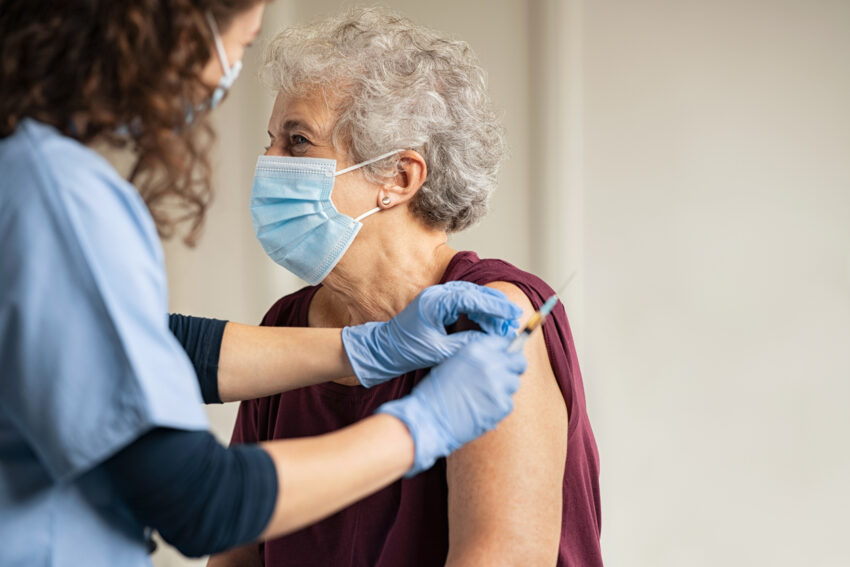
CDC Project Firstline knows that healthcare workers are short on time, but this shouldn’t limit access to practical and valuable infection control training. That’s why CDC Project Firstline developed Infection Control Micro-Learns – a series of guided infection control discussions that can be easily incorporated into team meetings or huddles facilitated by an experienced team member with infection control expertise. These short and easy-to-understand learning opportunities can help healthcare workers recognize and minimize infection control risks to protect themselves, coworkers, and patients from infectious diseases. Let’s explore the Infection Control Micro-Learn on blood!
What to Do When You See Blood
As a healthcare worker, you will work with a variety of patients ...
As a child in Puerto Rico, Alberto Martin dreamed of playing professional soccer. He knew that becoming a soccer pro meant lots of hard work, practice, and willpower to get better even when you’re tired and want to give up. Today, Martin is using those lessons to become a different kind of pro – a doctor. Martin is a second-year medical student at the Universidad Central del Caribe in Bayamón, Puerto Rico, and an intern at UT Health San Antonio’s Institute for Health Promotion Research. He is motivated to share his story to demonstrate how following your dream – on the soccer field or the doctor’s office – can be reality. “Stories and information you get, they just become such a powerful source of drive or inspiration. Because you want to see you, ...
One of the biggest contributors to climate change are gasoline-powered vehicles, which emit greenhouse gases that warm Earth’s atmosphere. In a positive step, our nation is shifting toward climate-friendly electric vehicles (EVs), which emit less greenhouse gasses than gasoline-powered cars, even when accounting for manufacturing and the electricity used for charging. But a new survey by Axios reveals differences in EV accessibility, especially in the Latino population. How might these differences impact Latino health and our nation’s fight against climate change?
How Do Latinos Feel About EVs?
According to the Axios survey, most Latinos (60%) say it’s important to shift to EVs to minimize climate change damage, but they expressed more interest in buying gas-powered ...
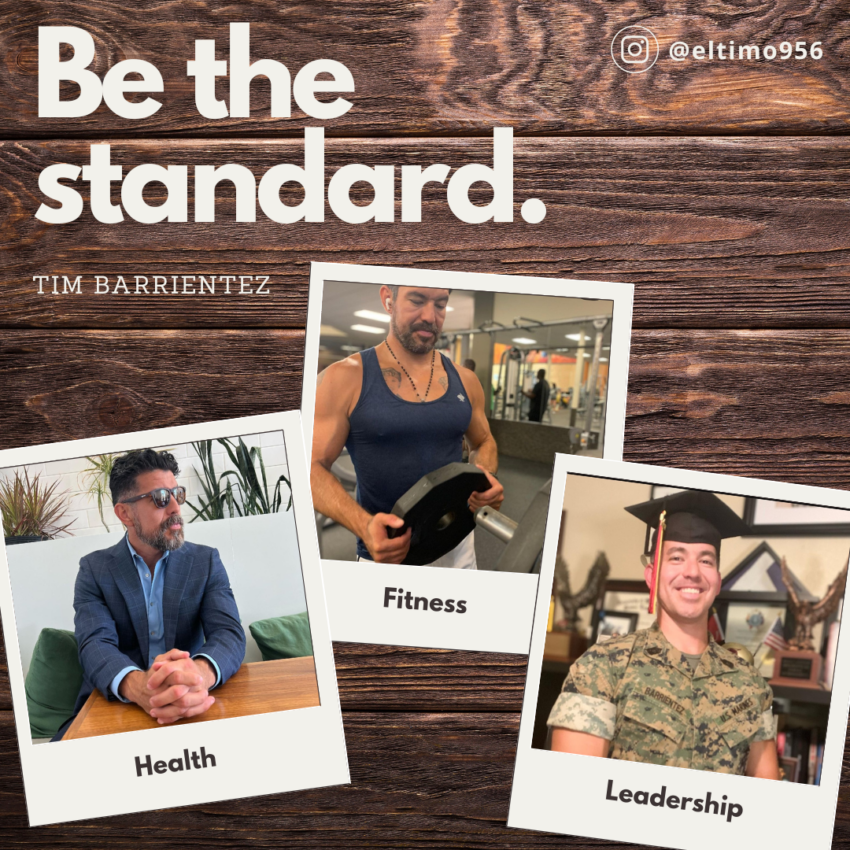
8/22/23 Update: Tim is Salud America!'s latest intern. Read his stories here! 18-year-old Timoteo “Tim” Barrientez wiped a bead of sweat from his brow. It was impossible not to sweat in the hot, humid climate of Port Isabel, Texas – a small coastal town in the Rio Grande Valley. As Tim’s feet struck the pavement, he thought about how he would soon trade his athletic sneakers for military boots. He smiled. After today’s run and weightlifting workout, he would finish packing his bags to begin training as a United States Marine – a career that would last more than 20 years and take him to Iraq, Kuwait, Jordan, Japan, and other countries to defend our nation’s freedom. While serving as a Marine, Tim kept his passion for health and fitness close to his heart. ...
Although the COVID-19 state of emergency has ended, healthcare workers continue to encounter COVID-19 and other infectious diseases in the workplace. That’s why the Centers for Disease Control and Prevention’s Project Firstline provides all healthcare workers – no matter their role or educational background – the infection control training and resources they need to protect themselves, their patients, and their coworkers from infectious diseases. Now in its third year, CDC Project Firstline includes a diverse group of more than 80 healthcare, public health, academic, and state and local partners. In collaboration with the National Hispanic Medical Association, Salud America! is one of those partners. Today, to support CDC Project Firstline and our partners, we’re ...
The Latino population increased to 63,664,346 in 2022, representing 19.1% of the total U.S. population, according to new Census data. Here is everything you need to know about the growing number of Latinos.
Latinos by The Numbers
The number of Latinos in the U.S. grew by 1,017,302, a 1.7% increase, from 2021 to 2022. California (15,732,180), Texas (12,068,549), and Florida (6,025,030) continue as the US states with the largest Latino populations. New York (3,867,076) was the only state to experience a drop (-0.7%, -27,522) in the Latino population. South Dakota had the fastest-growing Latino population (2,835 residents), with an increase of 6.8%. By county, Los Angeles County had the largest Latino population (4,766,616), followed by Harris ...
Times are financially tough for many families, especially low-income Latinos. To save money, many people are cutting costs on non-essentials, like eating out, entertainment, and more. But some people are cutting costs on items that are normally considered essential, like prescription medications, according to a recent US Centers for Disease Control & Prevention (CDC) report. Let’s explore what adults are most likely to skip taking medications to save money, the consequences of this behavior, and how leaders are working to reduce the cost of prescription drugs.
Groups Most Affected by Drug Costs
Unfortunately, groups most likely to skip medication to save money are those who are already vulnerable to health differences, according to the CDC report. These groups include ...
Our nation’s youth are struggling with mental health more than ever before. This crisis is fueled by excessive social media use, climate change, gun violence (now a top cause of death for young people), and the opioid epidemic. Further, many families, especially Latinos, lack access to mental healthcare resources due to stigma, cost, or long wait times to see a provider. Under these circumstances, how can schools and parents help promote mental wellbeing among children and teens this upcoming school year and beyond? Let’s use #SaludTues on Tuesday, August 1, 2023, to discuss how to improve school climates for children and teens’ mental health. WHAT: #SaludTues Tweetchat: Improving School Climates for Children’s Mental Health
TIME/DATE: 1-2 p.m. ET (Noon-1 ...