Latinos make up almost 19% of the total US population, but account for only 6% of US physicians. This lack of Latino representation in medicine negatively affects Latino patient health. For example, Latinos may be less likely to get the care they need due to physician implicit bias and language and cultural barriers. Studies also show that a lack of diversity in healthcare workers contributes to heath inequities, such as higher rates of maternal health issues in Latinas and worse health outcomes for Latino cancer patients, compared to their white counterparts. To boost diversity, Drs. Michael Galvez and Cesar Padilla are leading the effort to celebrate Oct. 1, 2022, as National Latino/a Physician’s Day. “We need more Latino and Latinas in medicine that are able to take ...
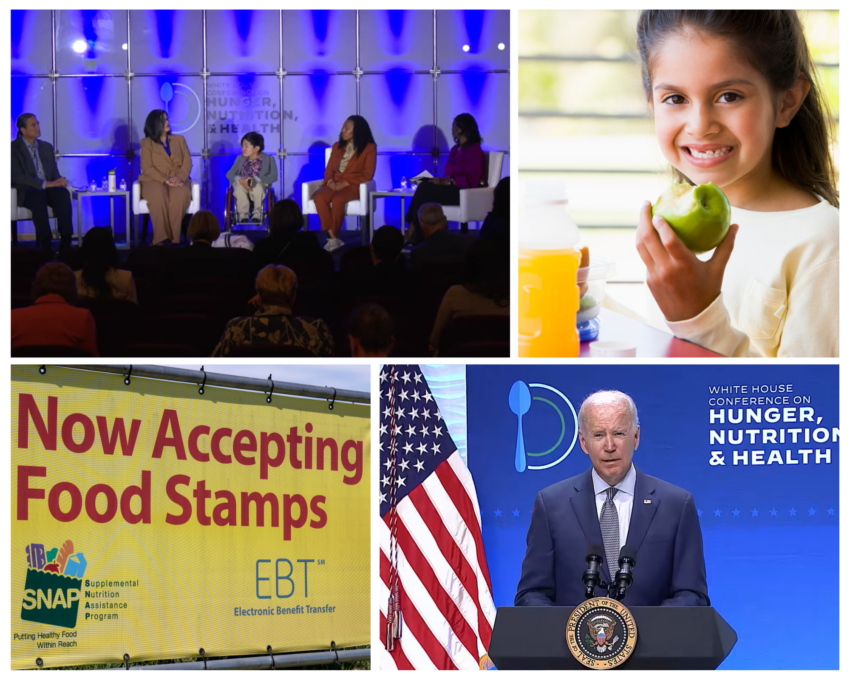
The Biden-Harris Administration announced its goal to eliminate hunger in America, improve diet and physical activity, and reduce diet-related disease by 2030 during the White House Conference on Hunger, Nutrition, and Health on Sept. 28, 2022 – the first such conference in over 50 years. The goal is based on five pillars of strategic action: Improve food access and affordability.
Integrate nutrition and health.
Empower all consumers to make and have access to healthy choices.
Support physical activity for all.
Enhance nutrition and food security research. President Joe Biden also shared three foundational principles for the goal. “Help more Americans access the food that will keep their families nourished and healthy, lot of food deserts out there. Second, ...
“Reservoirs” are where germs live, like a habitat. Things we do in healthcare can be pathways for germs to be carried from one reservoir to another, or into spaces that are not supposed to have any germs.
Too Touchy
Hands, for instance, touch almost everything. Your hands and skin can pick up germs in the environment, from multiple reservoirs, and spread germs to other surfaces or people if not properly disinfected. Germs from the skin and gastrointestinal reservoirs spread easily through touch.
Pathways for Germs to Invade
Germs can also spread when they’re breathed in or through splashes or sprays to the eyes, nose, and mouth, or to broken or unhealthy skin. For example, urine and snot can get into breaks in the skin, or be splashed or sprayed into the eyes, nose, and ...
Everything is bigger in Texas – except wages, worker protections, and the right to organize, according to a recent study by Oxfam, an organization dedicated to fighting poverty and injustices. After analyzing each state’s wage policies, worker protections, and the right to organize, Texas ranked 48th out of 52 (including Washington D.C. and Puerto Rico) in Oxfam’s “Best States to Work Index.” In comparison, Oregon, California, and Washington placed first, second, and third, respectively. What does this mean for Latinos, who make up 40.2% of Texas’ population? First, let’s take a closer look at Oxfam’s study.
Wage Policies
Oxfam’s evaluation criteria for this category included the ratio of the state minimum wage to the cost of living for a family of four, ...
In the last few years, childhood obesity has become a global epidemic. The effort to change individual choices – like diet and physical activity – hasn’t solved the problem, and also contributes to weight discrimination. That is why we need to use cultural insights, nutritional science, and a systemic focus to improve child health, according to a new report from the Vanderbilt University Cultural Context of Health and Wellbeing Initiative. “What we label ‘obesity’ is produced by interrelated systems in which human biology interacts with environments, social norms, economic structures, and historical legacies,” according to a Robert Wood Johnson Foundation blog post about the report, Reframing Childhood Obesity: Cultural Insights on Nutrition, Weight and Food ...
The pandemic revealed long-standing gaps in infection control knowledge and understanding among the frontline healthcare workforce. This is why CDC launched Project Firstline, a training and education collaborative designed to ensure all healthcare workers, no matter their role or educational background, have the infection control knowledge and understanding they need and deserve to protect themselves, their patients, and their coworkers. Salud America! at UT Health San Antonio, in partnership with the National Hispanic Medical Association (NHMA) and CDC Project Firstline, brings you a three-part episode podcast series, “Behind the Mask,” to explore infection control through three specific and diverse healthcare lenses: patient navigators/health screeners/community health ...
By Deputy Under Secretary Stacy Dean, U.S. Department of Agriculture, and Dr. Amelie Ramirez, DrPH, MPH, Director, Salud America! at UT Health San Antonio In recognition of Hispanic Heritage Month, Salud America! at UT Health San Antonio is excited to partner with the U.S. Department of Agriculture (USDA) to discuss the importance of the Special Supplemental Nutrition Program for Women, Infants, and Children (WIC) for the Hispanic/Latino Community. As we celebrate Hispanic Heritage Month, we recognize the important contributions the Hispanic/Latino community has made across the country. We also acknowledge the vital food and nutrition programs that impact the community every day at school, at home, and in the community, including WIC. More than 6.2 million women, infants, and ...
Leonel Rodriguez got some terrible news in November 2019. Doctors diagnosed Rodriguez, a South Texas resident, with mantle cell lymphoma – an aggressive, rare form of non-Hodgkin lymphoma. After going through several treatment options, his disease persisted. He soon learned about a potentially beneficial clinical trial for lymphoma patients at the Mays Cancer Center at UT Health San Antonio. Clinical trials help researchers learn how to better slow, manage, and treat diseases like cancer and Alzheimer’s. “[Clinical trials were] the best way because, you know, I feel good now with the treatment,” Rodriguez said. “Now I feel I've been feeling well, and well, well.”
Rodriguez’s Decision to Participate in a Clinical Trial
Rodriguez first experienced problems in ...
Leonel Rodríguez recibió una noticia terrible en noviembre de 2019. Los médicos diagnosticaron a Rodríguez, un residente del sur de Texas, con linfoma de células del manto, una forma agresiva y rara de linfoma no Hodgkin. Los primeros medicamentos que tomó para tratar el cáncer en realidad empeoraron su condición. Pronto se enteró de un estudio clínico potencialmente beneficioso para pacientes con linfoma ofrecido por el Mays Cancer Center de UT Health San Antonio. Los estudios clínicos ayudan a los investigadores a aprender cómo reducir el progreso, manejar y tratar mejor enfermedades como el cáncer y el Alzheimer. "[Los estudios clínicos fueron] la mejor manera porque, usted sabe, ahora me siento bien con el tratamiento", dijo Rodríguez. "Ahora siento que me ...