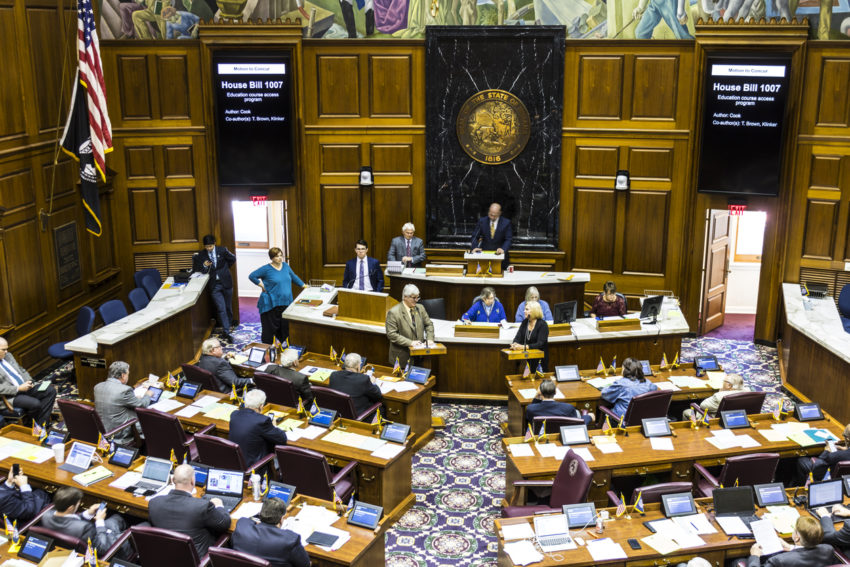
The Ohio State School Board this week approved social and emotional learning (SEL) standards to apply to students in K-12─and hundreds of Ohio educators and Salud America! members submitted comments to help refine those standards. Ohio now is one of only eight states with K-12 SEL standards. These standards aim to help students build emotional awareness, empathy, strong relationships, and responsible decision-making. How did this big change happen? What role did Salud America! and the public have?
The Growth of SEL in Ohio Schools
Students who get support for social and emotional learning in schools do better academically, socially, behaviorally, and mentally, research shows. SEL is part of a larger plan in Ohio (3.8% Latino) to prepare all students for life after high ...
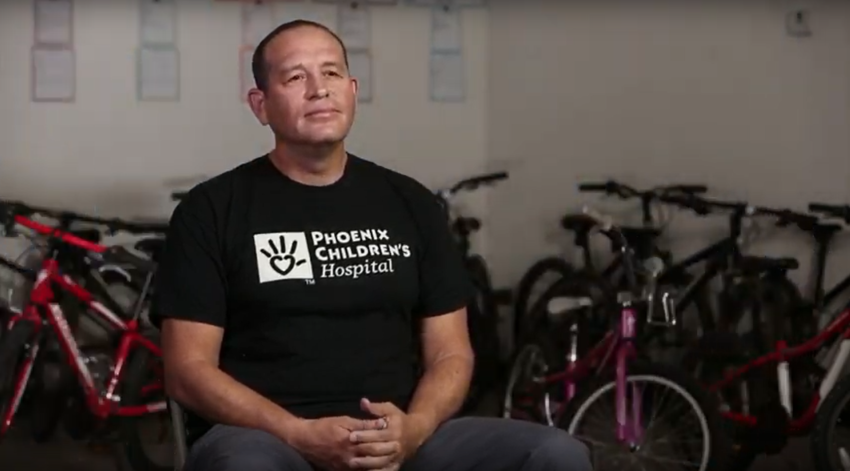
Juan Tarango of Tempe, Arizona, has been an avid cyclist for over 30 years. For him, it’s about exploring, exploring his city, state, country and even other countries. He loves to see kids ride bicycles, having fun and getting physical activity. But he hated seeing how many kids show up with bike-related injuries at the Phoenix Children’s Hospital ER where he worked. “One kid─wasn’t going fast, wasn’t doing tricks─falls, hits his head, and ends up with life-changing brain injury,” Tarango said. Tarango wanted to help. He wondered: What could he do to teach Latino and all kids bicycle safety behaviors, and thus reduce bike-related injuries?
Children, Bicycling, and Injuries
Bicycling is good for your health. For kids, it can help develop muscle ...
Rosalie Aguilar, Salud America!'s national project coordinator, recently joined as a guest on Dr. Charlotte Hughes Huntley's podcast, Public Health Epidemiology Careers. On the podcast, Aguilar spoke about: Salud America!'s focus on Latino health equity.
Salud America!'s network of over 250,000 parents, local leaders, health professionals, and school personnel. This network is working to make healthy policy and system changes in their communities.
Salud America!'s communications team and its daily content curation strategy. The team creates Latino healthy change success stories and action opportunities to fuel grassroots change.
How the team disseminates this content in social media. This includes weekly #SaludTues Tweetchats that reach 8 million impressions on Twitter ...
Colorado (21.5% Latino) students have faced high rates of disciplinary action for years. In 2018, nearly 6,000 preschool through second grade students were suspended or expelled from schools in that state. That’s why state leaders are pushing to make stricter standards for expelling and suspending young students.
Harsh Discipline is Troubling
Ineffective school discipline policies disrupt learning and harm a child’s future, according to EdSource. This kind of correction can also possibly trigger traumatic stress, reinforce unconscious biases, and hinder opportunities to address the causes of challenging behavior. Young students behave in challenging ways. The classroom setting and school schedules can prompt defiant behaviors. Colorado state legislators realize the ...
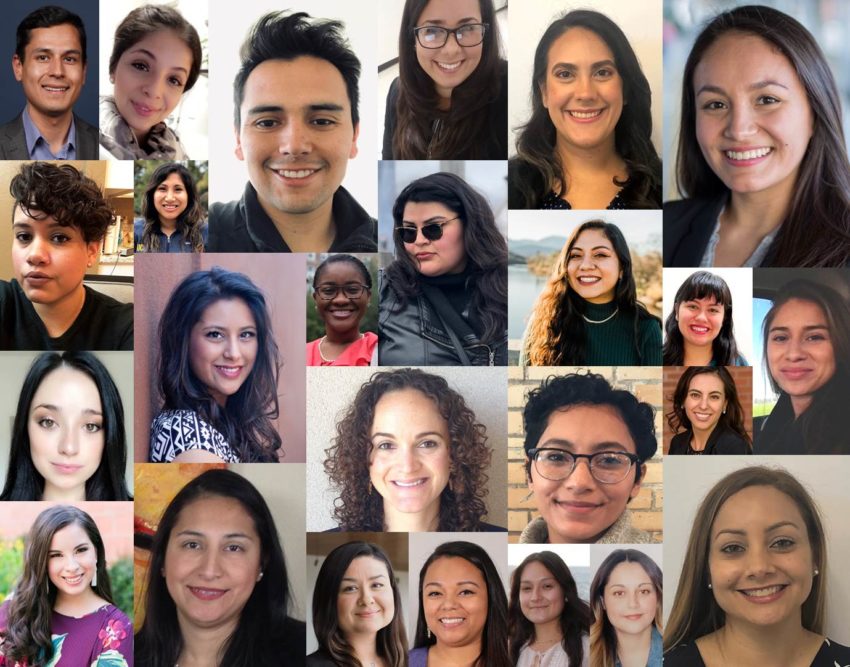
Program leaders have selected 25 aspiring Latino researchers from across the nation to join the 2019 cohort of Éxito! Latino Cancer Research Leadership Training at UT Health San Antonio. Each year, Éxito! recruits U.S. master’s level students and professionals to participate in a five-day, culturally tailored Éxito! summer institute to promote pursuit of a doctoral degree and cancer research. Applications were due in March 2019. The 25 new participants were selected from a deep pool of applicants. Each participant now will join the Éxito! summer institute on June 10-14, 2019 in San Antonio. They will interact with Latino researchers and doctoral experts to learn about Latino cancer, succeeding in a doctoral program, and the diversity of research careers. Here is the ...
Latino and other students of color who attend schools that emphasize the value of diversity show better heart health than peers whose schools without such values, according to a new study. The study examined a diverse sample of adolescents from over 100 schools, mainly in urban areas. "For students of color, these schools that emphasize diversity are different environments in concrete ways," Cynthia Levine, an assistant professor of psychology at the University of Washington, who conducted the study while a postdoctoral researcher at Northwestern University, told Futurity. “They may feel more supported and valued there, in a way that matters for their health.”
About The Study
The study examined how schools that emphasize the value of racial and ethnic diversity, can ...
Nearly 21% of Latino parents said their middle- and high-school children would not participate in any school activities in 2018-19, a higher rate than parents overall (18%), according to the C.S. Mott Children’s Hospital National Poll on Children’s Health at the University of Michigan. These kids miss the boost in educational achievement and personal development that stem from school extracurricular activities, from sports to student council. So why aren't more kids participating?
The Biggest Reason: Cost
Most middle- and high-schoolers will participate in at least one school activity in 2018-19. This includes 52% in sports, 43% in arts, and 51% in clubs/other, according to the poll. But cost is the biggest reason keeping other kids from participating. Many school ...
The number of Latino or Hispanic-serving colleges and universities has risen 98% in the past 10 years, from 264 in 2007 to 523 in 2018, according to a new report by Excelencia in Education. A “Hispanic-Serving Institution” (HSI) has 25% or more undergraduate full-time equivalent Latino enrollment. HSIs now constitute 17% of all colleges and universities.
The Key Data Two of three Latino undergraduates attend an HSI.
46% of student enrollment at HSIs is Latino.
HSIs are present in 27 states and Puerto Rico. That's up from 21 last year.
HSIs are very concentrated geographically. 69% were located in three states and Puerto Rico. California has the most, followed by Texas and New York.
Most HSIs are located in a city (273) or suburb (163). Fewer were in towns ...
Governors have the opportunity to use state resources and create partnerships to improve the social and economic inequities that cause poor health outcomes, especially among communities of color. But not all governors have the tools to boost public health. That’s why the National Academy for State Health Policy (NASHP) and the de Beaumont Foundation released four big tools to help governors understand what influences public health and how to embed upstream health- and prevention-related plans into the structure of government. “We’re the state that’s going to tear down the systemic barriers to work and education faced by people of color, people with disabilities, veterans and women,” said Washington Gov. Jay Inslee in his inaugural address, according to an NASHP blog ...