You don't need us to tell you how stressful the holidays can be. So how can we work together to turn the holiday season into a heart-healthy, less-stressed holiday for Latinos, who are at high risk of diabetes and unhealthy weight? Let’s use #SaludTues on Tuesday, Dec. 13, 2016, to tweet info and tips to help us reduce stress and boost healthy eating and activity over the holidays. WHAT: #SaludTues Tweetchat: “A Healthy Holiday How-To”
TIME/DATE: 1-2 p.m. ET (Noon-1 p.m. CT) Tuesday, Dec, 13 2015
WHERE: On Twitter with hashtag #SaludTues
HOST: @SaludToday
CO-HOSTS: My Food Diary (@MyFoodDiary), KidsHealth.org (@KidsHealth), the National Child and Adult Care Food Program (CACFP) Sponsor Association (@NationalCACFP) We’ll open the floor to your stories and ...
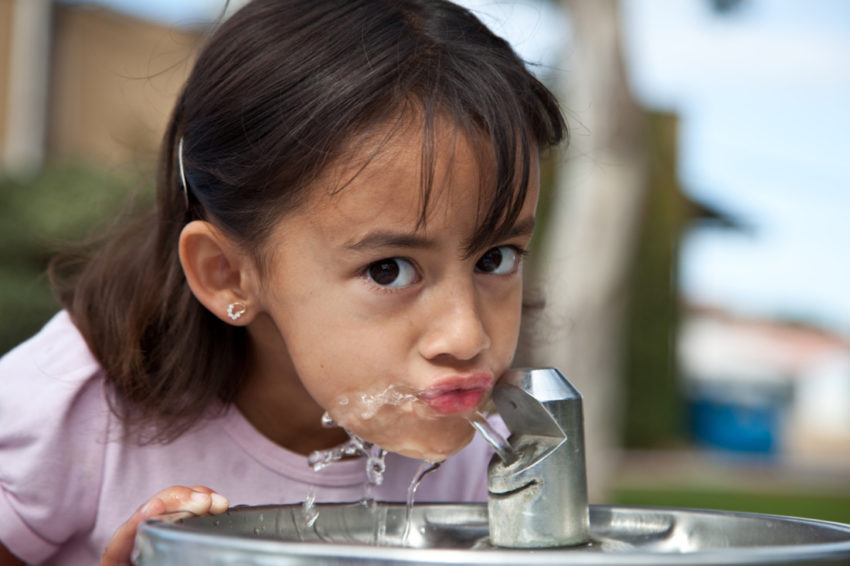
Did you know Mexican-American kids drink less plain water than white kids? They also are more likely to perceive tap water as unsafe? In fact, negative perceptions of school water fountains were associated with sugary drink intake among Latino kids, according to new Sugary Drinks and Latino Kids research from Salud America!, an obesity prevention network under Dr. Amelie Ramirez at UT Health San Antonio.
What changes can promote water?
When New York elementary and middle schools replaced vending machines with water jets, students’ likelihood of being overweight dropped 0.9 percentage points among boys and 0.6 points among girls. Also, kids would consume 205 fewer calories a day by replacing sugary drink consumption with low-fat milk at meals and water between meals.
What ...
Sugary drinks are a rising threat to the health of Latino preschoolers. Being Latino and drinking sugary beverages at least once in the past week were associated with 2.3 times the odds of severe obesity in kindergarten, which can lead to obesity-related diseases, according to a study. The study is part of a research review, Sugary Drinks and Latino Kids, released today by Salud America!, an obesity prevention network at UT Health San Antonio, and Bridging the Gap, an obesity research team at the University of Illinois. “We have to work together to do more to reduce sugar consumption and help kids grow up at a healthy weight, well before they ever enter kindergarten,” said Dr. Amelie G. Ramirez, director of Salud America! and the Institute for Health Promotion Research at UT ...
SaludToday Guest Blogger
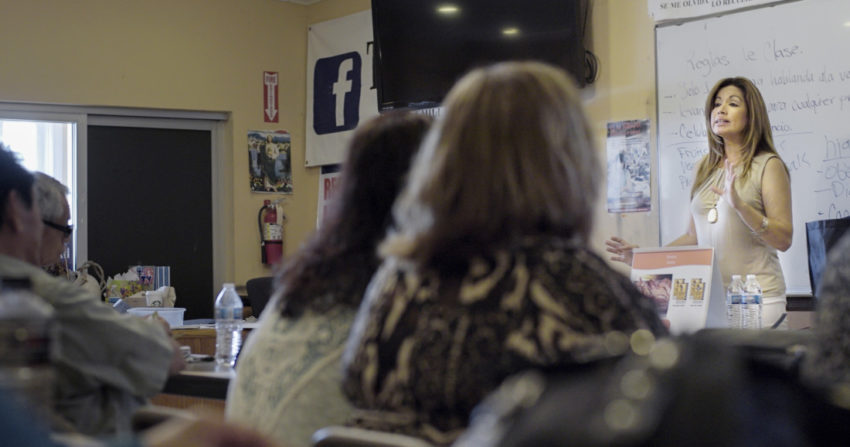
UnidosUS, Formerly: National Council of La Raza (NCLR) The holidays are upon us. So is the temptation for Latino and all families to eat, drink and be merry—but there are ways to approach the season with an eye toward choosing nutritious food, cooking healthy meals, and increasing physical activity in order to enjoy better health. These lessons are at the heart of UnidosUS's Comprando Rico y Sano program. The program, led by UnidosUS's Institute for Hispanic Health with support from WalMart Foundation, uses a culturally and linguistically sensitive approach and community health workers—called promotores de salud—from 20 partner groups to reduce local hunger and instill healthy shopping and eating habits among Latinos. UnidosUS trains the ...
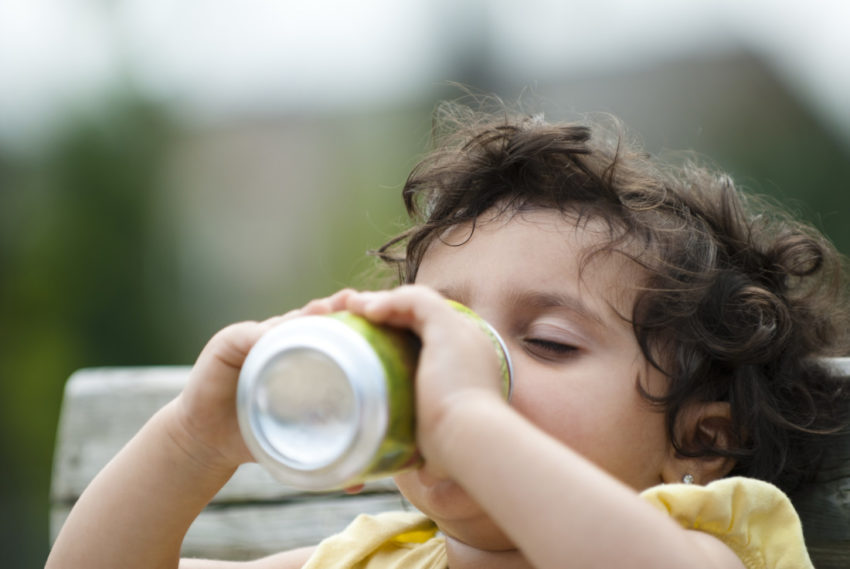
Three of every four Latino kids have had a sugary drink by their second birthday, compared to less than half of white kids. Regular consumption can have alarming health consequences. In fact, being Latino and drinking sugary beverages at least once in the past week were associated with 2.3 times the odds of severe obesity in kindergarten, which can lead to diabetes and worse, according to new research package to be released Dec. 5, 2016, from Salud America!, an obesity prevention network at UT Health San Antonio, and Bridging the Gap, an obesity research team at the University of Illinois. Let’s use #SaludTues on Tuesday, Dec. 6, 2016, to tweet about the new research and strategies to reduce consumption of sugary drinks among Latino kids: WHAT: #SaludTues Tweetchat: “The ...
Many people are aware of the effects that diabetes can take on your body. However, what can just having high-blood sugar do to you? Latino adults are almost twice as likely as non-Hispanic white adults to be diagnosed with diabetes by a physician. In 2010, Latinos were three times more likely to start treatment for end-stage renal disease related to diabetes and Latinas were 1.5 times as likely to die from it compared to whites. Glucose, or sugar, is the fuel that helps power cells through your body. Levels of it rise and fall in your blood depending on what you eat. However, when cells don’t absorb the glucose, the results can include damage to nerves, blood vessels, and organs. “If you keep glucose levels near normal, you reduce the risk of diabetes complications,” Dr. ...
Currently, more than 75% of all American adults today are classified as either overweight or obese. According to data released by the Centers for Disease Control and Prevention (CDC) and a report from the JAMA Internal Medicine journal, for the first time in history, the number of obese people has surpassed that of the overweight, Wallethub reports. Wallethub studied new data published by the Physical Activity Council to compare the 50 U.S. states and Washington, D.C., to determine which were the unhealthiest. Focusing on 17 indicators of weight-related health problems, including the percentage of adults that were overweight or obese and sugary-beverage consumption by adults. In 2015, about 81.6 million Americans were completely inactive. Factors such as genetics, emotional ...
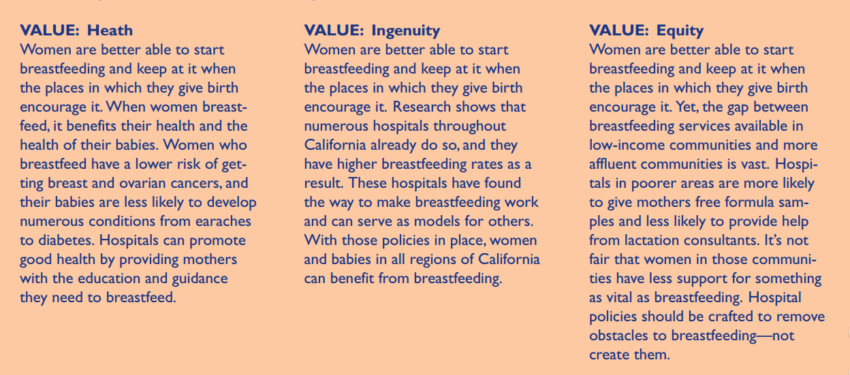
We all know that breastfeeding saves live and money, yet many moms, especially Latina moms, do not meet their own personal breastfeeding goals. Why not? According to a framing brief by Berkeley Media Studies Group (BMSG), the story on breastfeeding is narrowly framed around a portrait of the mother and baby rather than the context of real women's lives in which it takes place. Consider why Starbucks' executives get lactation rooms, but baristas have to lock themselves in the bathroom to pump breast milk. Advocates should look beyond the portrait towards to the landscape-social, cultural, political, structural, and environmental factors that make it difficult to breastfeed, like lack of support in hospitals, insufficient time and space in the workplace, unfriendly businesses, ...
Does your supermarket prominently feature unhealthy foods? You’re invited to sign a Salud America! and Care2 letter campaign asking grocery stores to use labels, floor arrows, and other marketing strategies to promote fruit and veggie options for Latino families. Fruits and veggies are critical to help kids grow up at a healthy weight. Access to, and purchases of, affordable healthy foods tends to improve when healthy food offerings are expanded and promoted in underserved communities, according to Salud America! research. But some grocers’ marketing, placement, and store design nudges families toward unhealthy foods. The new letter campaign asks members of state grocery store associations to consider changes like: adding green arrows on the floor to guide ...