Get ready! On Oct. 5, Salud America! will launch a free online tool where people can select their own county and get customized data on food access, activity, and equity issues compared to the state and nation. The tool, called the Salud Report Card, will also offer policy solutions, case studies, and share-ability to inspire people to start and support healthy changes in their communities. We're inviting parents, teachers, and local leaders to a webinar to explore the new Salud Report Card tool and how to use it at 1 p.m. CST Wednesday, Oct. 5, 2016. "We see the Salud Report Card as a great way for activists, parents, educators, and healthcare professionals to take action by engaging local leaders in conversations that will create healthier communities for Latino kids and the ...
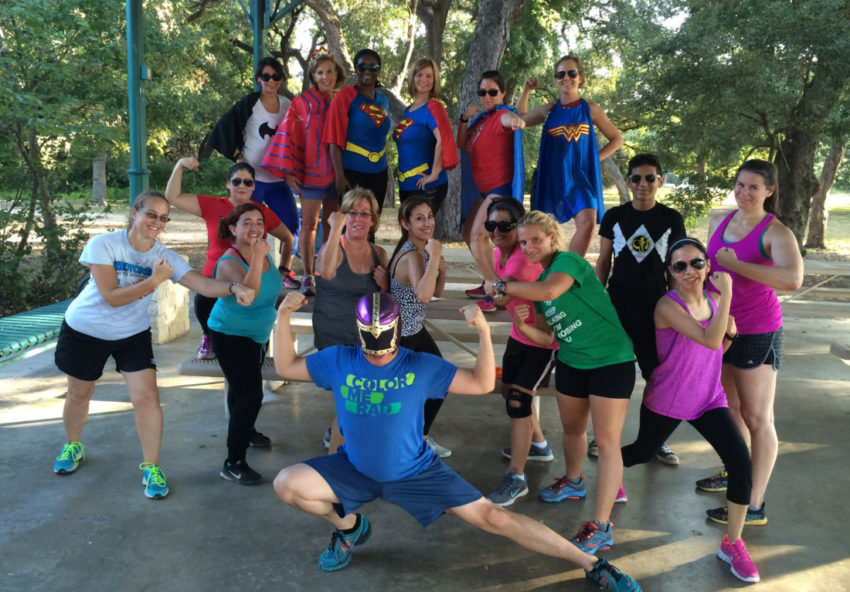
Are people in your city physically inactive? Community leaders in largely Latino San Antonio knew people weren't active enough, and had high risk of heart disease, diabetes, asthma, stroke, depression, stress, and more. So the city's Parks and Recreation Department helped launch Fit Pass and Fitness in the Park—two accessible, affordable strategies to attract Latino and all residents to be active at local parks and improve their mental and physical health. The city's excited progress is featured in a new Rivard Report article and Salud Heroes story by Amanda Merck of Salud America!, a national Latino childhood obesity prevention network based at the UT Health Science Center at San Antonio. For Fitness in the Park, city health worker Pete Garcia and his team developed a plan ...
Lacking access to and opportunities for physical activity is one of the big reasons Latino kids are more overweight and obese than their peers, and suffer more disease. So, what can we do to make physical activity a daily part of the lives for Latino kids? Join a new webinar from 3-4 p.m. ET on Tuesday, Sept. 27, 2016, to help learn about policy change and systems-change efforts taking place across the country to ensure physical activity is a meaningful part of the lives of all children. Sponsored by the National Council of La Raza (NCLR) and including Salud America!, the webinar will bring together a panel to highlight successful efforts that have been accomplished throughout the country. The webinar panel includes: David Thomsen, Policy Analyst, Health Policy Project, ...
By Patti Suppe, P.E. Teacher, Loma Vista Middle School, Riverside, Calif.
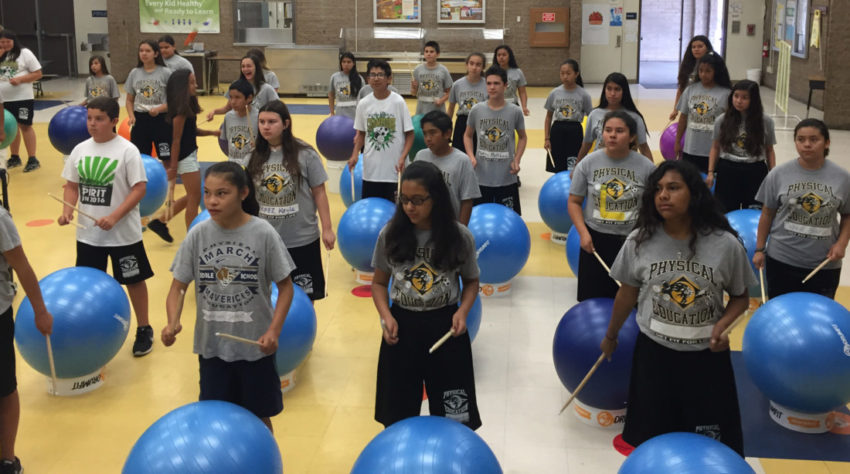
SaludToday Guest Blogger At Loma Vista Middle School, we have a vision that all students will realize their unlimited potential. Our goal is for them to excel in all areas of their middle school education, from academics to physical fitness and co-curricular activities. As a physical education teacher, I know first-hand the importance of health and wellness in achieving this goal. That’s why we enrolled in the Alliance for a Healthier Generation’s Healthy Schools Program, funded in part by Kaiser Permanente in select U.S. cities, including Riverside. The Program has had a huge impact on our school achieving our wellness goals. This year, we were named one of America’s Healthiest Schools – and were ...
About 14% of all American households didn’t have reliable access to enough affordable, nutritious food in 2014. People in Latino households were hungrier and less nourished than in white households. Also, Latinos often live in neighborhoods with more fast food restaurants and fewer supermarkets and farmers’ markets. This leads to inadequate consumption of healthy foods and overconsumption of unhealthy foods, according to Latino-focused research. Let’s use #SaludTues on Tuesday, Sept. 27, 2016 to tweet about these trends and innovative methods of solving Latino hunger and malnutrition issues. WHAT: #SaludTues Tweetchat: “How to Solve Latino Malnutrition and Hunger”
TIME/DATE: 1-2 p.m. ET (Noon-1 p.m. CT), Tuesday, Sept. 27, 2016
WHERE: On Twitter with hashtag ...
Maryflor Peña of Phoenix started to gain weight in sixth grade. She’d gained 65 pounds by the seventh grade, eating more pasta, more tacos, more everything. At age 12, Maryflor was diagnosed with high blood pressure, high cholesterol and a fatty liver — ailments common in overweight and obese children and adults. A pediatric specialist told Maryflor and her parents that she must start eating healthy and exercising or would face a future of heart disease and diabetes. The teen, with the help of her parents, embarked on a weight-loss journey that has helped improve her vital signs and eventually spurred health improvement among her family members, according to a profile story by the American Heart Association. Latino children are far more obese and overweight than their ...
Eat healthy. Exercise more. Sleep more. Drink more water. These tips are all essential to good health, but they're fairly straightforward with commonsense applications. Health magazine has new list of 12 health tips that may seem strange, but work. We break down the implications of several tips for Latinos. For healthy teeth, don’t brush after meals. Acidic foods, such as citrus fruits, tomatoes, sodas, or sports drinks can soften tooth enamel. Brushing your teeth after meals can speed up the acid’s effect on tooth enamel and even erode the layer underneath. It is suggested that waiting 30 to 60 minutes after eating will protect teeth better. This is good advice for Latinos, as they generally lag behind other racial and ethnic groups in the U.S. in oral and dental ...
Physical activity and play are critical to a child’s physical, social, and mental development. Afterschool and out-of-school time programs are uniquely positioned to support physical activity, play, and healthy eating for children, especially Latinos who are less physically active than their peers. Let’s use #SaludTues on Sept. 13, 2016, to tweet about how out-of-schools providers can promote a healthy weight and spur lifelong healthy habits among Latino children. WHAT: #SaludTues Tweetchat: “How Out-of-Schools Programs Can Impact #LatinoHealth”
TIME/DATE: 1-2 p.m. EST Tuesday, September 13, 2016
WHERE: On Twitter with hashtag #SaludTues
HOST: @SaludToday
CO-HOSTS: National AfterSchool Association (@NatlAfterSchool), Texas State Alliance of YMCAs ...
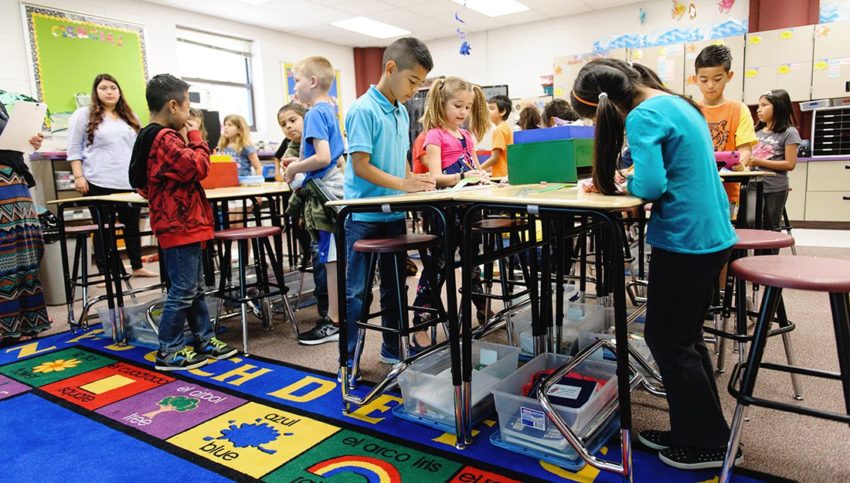
For the first time, a new study shows that standing desks in classrooms can slow the increase of a key obesity indicator by an average of 5 percentage points. The study, led by the Texas A&M School of Public Health, followed 193 third- and fourth graders in 24 elementary school classrooms, half with standing-oriented desks and half without, for two years in College Station, Texas, the Vital Record reports. Students who had standing-oriented desks for both years averaged a 3% drop in body mass index (BMI)—a key indicator of obesity. Those in traditional desks showed the 2% increase typically associated with getting older. Even more impressive, students who spent only one of two years with standing-oriented desks also had lower mean BMIs than traditionally seated ...