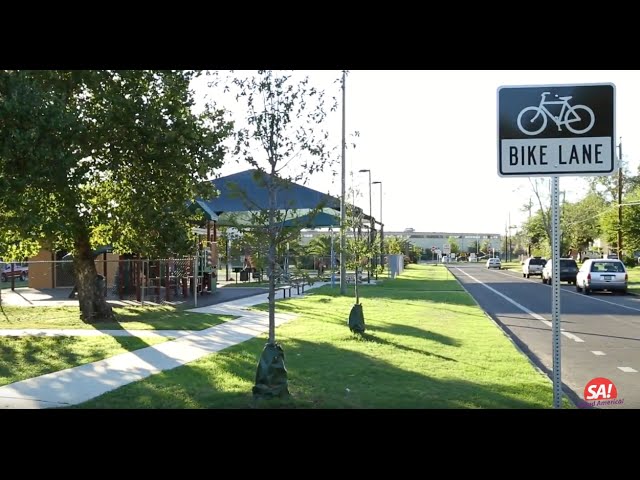
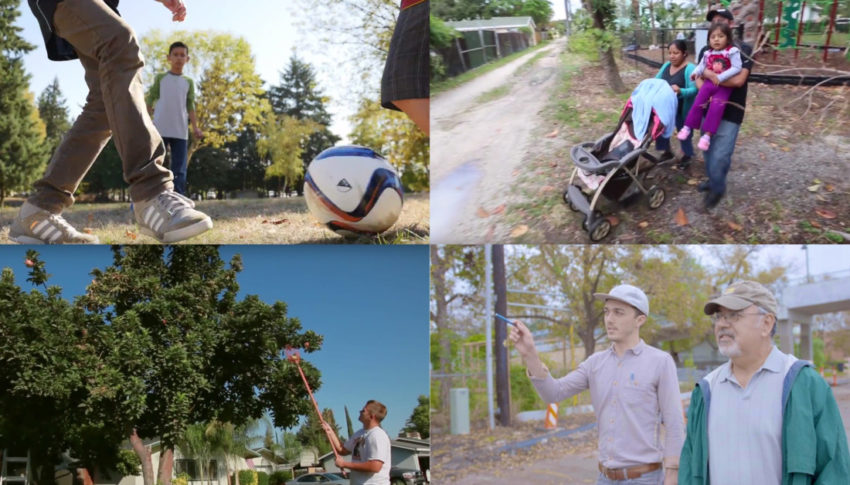
What can you do to bring walkable streets to your neighborhood? Follow the example of Nicolas Rivard and Allison Hu. Rivard and Hu, urban designers in San Antonio, noticed that a road construction project in a largely Latino neighborhood was lacking shade, trees, and other walkable streetscape elements because of cost issues. So they organized a multi-pronged effort with neighbors, business partnerships, storytelling, petitions, and more to mobilize support and suggest design-specific elements that could improve the road's walkability—an effort that paid off when the city agreed to add street trees, separated sidewalks, and other streetscape elements to the road. Their work is featured in a new Rivard Report article and Salud Heroes story by Amanda Merck of Salud America!, a ...
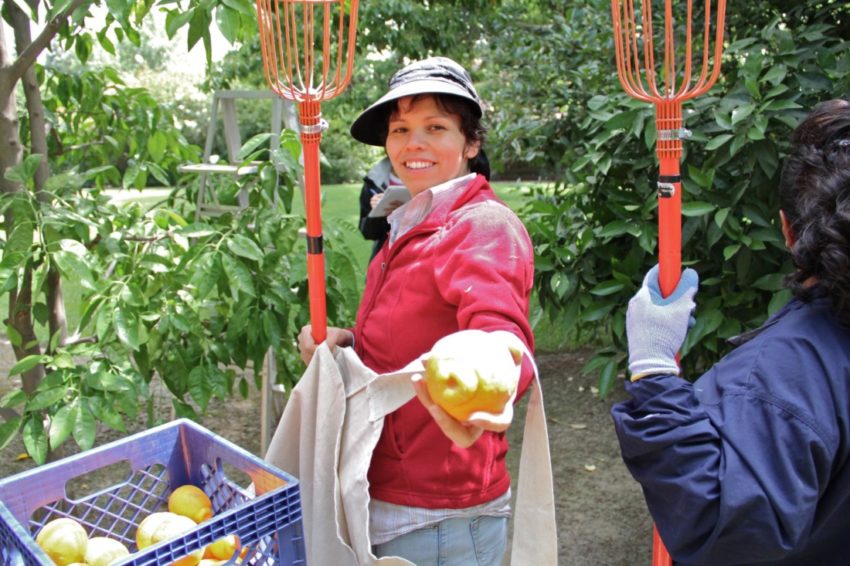
Fruit was in danger. It was falling off trees, rotting. Not nourishing people in desperate need of healthy food. So Sarah Ramirez, a health advocate in Tulare County, Calif., started a program to pick up unused fresh produce from yards and donate it to the food bank. It gets healthy fruits and veggies into the hands of locals who need them. Now Ramirez won the Salud America! #SaludHeroes video voting contest! Watch her winning video or read her story about how she took action after noticing poverty, hunger, and a lack of access to healthy food in her 60% Latino farming community where much freshly grown produce goes to waste. Ramirez's Be Healthy Tulare group researched and developed a volunteer program to glean fruit from local homes, and donated it the food bank, ...
Physical activity can help raise a healthier generation of kids in San Antonio, where there is high risk of obesity, diabetes, and heart disease. Complete streets, playful neighborhoods, and greenways are a few new ways to help create opportunities for physical activity, according to a new article in The Rivard Report by Amanda Merck of Salud America!, a national Latino childhood obesity prevention network funded by the Robert Wood Johnson Foundation and based at the UT Health Science Center at San Antonio. Merck suggests the city connect with groups that are already working to make the healthy choice the easy choice. For example, she suggests the Active Living Council of San Antonio—a public-private partnership of policymakers, business leaders, school officials, program ...
More Americans are eating healthier, but a widening nutrition gap is separating Whites from Latinos and African Americans, according to a new study, the L.A. Times reports. The study, which examined 34,000 U.S. adults' diets from 2000-2012, found that 46% of Americans had "poor" diets in 2012, an improvement from 56% in 2000. Researchers also found Americans made several positive gains: cutting sugary drink intake in half, nearly doubling consumption whole grain consumption, and boosting intake of nuts, seeds, fish, and shellfish. But Latinos and African Americans didn't improve as much. According to the L.A. Times:
Non-Latino blacks and Mexican Americans — the only two minority ethnic groups to be studied in the latest effort — were significantly less likely to have ...
Research has proven numerous times that breastfeeding reduces obesity, helps babies fight infections, and lowers the risk of asthma. According to new research, children that were breastfed also behave better in school, Time Live reports. Researchers from Glasgow University conducted the study among 1,500 children from South Africa between the ages of 7 and 11 and concluded that those who drank breast milk for six months or more had an easier time behaving in school than those who were breastfed for less than a month. “The duration of exclusive breastfeeding of an infant has greater importance than previously realized in several areas of development," Tamsen Rochat of the Human Science Research Council in Durban told Time Live. Learn more about breastfeeding and Latinos ...
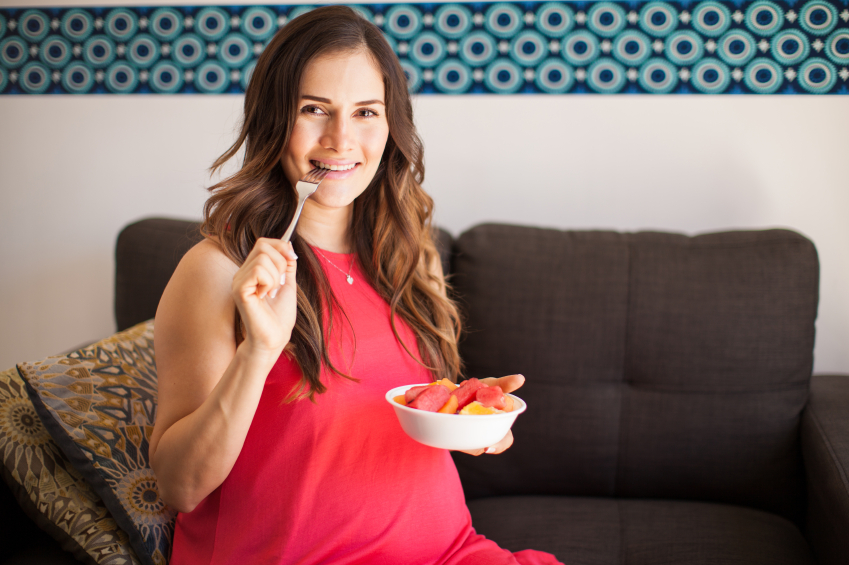
New research from the National Institutes of Health (NIH) concluded that “proper maternal folate levels during pregnancy may protect children from a future risk of obesity, especially those born to obese mothers.” What exactly is folate? According to the NIH folate is a B vitamin that is present in many popular Latino foods and vegetables, such as beans, avocados, baby spinach, and popular fruits among Latinos such as mangos and oranges. Doctors recommend women who are pregnant to consume 400 mcg of folic acid daily, either from supplements or fortified foods such as masa de maiz. Learn more about folate ...
Neighborhood conditions can have major health effects. WATCH and VOTE for new Salud America! #SaludHeroes who made neighborhoods healthier places to live, learn, and play—and be entered in a random drawing to win a FREE T-shirt and jump rope! #SaludHeroes in the neighborhood are: How to Make a Walkable Neighborhood. Urban designers Nicolas Rivard and Allison Hu mobilized neighbors to request walkable streetscapes in San Antonio. Rescuing Unwanted Fruit. Sarah Ramirez increased healthy food access in Tulare County, Calif., by picking unused produce from yards and donating it to the food bank. Greenway to Health. Erica Whitfield and other health advocates redeveloped an abandoned alley in Lake Worth, Fla., into an attractive greenway to increase walkability and ...
According to a new study, 40% of U.S. women are obese, Health Day reports. For the study, researchers gathered obesity rates from a national survey conducted from 2013-2014, and concluded obesity rates among women have been on the rise for the last seven years. "Given all the high-profile attention to the obesity epidemic in America, even by those in the White House, we might be surprised and appalled that, overall, obesity rates are rising, not falling, and that the best news in the mix is stabilization of alarmingly high rates in a few select groups,” Dr. David Katz director of the Yale-Griffin Prevention Research Center said. Obesity rates among U.S. men did not change significantly according to the ...
Nearly 1 in 3 Latino kids is already overweight or obese by ages 2-5, an alarming trend that often continues into youth and adulthood. How can we prevent early childhood obesity? It will take public-private partnerships, more effective interventions, and more, according to a new report on a recent meeting of the Roundtable on Obesity Solutions of the National Academies of Sciences, Engineering, and Medicine. The Roundtable, which engages leaders from multiple sectors to address obesity, includes Dr. Amelie Ramirez, director of SaludToday, Salud America!, and the Institute for Health Promotion Research at the UT Health Science Center at San Antonio. The Roundtable's new report covers lots of early childhood obesity questions.
What's working to prevent early obesity? ...