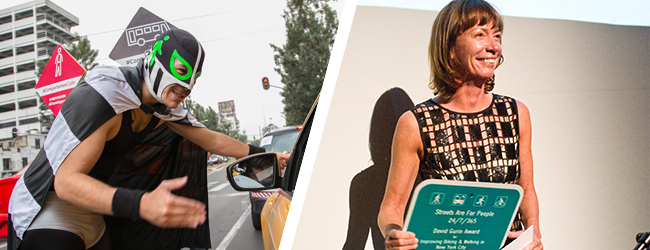
In March 2016, Transportation Alternatives and Families for Safe Streets held the second annual Vision Zero Cities Conference, in New York City, NY (28.6% Latino) for traffic safety experts, advocates, bereaved families, elected officials and the public to exchange ideas and discuss how to implement and enforce best practices to prevent road deaths and serious injuries. Former New York City Transportation Commissioner, Janette Sadik-Kahn believes that when you change the streets, you change the world. Not only are road deaths and serious injuries a public health issue, but unsafe streets are a major hurdle for people trying to be physically active, stay healthy, or to get to work. Thus, traffic safety is a public health issue. When people don't feel safe to walk or bike near ...
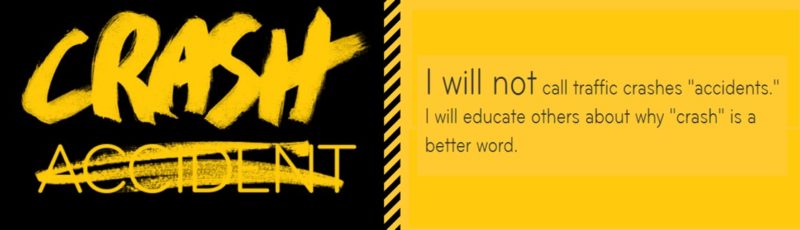
Transportation Alternatives has organized a campaign to get people to pledge to quit using the word "accident" when talking about a motor vehicle "crash." Transportation Alternatives fights for the installation of infrastructure improvements that reduce speeding and traffic crashes, save lives and improve everyday transportation for all New Yorkers. Consider this: Planes don’t have accidents. They crash. Altering language like this is a critical piece in re-framing the problem-unsafe streets designed for vehicles rather than for people. Altering language can also play an important role in highlighting issues in traffic fatalities and injuries as well as issues in access to safe streets. Unfortunately, many people in low-income neighborhoods are at higher risk for traffic ...
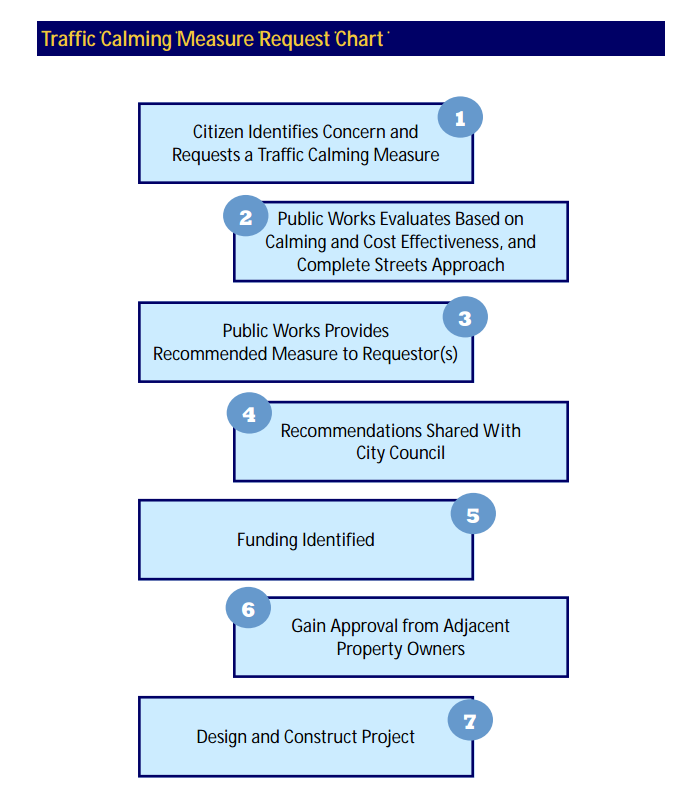
Are you concerned about speeding cars in your neighborhood? Residents in San Antonio can request traffic calming measures, like speed humps, speed enforcement, signage, pavement markings and medians using the Traffic Calming Handbook. Developed by the City of San Antonio Department of Public Works, the Traffic Calming Handbook aims to improve street features to reduce the negative effect of speeding and cut through traffic. The Handbook is also available in Spanish. Improving street features to improve safety is critical to promote walking, physical activity, and overall health and wellbeing. This Handbook outlines the process a resident must go through to request a traffic calming measure. It begins by filling out a 2-page form. The first page requires information about ...
Peatónito is an urban planner by day, serving as Coordinator of Communication for the Institute for Transportation and Development Policy in Mexico and working on the “Shared City” strategy for Vision Zero at the Laboratorio para la Ciudad. By night, he's a masked defender of pedestrians. His story is featured as one of nine innovative solutions to traffic safety across the world, published in the first-ever issue of Vision Zero Cities: International Journal of Traffic Safety Innovation, by Transportation Alternatives in March 2016. The "luchador" guides the elderly across the street, pushes vehicles backward out of crosswalks, paints crosswalks and road markings, and stomps across the tops of cars parked on the sidewalk to demonstrate to residents that they should be able ...
The Vision Zero Network conducted a case study to identify the key elements that distinguish Vision Zero from traditional approaches to traffic safety. What makes Vision Zero an innovative road safety policy with the potential to make our streets safe? Reframing traffic deaths as preventable
Focusing on system failure
Reducing the impact of collisions
Adopting a Safe System approach
Data-driven decision-making
Road safety as a community issue The U.S. often lags behind other countries in traffic safety. Read the case study ...
Nicolas Rivard and Allison Hu, urban designers in San Antonio and members of Dignowity Hill Neighborhood Association, learned about an upcoming street construction project that lacks walkable streetscape elements in their neighborhood. They saw this an an opportunity. The urban designers mobilized community members to get involved and request walkable streetscape elements, and the city responded by adding street trees, separated sidewalks, and landscaping. Today, through their recent project, Place Changing, the designers use “participatory design” processes to build planning literacy and equip residents with strategies to continue to get involved in city planning and development projects.
Walkability Low in East San Antonio Neighborhood
Nicolas Rivard and Allison Hu, urban ...
Many kids lack access to active spaces and safe streets where they can be physically active. These streets are often plagued with speeding cars and lack of sidewalks. Research shows that when communities adopt a “Complete Streets” policy and organize events such as “Open Streets,” more kids and their families become physically active, according to our new infographic on safe streets. The infographic is part of Salud America!’s Active Spaces and Kids research package, which tackles the latest issues on the physical activity environment and offers recommendations. Share this infographic today! Salud America! is a Robert Wood Johnson Foundation-funded national childhood obesity prevention and communication ...
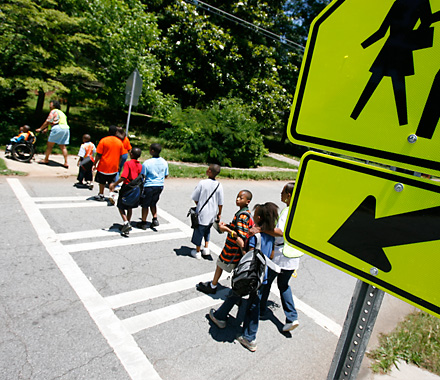
According to a recent research review, the Safe Routes to School program has been successful in increasing the proportion of students that walk and bike to school. The Safe Routes to Schools (SRTS) program provides education, encouragement and road improvements to create safe conditions to increase rates of walking and biking. This is particularly important for low-income populations who tend to experience greater rates of obesity and pedestrian injury and tend to live in areas with poor walking conditions. Participating schools were more likely to be in high-density areas. These areas found fewer rates of child pedestrian injuries and increased rates of walking and biking compared to areas that did not participate in SRTS. Additionally, rates of walking and biking increased over ...
Improved technology, like smart phones and tablets, is often blamed for increasing unhealthy, sedentary lifestyles in children. But what if this technology could be used to actually promote healthy living? Learn how a non-profit in Austin, Texas created a free mobile App that connects folks ready to get healthier with countless opportunities right in their backyard.
The Need for Better Health in the Community
Awareness: Chances are most Texans know someone, even kids, with diet-related health conditions. In fact, 42.8% of 4th graders in Texas are overweight or obese. Making healthier lifestyle changes can make a big difference. Fortunately, IT’S TIME TEXAS (ITT) is one of the many organizations across the state working to help people to lead healthier lives and build ...