by
by 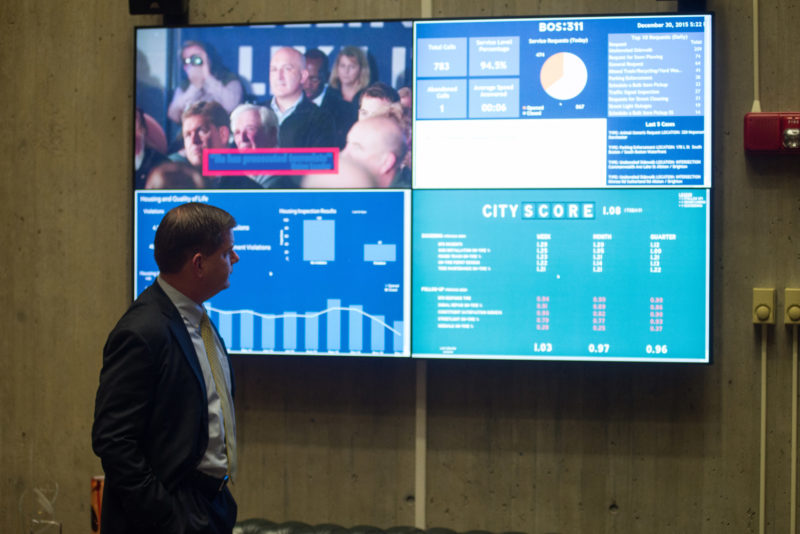
Share On Social!
Data plays a key role in driving changes operational, procedural, social, environmental, and political change.
In 2015, the National Recreation and Parks Association (NRPA) started hosting Innovation Labs, interactive events to bring the sharpest minds both in and outside the field of parks and recreation to explore how innovative thinking can meet emerging challenges, reduce costs, and better serve the public. In May, 2016, NRPA in conjunction with the City of Boston, the Boston Department of Parks and Recreation, and Sasaki Associates hosted an Innovation Lab to determine how innovation in data driven government could affect the field of parks and recreation, and how public agencies can leverage that data in Boston.
Boston (17.5% Latino) hosted this event focused on data because in 2013, the Boston parks knew that in order to determine (1) what it owned, (2) where those assets were located, and (3) what shape they were in, they would need to conduct a survey of the city’s 330-plus parks, which they did. Boston parks turned to Sasaki Associates, an international, interdisciplinary planning and design firm, to analyze the data. For example, they looked at distance of the park from the population it was intended to serve as well as visualization of new spaces. Breaking down the data like this is relevant because it helps the parks department ensure equitable investments across its constituency and it helps the parks department anticipate future city growth.
NRPA and the Boston team hosted a webinar “Big Data and Technology in Park and Recreation” in June 2016. One of the key takeaways discussed was making a more responsive government through use of technology. Therefore, Boston Parks and Recreation’s opened their dashboard of key performance indicators-which help viewers visualize complex data-called CityScore, up to the public to inform the community and Boston’s mayor and city managers about the overall health of the city at a moment’s notice.
Understanding the pulse of the community through data and stories can help identify health disparities as well as inequity in access to healthy resources, like safe places to play and walk. In order to improve the overall health of the city, city leaders must first embrace data in operational and political decision-making.
Learn more about NRPA Innovation Labs here.
Watch Innovation Labs “Big Data and Technology in Park and Recreation” Webinar here.

Explore More:
Healthy Families & SchoolsBy The Numbers
142
Percent
Expected rise in Latino cancer cases in coming years