
 by

Share On Social!
Alzheimer’s disease and related dementias are big health threats in the United States.
To protect the health of an aging population, the U.S. Department of Health and Human Services (HHS) in June 2026 asked for public comments to help update its National Plan to Address Alzheimer’s and Related Dementias, which guides efforts to address brain health.
In response, Salud America! developed a model comment urging that the plan focus on improving brain health clinical trial access for Latinos and all people, reducing the caregiving burden, and investing in Alzheimer’s research.
By the time the public comment period closed in August 2026, HHS received 226 total comments — 170 that were submitted by Salud America! members using the model comment, accounting for 75% of all submitted comments.
Fast forward to October 2026 and HHS has released its updated long-term plan.
“HHS is shifting the national strategy toward prevention, earlier detection, and faster development of better diagnostics and treatments [to combat Alzheimer’s and dementia in the U.S.],” said HHS Secretary Robert F. Kennedy, Jr.
Let’s review the plan, how it aligns with the Salud America! model comment, and what it means for Latinos and all people touched by Alzheimer’s and dementia.
1. Plan Aim: Reducing Dementia Risk Across the Lifespan
One of the keys to addressing Alzheimer’s and dementia is understanding disease risk and intervening before symptoms start.
This latest iteration of the plan focuses on understanding risk factors, supporting healthy aging initiatives, and reducing risk or delay onset dementia by practicing proven strategies.
While the plan doesn’t designate what forms this could take, these goals can be realized through education, resources, and incentivizing healthy behaviors that reduce disease risk.
Educating the older community, especially for Latinos living in South Texas, about Alzheimer’s and dementia risk is an important part of early intervention.
That’s why Salud America! is partnering with the Center for Alzheimer’s Disease and Related Dementias Population Aging and Social Studies at UT Health San Antonio to produce news, information, and resources based on research about Alzheimer’s and dementia risk.
Visit the (CAPAS) website to learn more about this effort and find bilingual resources. You can also sign up for updates to stay informed on the latest Alzheimer’s news that impacts you and your familia!
2. Plan Aim: Prioritize Alzheimer’s and Dementia Research and Clinical Trials
Research tells us more about disease, risk factors, and more, while clinical trials are evidence-based strategies and interventions that work to treat and prolong the impacts of Alzheimer’s and dementia.
However, participation in research and clinical trials don’t always reflect the makeup of the entire U.S. population.
As part of the new plan, the HHS will focus on advancing research, biomarkers, clinical trials, prevention, treatment development, and more to help create better health outcomes for Latinos and all people.
Increasing clinical trial access and investing in Alzheimer’s research studies was outlined in the Salud America! model comment to the HHS.
Learn more about the Alzheimer’s and dementia research geared toward the aging Latino community being conducted by CAPAS.
3. Plan Aim: Improve Alzheimer’s and Dementia Care Across Every Part of the Care Journey
Like many diseases, cognitive-related diseases like Alzheimer’s and dementia are graded and go through stages and severities with their own unique sets of challenges and needs.
To address each stage of the journey, from diagnosis to long-term care, the HHS is turning its attention to improving care from detection and diagnosis through treatment, management, and everything in-between.
4. Plan Aim: Reduce Alzheimer’s and Dementia Caregiving Burden
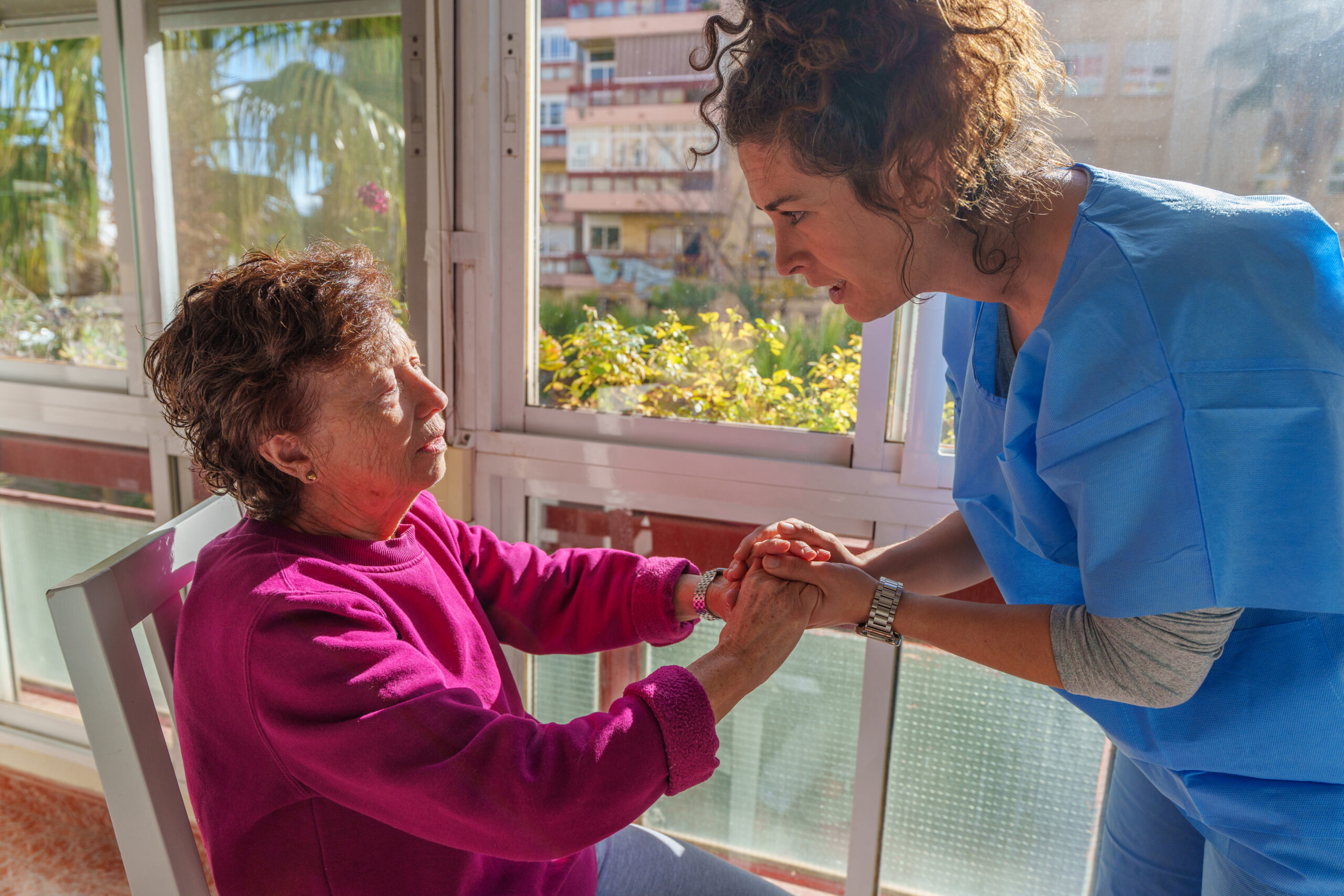
Alzheimer’s and dementia caregivers carry a heavy physical, emotional, and mental burden.
This is especially true for Latino caregivers, who often carry a cultural responsibility and obligation of caring for their elders.
The weight of caregiving can take an enormous toll, and there are too few resources to support the countless hours devoted to caring for a loved one.
Reducing the caregiving burden for the Latino community and all people by providing support services and programs was at the top of Salud America!’s model comment for the plan.
HHS plans to prioritize caregiver support programs and resources to help make caregiving support more accessible and more affordable.
The response includes “Strengthening caregiver support, long-term services and supports, home and community-based services, respite, education, safety, and planning,” according to HHS.
The National Plan to Address Alzheimer’s Disease
The National Plan to Address Alzheimer’s Disease was created under the National Alzheimer’s Project Act (NAPA).
The first plan was released in May 2012, according to the Federal Registrar.
It was designed to set up a national strategy focused on Alzheimer’s disease.
As part of its creation, HHS works together with other federal agencies and meets with a council of experts to update the national plan each year.
With input from the Advisory Council on Alzheimer’s Research, Care, and Services, HHS releases an annual plan update to help steer efforts to improve research, brain health care, caregiver support, and more.
Since it began, the plan has helped allocate more money to Alzheimer’s research, created Alzheimer’s research centers, and supported a national public health infrastructure, according to the Alzheimer’s Impact Movement.
While the plan will continue to be updated through 2035, the newly released national plan seeks to cover a more comprehensive list of new and emerging priorities through 2035, according to the federal regulations posting.
The release of the updated plan in 2027 will contain insight on new initiatives that arose as a result of the 2026 plan.
State of the National Plan to Address Alzheimer’s Disease
The National Plan to Address Alzheimer’s and Related Dementias continues to address some of the major factors driving cognitive health outcomes.
These issues spread across research, prevention, diagnosis, treatment, care, and beyond.
To accomplish this, HHS has received financial and administrative support from government agencies, including the creation of new programs and initiatives.
The Food and Drug Administration (FDA) recently launched an Alzheimer’s Prevention Accelerator, which is part of the new program called the Neuroscience Advancement and Innovation Nexus (NAIN).
The accelerator will focus its efforts on improving clinical trials, including special attention to trial populations, to prevent or delay Alzheimer’s disease and cognitive decline.
The Advanced Research Projects Agency for Health has pledged up to $48.8 million toward helping find ways to promote early detection and intervention.
The contribution joins financial support totaling up to $155.3 million.
Supporters like the Administration for Community Living will seek to expand brain health resources and training.
HHS is also looking to “expand dementia training and screening in health centers, develop behavioral health and crisis response resources for older adults experiencing cognitive decline, strengthen public health approaches to dementia, study diagnostic delays and the economic burden of dementia, review evidence on prevention, and test a lifestyle intervention for beneficiaries with mild cognitive impairment,” according to HHS.
“The 2026 National Plan provides a coordinated framework for federal action to protect brain health, accelerate scientific progress, improve dementia care, and strengthen support for patients and families.”
Read more about the National Plan and other agencies’ participation in making these goals a reality.
Addressing Alzheimer’s and Dementia in South Texas
Alzheimer’s and related dementias continue to ravage communities and families in South Texas, where many Latinos call home.
There are many societal and background-prevalent factors that contribute to inconsistencies in the Alzheimer’s and dementia care continuum.
Many of these factors stem from some of the modifiable risk factors included on this list.
To address some of these inconsistencies, UT San Antonio launched the San Antonio Center for Alzheimer’s Disease and Related Dementias (AD/ADRD) Population Aging and Social Studies (San Antonio CAPAS), which is funded by the National Institute on Aging.
Led by Drs. Rebeca Wong and Fernando Riosmena, CAPAS seeks to bring together multidisciplinary groups of experts and research networks in demography, sociology, AD/ADRD epidemiology, neuropsychology, public health issues, and experience conducting longitudinal studies for AD/ADRD research and Latino aging.
“By combining our strengths, we can address Alzheimer’s disease from every angle — from molecules and biomarkers to families, neighborhoods and communities,” Dr. Wong told UT San Antonio Today.
For more information on Alzheimer’s or what researchers are doing to improve health outcomes in aging Latinos and all older adults, please visit the CAPAS center website.
Explore More:
DementiaBy The Numbers
We currently do not have any By the Number Facts related to this issue.