More than 2 million people in the United States are expected to be diagnosed with cancer this year. No two among them will experience cancer exactly the same way. Even so, certain groups of people will share similar cancer experiences. Latinos face higher rates of cervical, liver, and stomach cancers. Black women with ovarian cancer don’t live as long as White women with the disease. People living in rural areas are less likely to get regular cancer screenings than those who live in cities. And people who live in areas where poverty has been the norm for decades are more likely to die of cancer than those living in more affluent areas. These patterns of worse outcomes among specific groups of people are called cancer differences. Although biological differences can contribute to ...
Every year an unprecedented number of pregnant women in the US suffer mental hardships. The American Academy of Medicine (AAMC) estimates that 1 in 5 women endure a mental health or substance use disorder during a pregnancy and up to a year after birth. In fact, mental health conditions are one of the leading causes of pregnancy-related deaths, according to the Centers for Disease Control and Prevention (CDC). What’s more, 80% of these deaths are preventable. That’s why the U.S. Department of Health and Human Services (HHS) created the National Maternal Mental Health Hotline. Let’s dive into the hotline, how it helps Latinas and all mothers, and what HHS is doing to get the word out about it.
What is the National Maternal Mental Health ...
The US is experiencing a maternity healthcare crisis where pre-term labors and infant and maternal mortality rates are up due to a lack of access to prenatal and postpartum care. Many of these women live in areas designated as maternity care deserts. These are areas where pregnant individuals and mothers have limited or nonexistent access to vital prenatal and postpartum health care. Maternal care deserts exist in 35% of US counties — encompassing 2.3 million reproductive aged women, according to the March of Dimes’ annual report, Nowhere to Go: Maternity Care Deserts in the US. According to the report, living in these areas greatly increases their risk for infant and maternal mortality, pre-term labor, and untreated conditions that could harm the lives of the mother or ...
Dr. Patricia Chalela, a researcher at the Institute for Health Promotion Research (IHPR) at UT Health San Antonio, has been named the IBC Foundation Endowed Professorship in Health Promotion Research. The International Bancshares Corporation (IBC) Foundation is a private foundation affiliated with IBC and its subsidiary banks. It is dedicated to supporting charities that enrich the community and improve the health and wellness of people in Texas and Oklahoma. The foundation made a $2 million donation that established four endowed professorships at UT Health San Antonio. Dr. Chalela's endowment, which is for $500,000, aims to help her advance novel research in health promotion. "I am deeply honored and sincerely grateful to be nominated as the recipient of the IBC Foundation ...
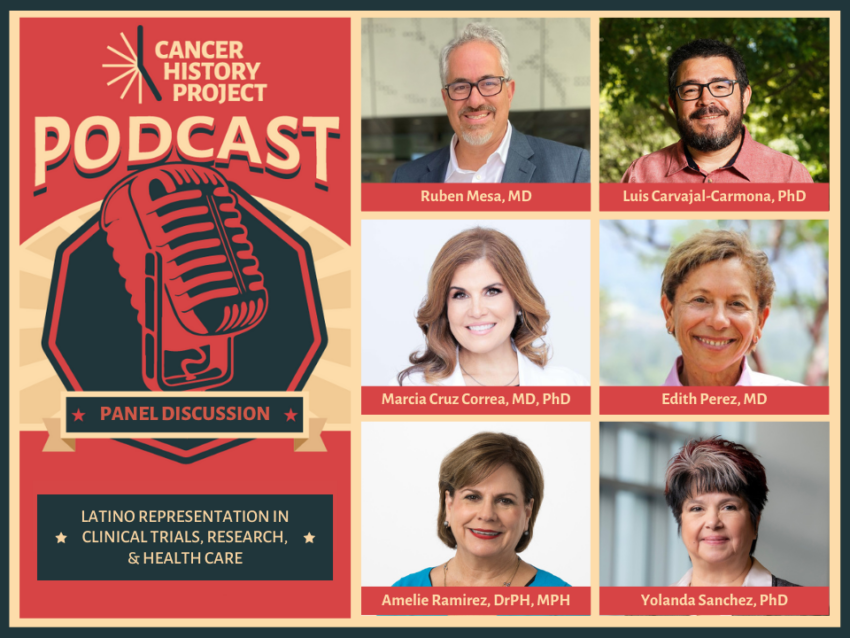
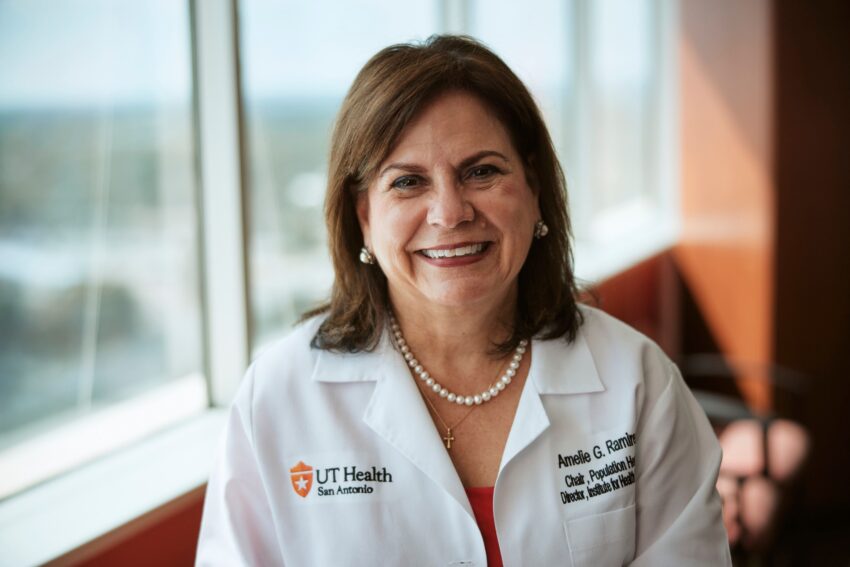
Dr. Amelie G. Ramirez, leader of Salud America! at UT Health San Antonio, joined other cancer experts to discuss participation in clinical trials, research, and healthcare on a podcast episode for the Cancer History Project by The Cancer Letter. The episode features: Dr. Ramirez
Dr. Luis Carvajal-Carmona, University of California, Davis
Dr. Edith Perez, Mayo Clinic
Dr. Marcia Cruz-Correa, University of Puerto Rico Comprehensive Cancer Center
Dr. Yolanda Sanchez, University of New Mexico Comprehensive Cancer Center
Dr. Ruben Mesa, Atrium Health Wake Forest Baptist Comprehensive Cancer Center (moderator) The group explores cancer and clinical care among people with different backgrounds. “The pipeline issue continues to be a huge issue for us,” said Ramirez, ...
Cancer can be many things. Some describe cancer as a journey, a struggle, or a fight. For Brittney Millard, a breast cancer diagnosis was a life-changing event that gave her the passion to help other cancer survivors. “It's really what's in your heart. You can [help] people you know in your daily life, just spreading awareness and taking initiative,” Millard said. Millard, 32, an intern at the Institute for Health Promotion Research at UT Health San Antonio, still faced many hardships with her cancer experience. But now she aims to help others avoid pitfalls she went through. Let’s learn more about her inspiring story and her goals for helping others.
A Major Life Change
A native of San Antonio, Millard described her childhood as difficult. Growing up, ...
Volunteering for Thanksgiving, Christmas, and New Year’s helps other people. It gives the volunteer a nice emotional boost, too. So why not volunteer your “digital voice” or “actions”? We at Salud America! invite you to take or start these 14 actions to promote health for Latino and all families this holiday season!
1. Help Prevent Birth Defects: Add a Warning Label on Unfortified Corn Masa Flour
Are the corn masa products you eat fortified with folic acid? Because too many babies in the Latino community suffer from birth defects like spina bifida, UnidosUS and its partners submitted a citizen petition asking the FDA to require a warning label on unfortified corn masa flour and products. The warning would alert consumers when corn masa flour, tortilla chips, ...
Physical activity can have many benefits for cancer survivors, from improving their quality of life to potentially making it less likely that their disease will come back. Yet studies have shown that many cancer survivors struggle to get the recommended levels of physical activity, particularly those affected by health differences. Now, according to the results of a new study, a program in Texas has shown it can get these cancer survivors moving more by supporting them in the communities where they live, and by getting their caregivers to become more active as well. The cancer survivors and caregivers, who were mostly Latino, were participants in a 12-week program called Active Living After Cancer. After completing the program, the percentage of survivors getting recommended ...
Dr. Amelie G. Ramirez, leader of Salud America!, joined a KSAT News town hall on Oct. 8, 2024, to share insights on a growing effort to address cancer in majority-Latino South Texas. The event, “Revolutionizing Cancer Care for South Texans: A New Era of Treatment,” was hosted by KSAT anchor Stephania Jimenez. It featured Ramirez, Dr. Mark Bonnen, chief medical officer at the Mays Cancer Center at UT Health San Antonio, and Jeff Flowers, chief executive officer at the UT Health San Antonio Multispecialty & Research Hospital. Ramirez shared about the state of cancer and the need to address the non-medical drivers of health in South Texas. She also urged cancer survivors to join the Avanzando Caminos study. The study aims to enroll 1,500 Latino cancer survivors in South ...