by
by 
Share On Social!
Families are often busy with work, school, extra-curricular activities, and everyday life.
With this in mind, it’s important for families to come together and spend time with one another.
One way many families do this is after a long day of work and school is gathering at the dinner table and enjoying a meal together.
In fact, the National Research Center on Hispanic Children and Families (NRCHCF) highlights research that finds that half of all Hispanic children eat at least one meal a day with their family, which has many health, emotional, and academic benefits.
Additionally, 63% of preschool-aged children (birth to age 5) are the most likely to have daily family meals, while teenagers are the least likely.
Let’s dig deeper into this research and why it’s important for families.
Family Meals by The Numbers
According to the research, Hispanic children in families with low incomes are even more likely to eat at least one meal a day with their family (55%), regardless of their age.
By age, the numbers are:
- 66% of children from birth to age 5
- 55% of children ages 6 to 12
- 44% of teens ages 13 to 17
“Among all Hispanic children, teens ages 13 to 17 with only non-U.S.-born parents are more likely to have daily family meals (42%) than those with at least one U.S.-born parent (33%),” according to the NRCHCF.
Additionally, the likelihood of having daily family meals is the same for Hispanic children regardless of whether their parents were born in the United States or in another country.
The one exception of this being the difference by parental country of birth is statistically significant for children aged 13-17 years.
The Benefits of Family Meals
According to the NRCHCF, research finds several benefits for children and adolescents that participate in family meals.
“More frequent family meals are linked to better nutritional health among youth, including a healthier diet, a greater likelihood of being in a normal weight range, and a lower likelihood of disordered eating,” according to the NRCHCF.
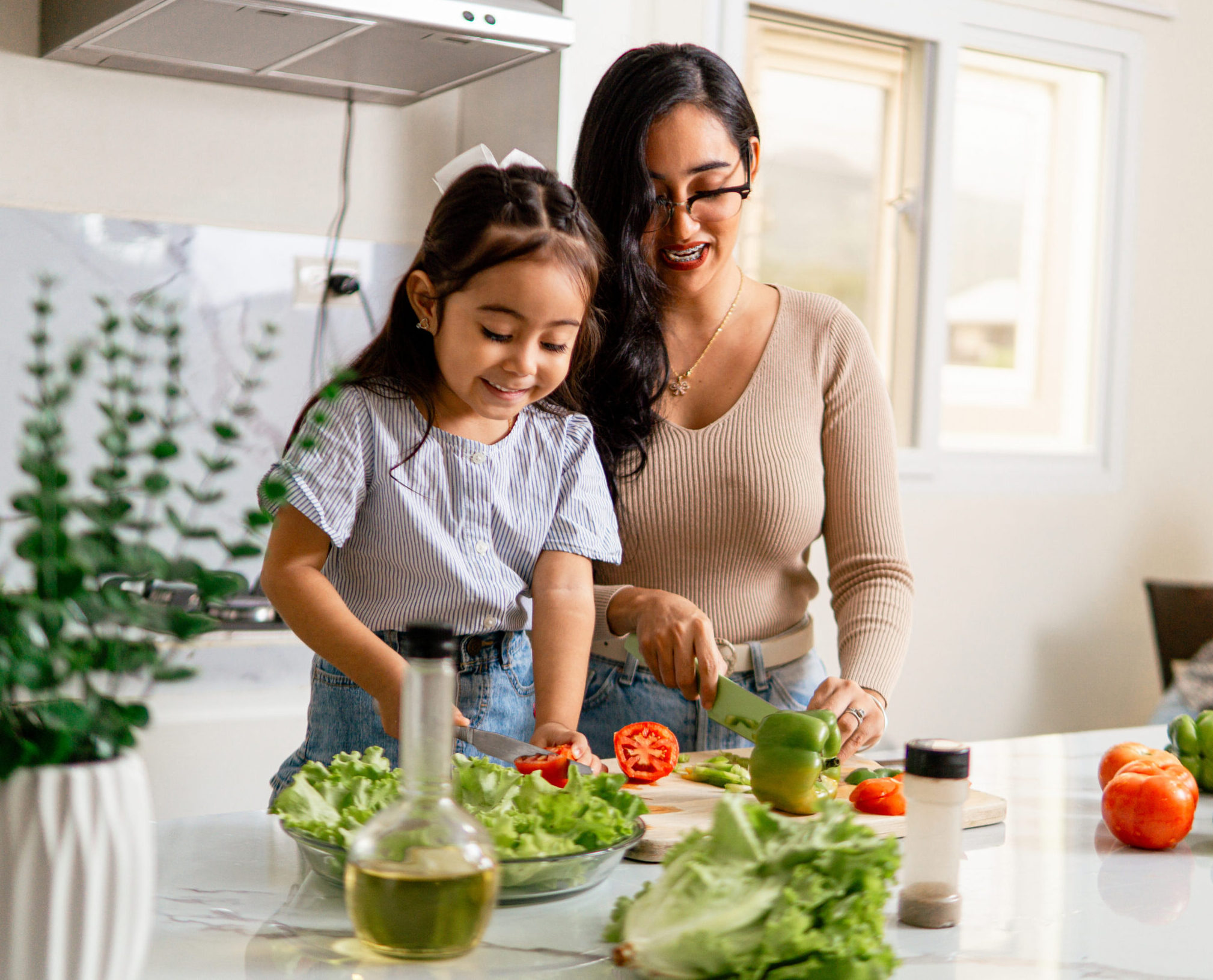
Academic and emotional benefits are also possible.
“Among young children, eating more family meals is associated with increased vocabulary and reading skills, which can set youth up for academic success as they enter school,” according to the NRCHCF.
Research shows that more frequent meals during adolescence are associated with a lower risk of alcohol use, violent behavior, and feelings of depression and an increased likelihood of emotional well-being.
It is also noted that for some outcomes, the benefits associated with family meals appear to be somewhat stronger for female teens than for their male counterparts.
While many families struggle to fit regular family meals into their daily lives, it’s important to note that family meals can provide structure and stability to home life.
Additionally, research with some mothers who have lower incomes highlights that lack of help preparing meals and/or the need to watch younger children can get in the way of family meals.
Overall, family meals seem to have the strongest impact on well-being among youth in families characterized by more positive family dynamics.
This includes strong parent-child relationships and more limited instances of family arguments.
“During meals, family members can check in and communicate with one another and parents can share important family and cultural values,” according to the NRCHCF.
Examining the Health of Your Community
Nutritious meals are a big part of healthy families.
But what about the health of your community?
Find out by downloading the Salud America! Health Report Card for your town!
Enter your county name and get auto-generated local data with interactive maps and comparative gauges on several health indicators. This can help you visualize and explore local issues in education, housing, transportation, food, health, and more.
See how your county stacks up compared to the rest of your state and nation.
Then email the Report Card to local leaders to raise awareness, include the data in a presentation or grant proposal, or share it on social media to drive healthy change in your community!
Explore More:
Healthy Families & SchoolsBy The Numbers
142
Percent
Expected rise in Latino cancer cases in coming years